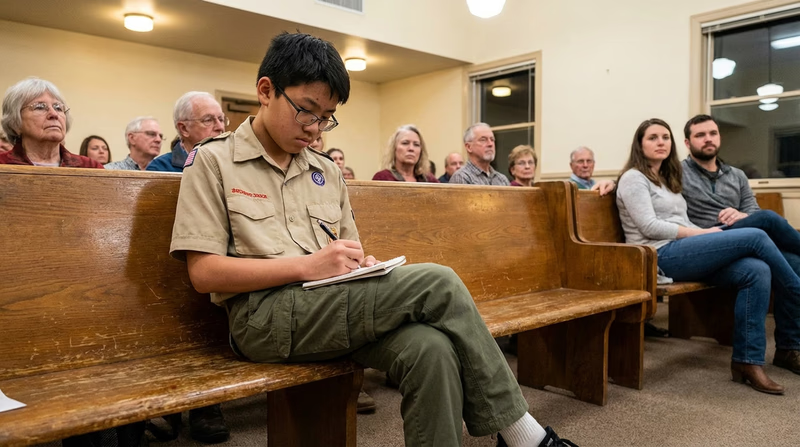
Req 3 — Attending a Government Meeting
Why Attend a Government Meeting?
Reading about government is one thing. Watching it happen in real time is something else entirely. When you sit in on a city council meeting or a school board session, you see democracy at work — real people debating real issues that affect your community. It can be fascinating, frustrating, inspiring, and sometimes even boring. But it is always real.
Most government meetings are open to the public. That is not an accident — it is the law. Open meeting laws (sometimes called “sunshine laws”) exist because citizens have the right to see how their government makes decisions.
Choosing a Meeting
You have several options. Pick the one that is most accessible and interesting to you:
City or Town Council Meeting
This is the most popular choice for Scouts. City councils typically meet once or twice a month in the evening. They discuss local issues like zoning, budgets, road projects, parks, and public safety. Check your city’s website for the schedule and location.
County Board or Commission Meeting
If you live in an unincorporated area or want to see county-level government at work, attend a county board meeting. These often cover topics like county road maintenance, law enforcement, and public health.
School Board Meeting
School boards make decisions about your schools — budgets, curriculum, policies, and facilities. Since these decisions directly affect you, school board meetings can be especially engaging for Scouts.
Local Court Session
Courtrooms are open to the public for most proceedings. You can observe a court session to see the judicial branch in action. Contact the courthouse in advance to find out when sessions are scheduled and what types of cases will be heard.
What to Expect
Government meetings follow a formal structure called parliamentary procedure (often based on Robert’s Rules of Order). Here is what a typical city council meeting looks like:
- Call to Order — The chair (usually the mayor) officially starts the meeting.
- Roll Call — Members present are recorded.
- Approval of Minutes — The record of the last meeting is reviewed and approved.
- Public Comment — Citizens can address the council on any topic. Each speaker usually gets 2–3 minutes.
- Old Business — Items carried over from previous meetings.
- New Business — New items for discussion and vote.
- Reports — Updates from staff, committees, or departments.
- Adjournment — The meeting ends.
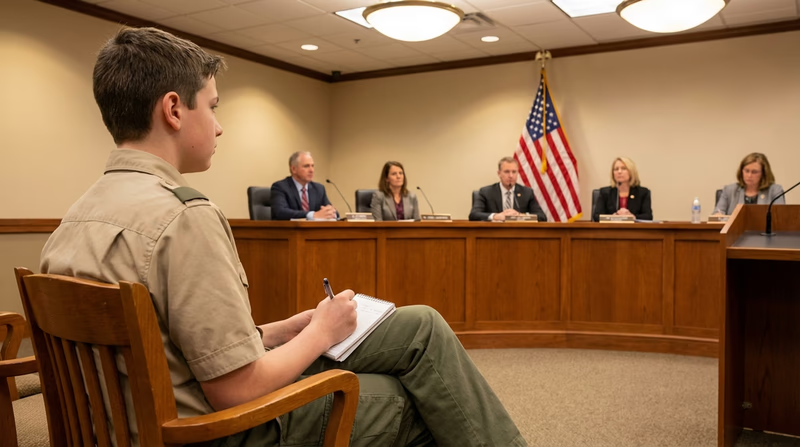
Taking Notes
Bring a notebook and pen. As you watch the meeting, write down:
- The date, time, and location of the meeting
- Who was present (the names of council members or board members)
- The main topics discussed
- Any issues where people disagreed
- How votes turned out
- Your own reactions and thoughts
Meeting Observation Guide
Key things to watch for during the meeting
- What issues generated the most debate?
- Did any members of the public speak? What did they say?
- How did council members treat each other — respectfully? Contentiously?
- Were there any votes? Were they unanimous or split?
- Did anything surprise you?
Forming Your Opinion (Requirement 3b)
After the meeting, your counselor will ask you to pick one issue where opinions were divided and explain which side you agree with — and why.
This is not about having the “right” answer. It is about showing that you can:
- Listen to both sides of an issue
- Understand the reasoning behind each position
- Form your own opinion based on evidence and values
- Explain your reasoning clearly