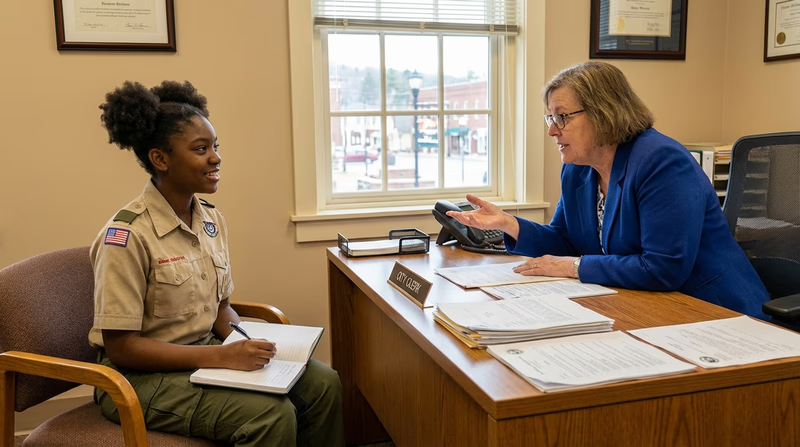
Req 4 — Investigating a Community Issue
Choosing Your Issue
This requirement puts you in the role of an investigative citizen. You will pick a real issue in your community, figure out who in the government is responsible for it, and interview someone working on it. This is hands-on civic engagement at its best.
Start by asking yourself: What matters to you? What have you noticed in your community that could be better? Here are some common categories to spark ideas:
Infrastructure and Environment
- Roads or sidewalks in poor condition
- Lack of bike lanes or safe crosswalks
- Parks that need maintenance or new equipment
- Litter or illegal dumping
- Water quality concerns
Public Safety
- Traffic safety near schools
- Streetlight outages
- Emergency response times
- Youth safety programs
Community Services
- Library hours or programs
- Recreation center availability
- Public transportation access
- After-school programs for young people
Growth and Development
- New construction or zoning changes
- Housing affordability
- Business development
- Preserving green spaces or historic buildings
Finding the Right Branch of Government (Req 4a)
Once you have chosen your issue, figure out which part of your local government handles it. Here is a general guide:
| Issue Area | Likely Responsible Office |
|---|---|
| Roads, water, sewers | Public Works Department |
| Crime, safety | Police Department |
| Fires, emergencies | Fire Department |
| Parks, recreation | Parks & Recreation Department |
| Schools, education | School Board / School District |
| Zoning, building | Planning & Zoning Commission |
| Health, sanitation | Health Department |
| Budgets, taxes | City Council / County Board |
If you are not sure, call your city hall or visit your community’s website. Most government websites have a directory of departments and their responsibilities.
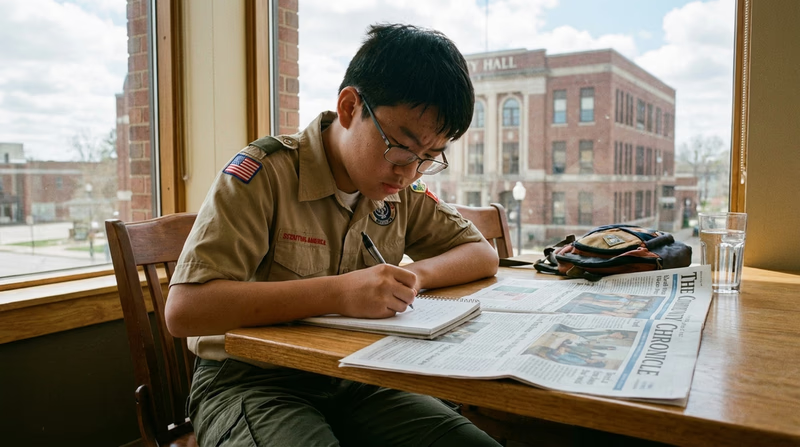
Conducting Your Interview (Req 4b)
The interview is the heart of this requirement. You will talk to a real government official or employee about a real issue. This is a skill that will serve you in school, in Scouting, and eventually in your career.
Before the Interview
- Get approval from both your counselor and a parent or guardian before reaching out.
- Identify the right person. Call the relevant department and ask to speak with someone who works on your issue. You might talk to a department director, a staff member, or even an elected official.
- Schedule the interview. Be polite, explain that you are a Scout working on the Citizenship in the Community merit badge, and ask if they would be willing to spend 15–20 minutes answering questions.
- Prepare your questions. Write them down in advance.
Key Questions to Ask
Here are some strong questions to include — but feel free to add your own:
- What is currently being done about this issue?
- What is the biggest challenge your department faces with this issue?
- How is this issue funded?
- Have citizens been involved in addressing this issue? How?
- How can young people help?
- What is one thing you wish more people understood about this issue?
Interview Prep Checklist
Be ready before you make contact
- Issue chosen and researched
- Counselor approval obtained
- Parent or guardian approval obtained
- Correct department and contact person identified
- Written list of at least 5 questions
- Notebook and pen ready for notes
- Thank-you note or email prepared (send after the interview)
During the Interview
- Be on time. Arrive a few minutes early or call exactly when scheduled.
- Listen more than you talk. Let the person answer fully before asking your next question.
- Take notes. Write down key points so you can share them accurately with your counselor.
- Ask follow-up questions. If something interests you, ask to hear more.
- Be respectful of their time. Keep the interview to the agreed length.
After the Interview
- Send a thank-you note. A brief, handwritten note or email goes a long way.
- Review your notes while the conversation is still fresh in your mind.
- Reflect. What surprised you? What did you learn that you did not know before?
Sharing What You Learned (Req 4c)
When you meet with your counselor, be prepared to share:
- The issue you chose and why it matters to your community
- Which branch of government handles it
- Who you interviewed and their role
- What you learned — What is being done? What are the challenges? How can young people contribute?
- Your thoughts — Did anything change your perspective? What would you do differently if you were in charge?