Req 7 — Charitable Organizations & Volunteering
The Role of Charitable Organizations
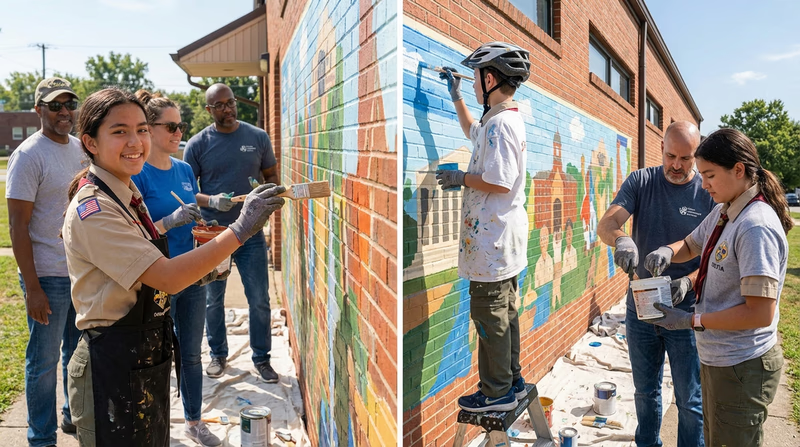
Government provides essential services, but it cannot do everything. Charitable organizations — also called nonprofits — fill gaps that government does not cover. They fight hunger, build affordable housing, protect the environment, support the arts, help disaster victims, mentor young people, and do thousands of other things that make communities stronger.
These organizations run on donations and volunteers. And that is where you come in.
Step 1: Identify Three Organizations (Req 7a)
Look for organizations that operate in your community and bring people together for a common good. They should be outside of Scouting — your troop, pack, or council do not count for this one.
Here are some types of organizations to consider:
Food and Hunger Relief
- Food banks and food pantries
- Community gardens that donate produce
- Meal delivery programs (like Meals on Wheels)
Housing and Shelter
- Habitat for Humanity chapters
- Homeless shelters
- Transitional housing programs
Environmental Conservation
- Local land trusts or watershed groups
- Park conservancy organizations
- Recycling and cleanup groups
Youth and Education
- Boys & Girls Clubs
- Big Brothers Big Sisters
- Tutoring and literacy programs
Health and Wellness
- American Red Cross chapters
- Special Olympics
- Mental health awareness organizations
Community Building
- Rotary Club, Lions Club, or Kiwanis
- Cultural heritage organizations
- Neighborhood associations
Step 2: Research One Organization (Req 7b)
Choose the organization that interests you most and dig in. The requirement specifically says to use a variety of resources, so do not just check their website. Here is how to research from multiple angles:
Online
- Visit the organization’s official website. Look for their mission statement, programs, impact reports, and volunteer information.
- Check their social media accounts for recent activities and community engagement.
- Search local news outlets for stories about the organization.
Print Materials
- Pick up brochures, fliers, or newsletters at the organization’s office or at community bulletin boards.
- Check your local newspaper for articles or event listings related to the organization.
People
- Talk to current volunteers about their experience.
- Speak with employees about the organization’s history and goals.
- Ask community members what they know about the organization and its reputation.
Research Notes
Information to gather about your chosen organization
- Full name and location of the organization
- When it was founded and by whom
- Its mission statement (in your own words)
- The main programs or services it provides
- How it is funded (donations, grants, fundraising events)
- How many people it serves or impacts
- What volunteers do and how many it has
- How it brings the community together
Step 3: Volunteer Eight Hours (Req 7c)
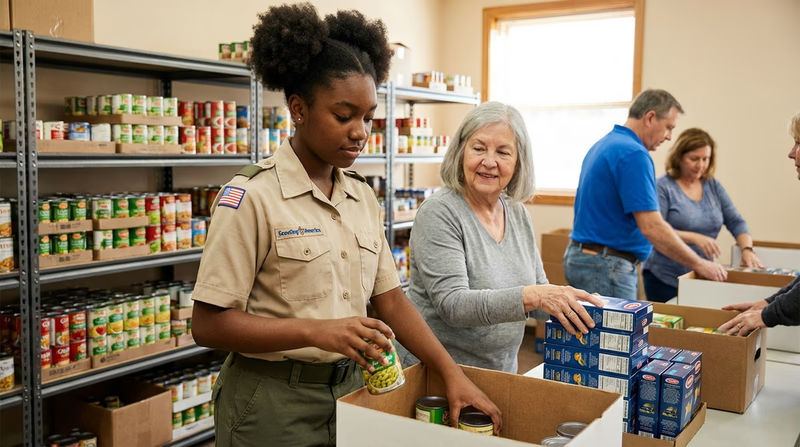
This is the big one. You need to contribute at least eight hours of volunteer service to the organization you researched. Here is how to make it happen:
Getting Started
- Get approval from your counselor and a parent or guardian.
- Contact the organization. Call, email, or visit. Explain that you are a Scout working on the Citizenship in the Community merit badge and that you would like to volunteer.
- Ask what young people can do. Not every role is open to minors. The organization will guide you to age-appropriate tasks.
- Schedule your hours. You can volunteer all eight hours in one or two sessions, or spread them out over several weeks.
Making the Most of Your Experience
- Show up on time and ready to work. First impressions matter.
- Ask questions. Learn about the people you are serving, the challenges the organization faces, and the impact of the work.
- Be flexible. You might not get to choose your exact task. Sorting donations, setting up for events, or cleaning are all valuable contributions.
- Reflect as you go. What are you learning? How does this work affect the community?
Tracking Your Hours
Use the volunteer service log to record your hours, tasks, and reflections. Your counselor will want to see documentation of your eight hours.
Volunteer Service LogDiscussing Your Experience (Req 7c)
After completing your volunteer hours, your counselor will want to hear about:
- What you did — Describe the tasks you performed.
- Who you met — Talk about the people you worked with and the people the organization serves.
- What you learned — How does this organization make the community better? What surprised you?
- How it changed you — Did volunteering shift your perspective? Would you continue volunteering after the merit badge is done?
- The bigger picture — How does this organization connect to the themes of citizenship you have been learning about throughout this badge?