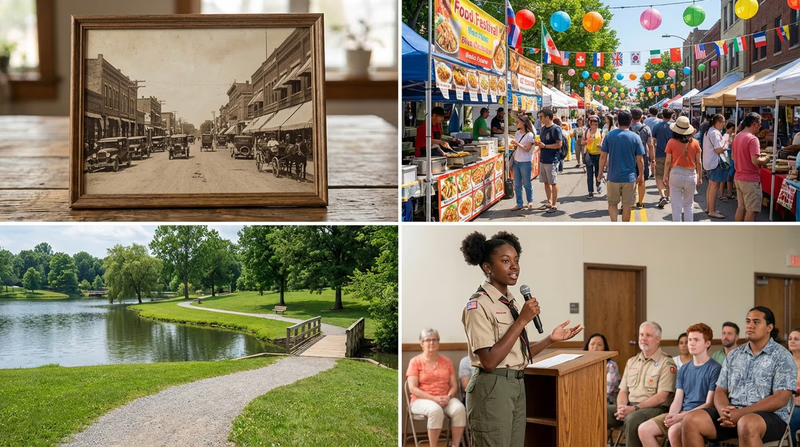
Req 8 — Your Community Presentation
Your Chance to Tell the Story
This is the capstone of the Citizenship in the Community merit badge — the moment where everything you have learned comes together. You have mapped your community, attended a government meeting, investigated an issue, volunteered for a cause, and studied the services that keep things running. Now you get to share what makes your community unique, vibrant, and worth caring about.
Think of yourself as a storyteller. You are not just listing facts — you are painting a picture of a real place with real people, real history, and real challenges.
Choosing Your Format
The requirement gives you several options. Pick the one that plays to your strengths:
| Format | Best For | Tools You Might Use |
|---|---|---|
| Slide show | Visual learners who like organizing information | Google Slides, PowerPoint, Keynote |
| Video | Storytellers who like filming and editing | Phone camera, iMovie, CapCut |
| Speech | Strong speakers who like performing live | Note cards, practice mirror |
| Digital presentation | Tech-savvy Scouts who want interactivity | Prezi, Canva, Google Sites |
| Photo exhibit | Photographers who want to show, not tell | Printed photos, poster boards, captions |
What to Include
The requirement specifies four areas your presentation must cover. Here is how to approach each one:
1. History of Your Community
Tell the story of how your community came to be. You do not need to write a textbook — focus on the most interesting highlights.
- When and why was your community founded?
- Who were the original settlers or inhabitants?
- What events shaped the community over time?
- Are there historical landmarks or sites?
Use your research from Requirement 2a (points of interest) and anything you learned from your community mapping.
2. Cultures and Ethnic Groups
Every community has a cultural story. Who are the people who live there, and what traditions do they bring?
- What cultural communities exist in your area?
- Are there cultural festivals, restaurants, or religious institutions that reflect this diversity?
- How have different groups contributed to the community’s identity?
- What languages are spoken?
3. Best Features and Popular Gathering Places
What makes your community special? What do residents love about living there?
- Parks, trails, lakes, or natural features
- Downtown areas, shopping districts, or farmers’ markets
- Community centers, libraries, or sports venues
- Annual events, parades, or traditions
- Local businesses that define the character of the area
4. Challenges Your Community Faces
No community is perfect. Being honest about challenges shows that you are a thoughtful, engaged citizen.
- Infrastructure needs (roads, buildings, utilities)
- Economic challenges (unemployment, business closures)
- Environmental issues (pollution, flooding, drought)
- Social issues (housing affordability, access to healthcare)
- Growth and development tensions
Connect this to your work in Requirement 4 — the community issue you investigated is a natural fit here.
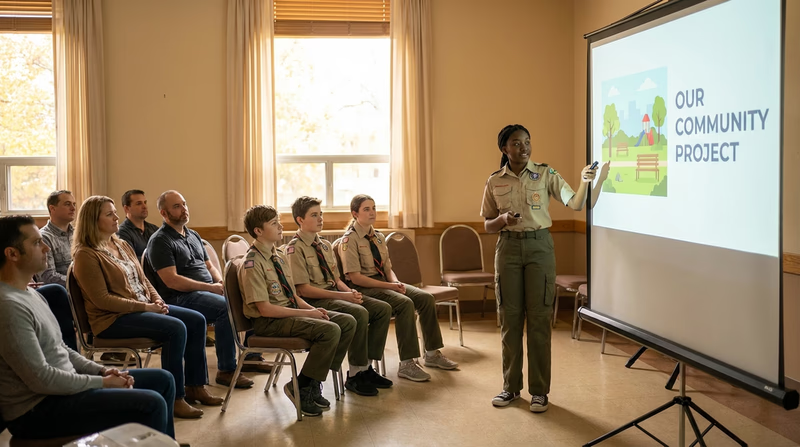
Building Your Presentation
Step 1: Research
Gather information from multiple sources:
- Your own observations and experiences from this merit badge
- Your community’s official website
- Local history books or museum exhibits
- Interviews with long-time residents
- Local newspaper archives
- Census data for demographic information
Step 2: Organize
Structure your presentation with a clear flow:
- Opening — Introduce your community. Where is it? How many people live there?
- History — The story of how it started and how it has changed.
- People and Cultures — Who lives there and what they bring to the community.
- Best Features — What makes it great.
- Challenges — What needs work.
- Closing — Why you are proud to be part of this community (or what you hope for its future).
Step 3: Add Visuals
Photos, maps, and charts make any presentation stronger. Take your own photos when possible — they add a personal touch that generic images cannot match.
Step 4: Practice
Rehearse your presentation at least twice before delivering it. Time yourself to make sure it fits within 5–10 minutes. Practice in front of a family member to get feedback.
Presentation Quality Check
Review before you present
- All four required topics covered (history, cultures, best features, challenges)
- At least one visual element (photo, map, chart) per topic
- No spelling or grammar errors
- Flows logically from beginning to end
- Fits within 5–10 minutes
- You can deliver it without reading every word from a script
Delivering Your Presentation
You need to present to your counselor or a group (your patrol, a class at school, etc.). Here are some tips for a strong delivery:
Canva — Free Presentation Templates Free, easy-to-use presentation templates that can help you create a professional-looking slide show. No design experience needed.