 Getting Started
Introduction & Overview
You are a citizen of the United States of America. That is not just a fact on a piece of paper — it is a living, active relationship between you and your country. The Citizenship in the Nation merit badge invites you to explore what that relationship really means: how your government works, what your rights are, and how you can make your voice heard on the national stage.
This is one of the Eagle-required merit badges, and for good reason. Scouting has always emphasized duty to country. Understanding how the nation works — from the Constitution to Congress — is a big part of what it means to be a responsible, informed citizen.
Then and Now
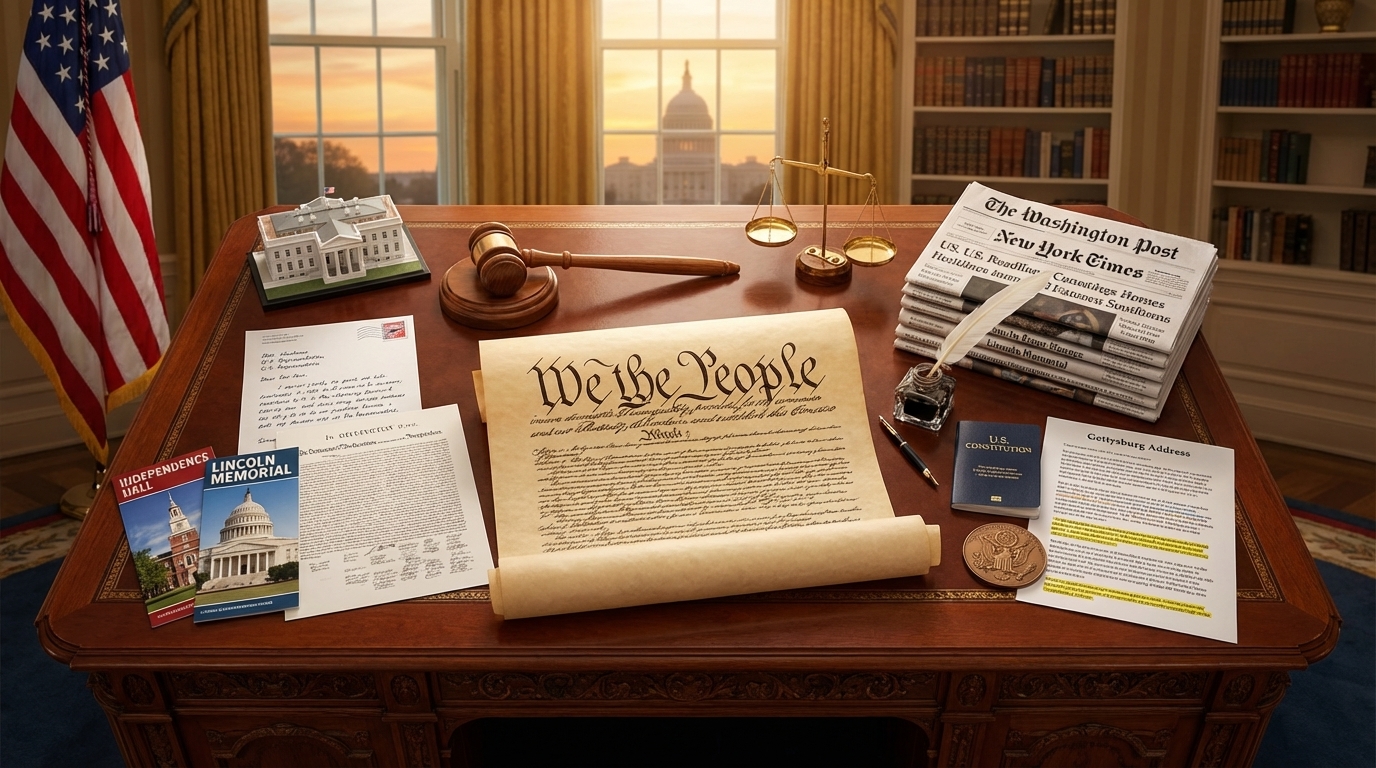
Then — “We the People”
In the summer of 1787, fifty-five delegates gathered in Philadelphia to do something that had never been done before: design a government from scratch. The room was hot, the debates were fierce, and the stakes could not have been higher. These men — farmers, lawyers, soldiers — argued for months over how much power the federal government should have, how to represent large states and small states fairly, and how to protect individual rights.
The result was the Constitution of the United States, a document that has guided the nation for over two hundred years. It was not perfect — it originally excluded many people from full citizenship — but it included a way to change and improve over time through amendments.
- Purpose: Create a government that was strong enough to unite the states but limited enough to protect individual freedom
- Mindset: “We can govern ourselves — and we can build a system that gets better over time”
Now — Living the Constitution
Today, the Constitution is not a dusty museum piece. It is a working document that shapes your everyday life. When you post your opinion online, the First Amendment protects your right to speak. When a court strikes down an unfair law, that is the system of checks and balances in action. When citizens march for a cause they believe in, they are exercising rights that the founders wrote into the very foundation of the government.
- Purpose: Self-governance, protection of rights, peaceful resolution of disagreements
- Mindset: “The Constitution belongs to all of us — and every generation helps define what it means”
Get Ready! You are about to explore the ideas and documents that hold an entire nation together. Along the way, you will discover that citizenship is not something you just have — it is something you do.

Kinds of National Citizenship
Being a citizen of a nation is about much more than living within its borders. There are many ways to practice citizenship, and the best citizens use a combination of all of them.
Informed Citizenship
An informed citizen pays attention to what is happening in the country. You read the news, learn about current issues, and try to understand different points of view. You cannot make good decisions about the future of your country if you do not know what is going on.
Participatory Citizenship
Participatory citizens take action. They vote (when old enough), attend public meetings, contact their elected officials, run for office, and serve on juries. Participation is how citizens turn their opinions into real change.
Service-Oriented Citizenship
Service-oriented citizens give back to their communities and their country. This includes volunteering, joining national service programs like AmeriCorps, serving in the military, and organizing community projects. As a Scout, you already practice this kind of citizenship every time you do a service project.
Constitutional Citizenship
Constitutional citizens understand and defend the principles that the nation was built on. They know their rights, they respect the rights of others, and they stand up when those rights are threatened. This kind of citizenship requires knowledge — which is exactly what this merit badge will give you.
Cultural Citizenship
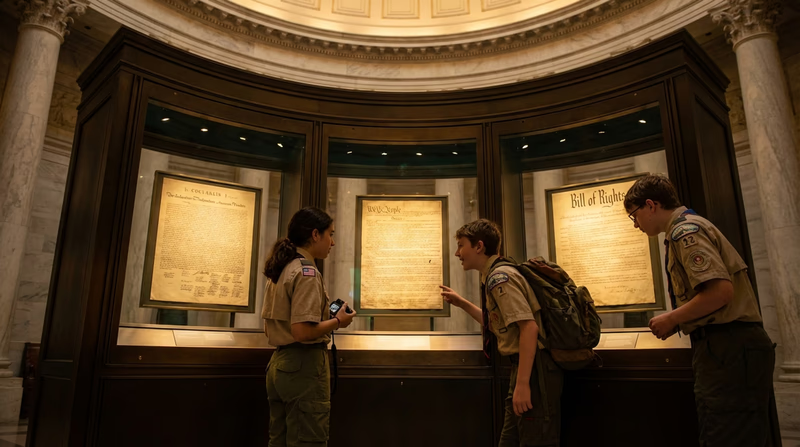
Cultural citizens take pride in the shared symbols, traditions, and stories that bring Americans together. From the national anthem to the Pledge of Allegiance, from Independence Day to Veterans Day, these traditions remind us that we are all part of something larger than ourselves. Cultural citizenship also means recognizing and celebrating the diversity that makes the nation strong.
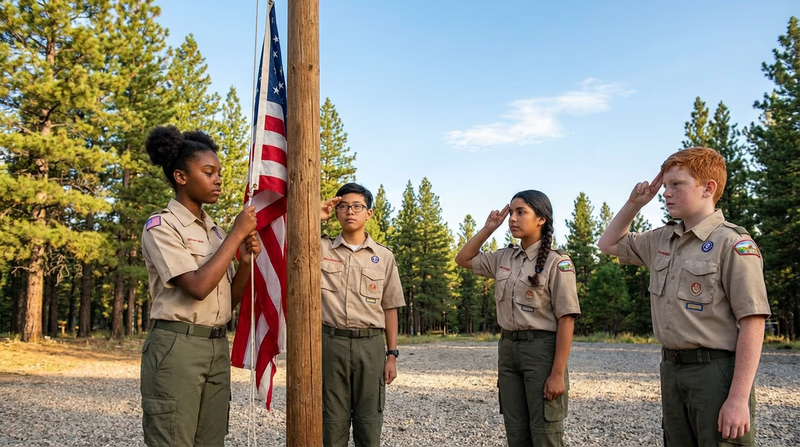
Now let’s explore the requirements for the Citizenship in the Nation merit badge, starting with the foundation of it all — the Constitution.