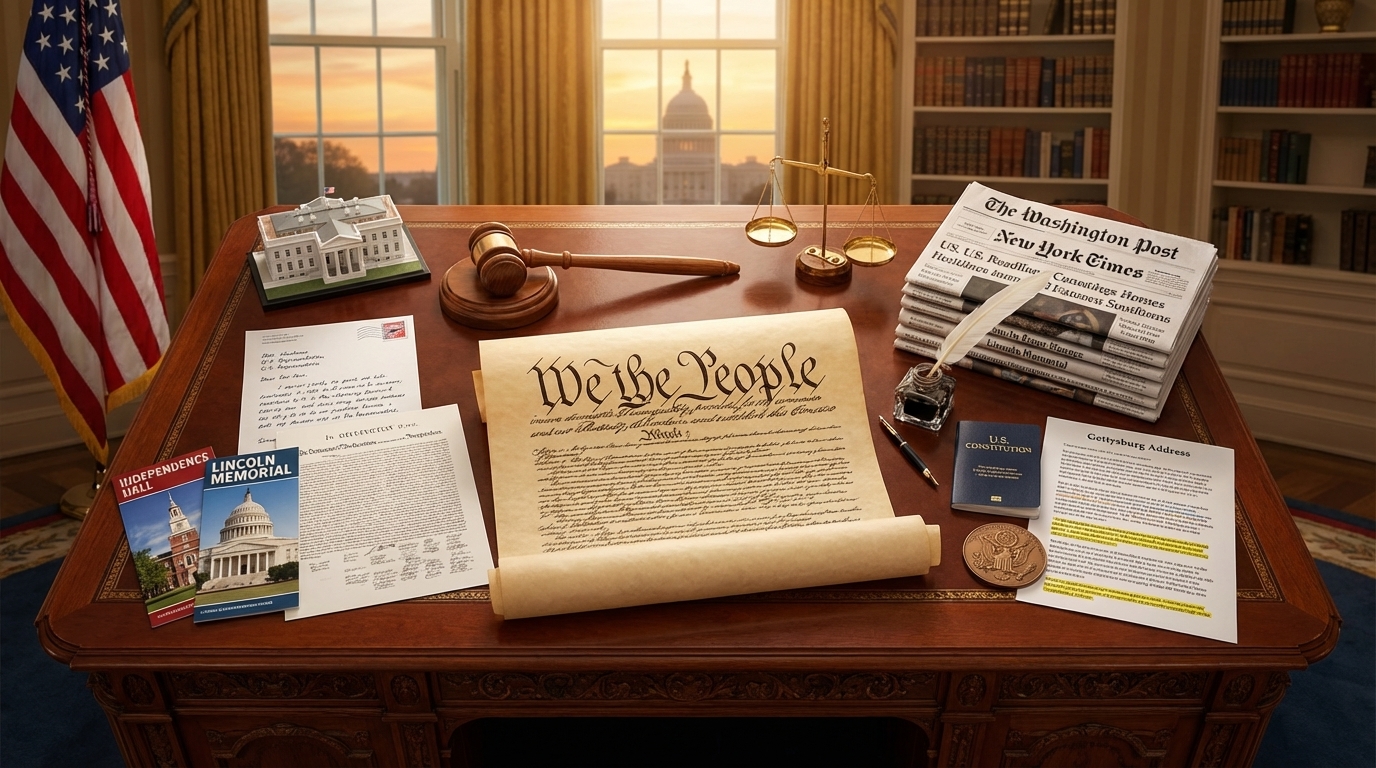
Citizenship in the Nation Merit Badge — Complete Digital Resource Guide
https://merit-badge.university/merit-badges/citizenship-in-the-nation/guide/
Introduction & Overview
You are a citizen of the United States of America. That is not just a fact on a piece of paper — it is a living, active relationship between you and your country. The Citizenship in the Nation merit badge invites you to explore what that relationship really means: how your government works, what your rights are, and how you can make your voice heard on the national stage.
This is one of the Eagle-required merit badges, and for good reason. Scouting has always emphasized duty to country. Understanding how the nation works — from the Constitution to Congress — is a big part of what it means to be a responsible, informed citizen.
Then and Now
Then — “We the People”
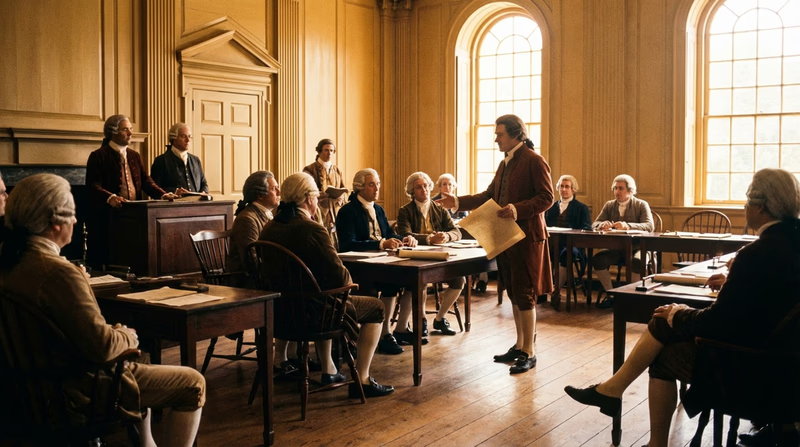
In the summer of 1787, fifty-five delegates gathered in Philadelphia to do something that had never been done before: design a government from scratch. The room was hot, the debates were fierce, and the stakes could not have been higher. These men — farmers, lawyers, soldiers — argued for months over how much power the federal government should have, how to represent large states and small states fairly, and how to protect individual rights.
The result was the Constitution of the United States, a document that has guided the nation for over two hundred years. It was not perfect — it originally excluded many people from full citizenship — but it included a way to change and improve over time through amendments.
- Purpose: Create a government that was strong enough to unite the states but limited enough to protect individual freedom
- Mindset: “We can govern ourselves — and we can build a system that gets better over time”
Now — Living the Constitution
Today, the Constitution is not a dusty museum piece. It is a working document that shapes your everyday life. When you post your opinion online, the First Amendment protects your right to speak. When a court strikes down an unfair law, that is the system of checks and balances in action. When citizens march for a cause they believe in, they are exercising rights that the founders wrote into the very foundation of the government.
- Purpose: Self-governance, protection of rights, peaceful resolution of disagreements
- Mindset: “The Constitution belongs to all of us — and every generation helps define what it means”
Get Ready! You are about to explore the ideas and documents that hold an entire nation together. Along the way, you will discover that citizenship is not something you just have — it is something you do.

Kinds of National Citizenship
Being a citizen of a nation is about much more than living within its borders. There are many ways to practice citizenship, and the best citizens use a combination of all of them.
Informed Citizenship
An informed citizen pays attention to what is happening in the country. You read the news, learn about current issues, and try to understand different points of view. You cannot make good decisions about the future of your country if you do not know what is going on.
Participatory Citizenship
Participatory citizens take action. They vote (when old enough), attend public meetings, contact their elected officials, run for office, and serve on juries. Participation is how citizens turn their opinions into real change.
Service-Oriented Citizenship
Service-oriented citizens give back to their communities and their country. This includes volunteering, joining national service programs like AmeriCorps, serving in the military, and organizing community projects. As a Scout, you already practice this kind of citizenship every time you do a service project.
Constitutional Citizenship
Constitutional citizens understand and defend the principles that the nation was built on. They know their rights, they respect the rights of others, and they stand up when those rights are threatened. This kind of citizenship requires knowledge — which is exactly what this merit badge will give you.
Cultural Citizenship
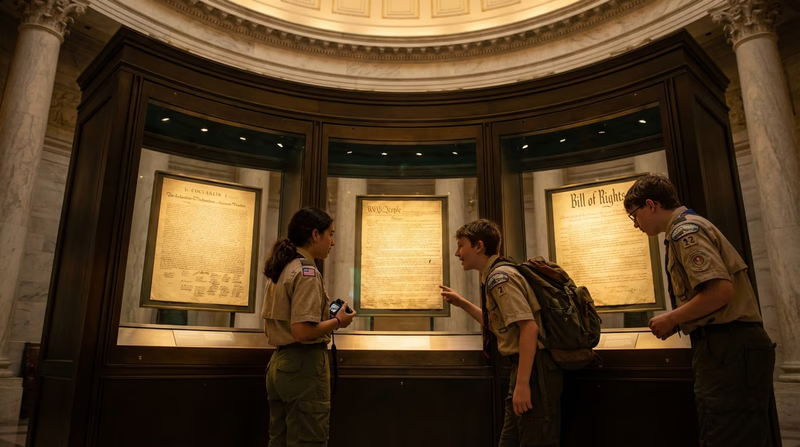
Cultural citizens take pride in the shared symbols, traditions, and stories that bring Americans together. From the national anthem to the Pledge of Allegiance, from Independence Day to Veterans Day, these traditions remind us that we are all part of something larger than ourselves. Cultural citizenship also means recognizing and celebrating the diversity that makes the nation strong.

Now let’s explore the requirements for the Citizenship in the Nation merit badge, starting with the foundation of it all — the Constitution.
Req 1 — The Constitution
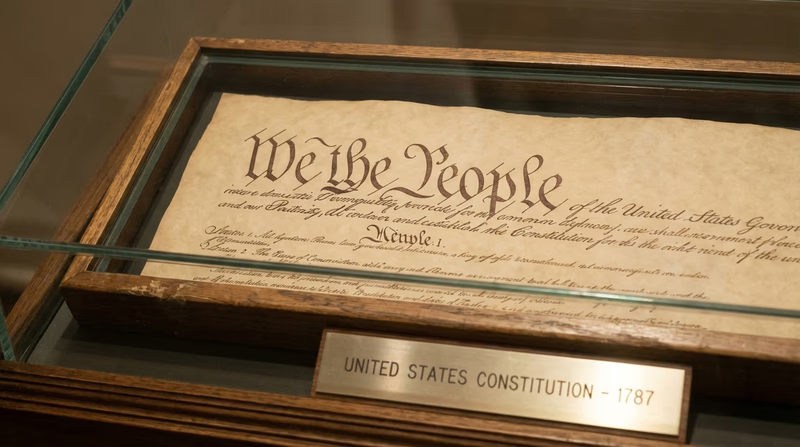
The Constitution of the United States is the supreme law of the land. Written in 1787 and ratified in 1788, it is the document that created the federal government, defined its powers, and set the rules for how the country operates. Every law passed by Congress, every decision made by the President, and every ruling handed down by the courts must follow the Constitution. If a law conflicts with it, that law can be struck down.
Think of the Constitution as the rulebook for the entire country. Just like a game needs rules so everyone plays fairly, a nation needs a constitution so the government treats people fairly and does not grab too much power.
What Does the Constitution Do?
The Constitution does four essential things:
- Creates the government. It establishes three branches — legislative, executive, and judicial — and spells out what each branch can and cannot do.
- Limits the government. It puts boundaries on government power so that no single person or group can become a tyrant.
- Protects individual rights. Through the Bill of Rights and later amendments, it guarantees freedoms like speech, religion, and due process.
- Provides a way to change. The amendment process allows the Constitution to grow and adapt as the nation evolves.
Key Principles
The Constitution reflects several core principles that the founders believed were essential to good government:
Popular Sovereignty — The power of the government comes from the people. The very first words of the Constitution, “We the People,” make this clear. The government does not rule over the people; the people choose the government.
Limited Government — The government can only do what the Constitution says it can do. Powers not specifically given to the federal government are reserved for the states or the people.
Separation of Powers — Government power is divided among three branches so that no single branch can dominate. Each branch has its own job: Congress makes laws, the President enforces laws, and the courts interpret laws.
Checks and Balances — Each branch has ways to limit the others. The President can veto a law passed by Congress. Congress can override that veto. The Supreme Court can declare a law unconstitutional. This system prevents any one branch from becoming too powerful.
Federalism — Power is shared between the national government and the state governments. Some things — like national defense and foreign policy — are handled by the federal government. Others — like education and local law enforcement — are primarily managed by the states.
Why Is It Important to Have a Constitution?
Without a constitution, there would be no agreed-upon rules for how the government should work. Leaders could make decisions without accountability. Citizens would have no guaranteed rights. Disputes between states, or between citizens and the government, would have no clear process for resolution.
The Constitution matters because it holds everyone — including the most powerful people in the country — to the same set of rules. It is the reason a President cannot simply declare themselves ruler for life. It is the reason you can criticize the government without going to jail. It is the reason every person accused of a crime gets a fair trial.
Explore More
National Constitution Center — Interactive Constitution Read the full text of the Constitution with expert analysis and commentary on every section and amendment. Link: National Constitution Center — Interactive Constitution — https://constitutioncenter.org/the-constitution National Archives — The Constitution See the original document, learn its history, and explore the stories behind its creation. Link: National Archives — The Constitution — https://www.archives.gov/founding-docs/constitution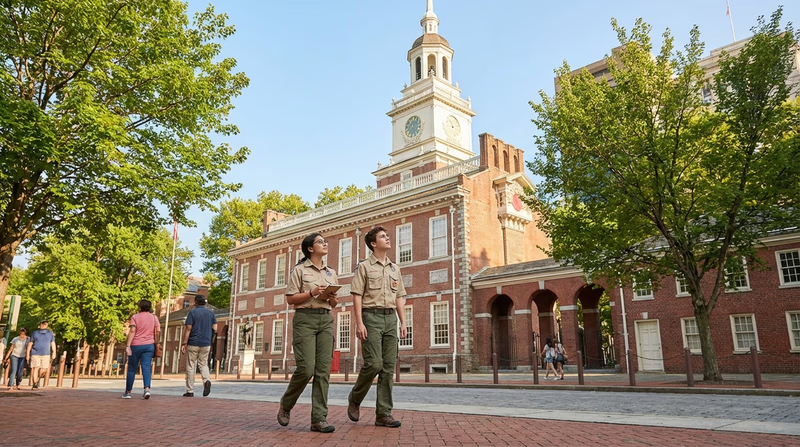
Req 2 — The Preamble
The Preamble is the opening statement of the Constitution. It is only one sentence long, but it packs in six powerful reasons for creating the entire system of government. Think of the Preamble as a mission statement — it tells you what the Constitution is trying to accomplish.
Here it is in full:
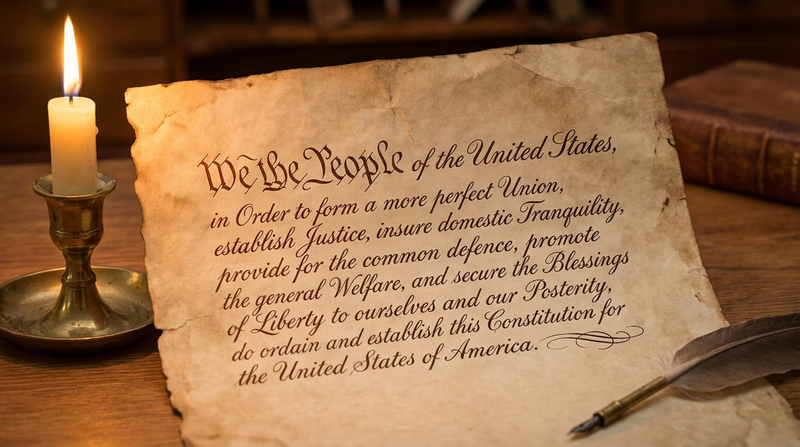
“We the People of the United States, in Order to form a more perfect Union, establish Justice, insure domestic Tranquility, provide for the common defence, promote the general Welfare, and secure the Blessings of Liberty to ourselves and our Posterity, do ordain and establish this Constitution for the United States of America.”
The Six Purposes
Let’s break down each purpose and think about what it means for your life today.
1. Form a More Perfect Union
The founders knew their first attempt at government — the Articles of Confederation — was not working. The states were acting like separate countries, arguing over trade and borders. “A more perfect Union” means a stronger, more united country where the states work together instead of against each other.
How it affects you: You can travel freely between states, use the same currency everywhere, and count on the federal government to handle issues that cross state lines — like interstate highways and national parks.
2. Establish Justice
Justice means fairness under the law. The Constitution created a court system to settle disputes, punish crimes, and protect the rights of individuals. Everyone — rich or poor, powerful or ordinary — is supposed to be treated equally by the law.
How it affects you: If someone wrongs you, you have the right to seek justice in court. If you are accused of something, you are presumed innocent until proven guilty. These protections exist because the Constitution established justice as a core purpose.
3. Insure Domestic Tranquility
“Domestic tranquility” means peace and order within the country. Before the Constitution, there were uprisings and violent conflicts between groups of citizens. The founders wanted a government strong enough to keep the peace.
How it affects you: Law enforcement, emergency services, and the National Guard all work to maintain safety in your community. When natural disasters strike, the federal government can coordinate relief efforts across state lines.
4. Provide for the Common Defence
The common defense means protecting the entire nation from threats — both foreign and domestic. Under the Articles of Confederation, there was no real national military. The Constitution gave Congress the power to raise armies and navies and the President the role of commander-in-chief.
How it affects you: The military, the Coast Guard, and agencies like the Department of Homeland Security all exist because of this purpose. They work to keep you, your family, and your community safe from external threats.
5. Promote the General Welfare
The “general welfare” means the well-being of all the people. The government should work to improve the lives of its citizens — not just the wealthy or powerful, but everyone. This purpose is broad and has been interpreted in many ways over the centuries.
How it affects you: Public schools, clean water standards, food safety inspections, national weather forecasts, and programs that help families in need — all of these are ways the government promotes the general welfare.
6. Secure the Blessings of Liberty
Liberty means freedom. The founders wanted to make sure that the freedoms they fought for would last not just for their generation, but for all future generations — “our Posterity.” That includes you.
How it affects you: Your freedom to speak your mind, practice your faith, and live your life without unnecessary government interference all come from this purpose. The Constitution was designed to protect these freedoms forever.
Making It Personal
When your counselor asks how these purposes affect your family and community, think about specific, real examples from your own life. Here are some questions to get you started:
Reflection Questions
Connect each purpose to your own experience- Form a more perfect Union: Has your family ever moved to a different state? What made that transition smooth?
- Establish Justice: Do you know anyone who has served on a jury or gone to court to settle a dispute?
- Insure domestic Tranquility: What public safety services operate in your community? Think about police, fire, and emergency responders.
- Provide for the common defence: Do you know anyone who serves or has served in the military?
- Promote the general Welfare: What public services does your family use regularly? Consider schools, libraries, roads, and parks.
- Secure the Blessings of Liberty: What freedoms do you exercise every day without even thinking about them?
Explore More
National Constitution Center — The Preamble An in-depth look at the Preamble with expert analysis of each phrase and its historical context. Link: National Constitution Center — The Preamble — https://constitutioncenter.org/the-constitution/preamble
Req 3 — Three Branches of Government
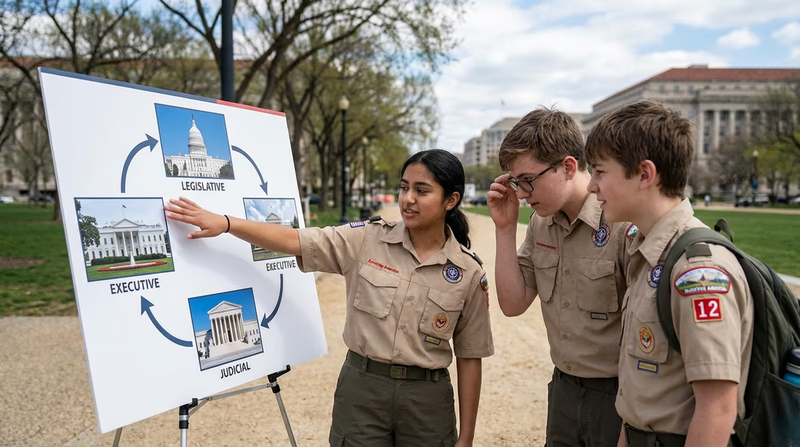
The three branches of the United States government are the Legislative Branch, the Executive Branch, and the Judicial Branch. The founders deliberately split the government into three parts so that no single person or group could hold all the power. This idea — called separation of powers — is one of the most important concepts in American government.
The Legislative Branch — Congress
What it does: Makes the laws. Congress is made up of two chambers: the Senate (100 members, two per state) and the House of Representatives (435 members, divided among the states by population). Together, they debate and vote on new laws, set the federal budget, and declare war.
Key powers:
- Write and pass laws
- Control the federal budget and taxes
- Approve treaties and presidential appointments (Senate)
- Impeach federal officials, including the President
- Declare war
The Executive Branch — The President
What it does: Enforces the laws. The President is the head of the executive branch, which includes the Vice President, the Cabinet (heads of federal departments like Defense, Education, and Justice), and millions of federal employees. The President signs bills into law, commands the military, and represents the nation to the world.
Key powers:
- Sign or veto bills passed by Congress
- Serve as Commander-in-Chief of the armed forces
- Negotiate treaties with other countries
- Appoint federal judges, ambassadors, and Cabinet members
- Issue executive orders
The Judicial Branch — The Courts
What it does: Interprets the laws. The judicial branch is led by the Supreme Court, the highest court in the country. Below it are federal appeals courts and district courts. Judges decide whether laws and government actions follow the Constitution.
Key powers:
- Hear cases involving federal law and the Constitution
- Decide whether laws are constitutional (called judicial review)
- Settle disputes between states
- Interpret what the Constitution means in specific situations
Why Divide Power?
The founders had lived under a king who held all the power. They had seen what happens when one person or group can make the rules, enforce the rules, and judge whether the rules were followed — all at the same time. The result was tyranny.
By dividing power among three branches, they made sure that:
- No single branch can dominate. Each branch has its own job, and none of them can do the other’s job.
- Disagreements are resolved through debate, not force. When branches disagree, they have to negotiate and compromise.
- The government moves deliberately. It is harder to pass a bad law when multiple branches have to agree.
Checks and Balances in Action
Each branch has specific powers to limit the other two. Here are the most important ones:
How the Branches Check Each Other
Key checks and balances- Congress checks the President: Can override a presidential veto with a two-thirds vote in both chambers. The Senate must approve treaties and major appointments. Congress can impeach and remove the President.
- Congress checks the Courts: Can propose constitutional amendments to override court decisions. The Senate confirms or rejects judicial nominees. Congress sets the number of justices on the Supreme Court.
- The President checks Congress: Can veto bills passed by Congress. Can call special sessions of Congress. Uses the “bully pulpit” to rally public support for or against legislation.
- The President checks the Courts: Nominates all federal judges, including Supreme Court justices. Can grant pardons for federal crimes.
- The Courts check Congress: Can declare laws unconstitutional through judicial review. Interpret what laws actually mean when their language is unclear.
- The Courts check the President: Can declare executive actions unconstitutional. Review executive orders and federal regulations for legality.
How Citizens Get Involved
You do not have to hold office to participate in government. Citizens can be involved with all three branches:
Legislative Branch:
- Contact your senators and representatives by phone, email, or letter
- Attend town halls hosted by members of Congress
- Testify at congressional hearings (some accept written testimony from the public)
- Vote for your representatives (when old enough)
Executive Branch:
- Vote for the President (when old enough)
- Apply for jobs in federal agencies
- Participate in public comment periods on proposed regulations
- Serve in the military or national service programs
Judicial Branch:
- Serve on a jury when called
- Follow and discuss court decisions
- File lawsuits to protect your rights
- Attend court proceedings (most federal courts are open to the public)

Explore More
USA.gov — Branches of the U.S. Government The official U.S. government resource explaining how each branch works and how they interact. Link: USA.gov — Branches of the U.S. Government — https://www.usa.gov/branches-of-government Congress.gov — How Laws Are Made Follow a bill from introduction to the President's desk and learn how the legislative process works step by step. Link: Congress.gov — How Laws Are Made — https://www.congress.gov/legislative-processReq 4a — Declaration of Independence
The Declaration of Independence is the document that started the United States. Adopted on July 4, 1776, it announced to the world that the thirteen American colonies were breaking away from British rule and forming a new, independent nation. But it did much more than declare independence — it laid out a philosophy of government that still shapes the country today.
Why Was It Written?
By 1776, tensions between the American colonies and Great Britain had reached a breaking point. The colonists were being taxed without any say in the British Parliament. British soldiers were quartered in their homes. Their protests were met with force. The Continental Congress decided it was time to formally declare independence — and explain to the world why.
Thomas Jefferson, a 33-year-old delegate from Virginia, was chosen to draft the document. He worked on it for about two weeks, drawing on ideas from philosophers like John Locke and from the Virginia Declaration of Rights. After edits by Benjamin Franklin, John Adams, and the full Congress, the final version was adopted.
The Big Ideas
The Declaration contains some of the most famous words in American history:
“We hold these truths to be self-evident, that all men are created equal, that they are endowed by their Creator with certain unalienable Rights, that among these are Life, Liberty and the pursuit of Happiness.”
Let’s unpack what this means:
- “Self-evident” — These truths are obvious and do not need to be proven.
- “All men are created equal” — Every person has the same basic worth and dignity. (The nation has struggled throughout its history to fully live up to this ideal, but the ideal itself has inspired every generation to push closer.)
- “Unalienable Rights” — These rights cannot be taken away by any government. They belong to you simply because you are a human being.
- “Life, Liberty and the pursuit of Happiness” — The three rights the founders considered most fundamental. Government exists to protect these rights.
The Declaration also states that if a government fails to protect these rights, the people have the right to change it or replace it. This was a revolutionary idea — literally.
Why It Still Matters
The Declaration is not a law. It does not create any rules or government structures. But it is the philosophical foundation of the entire American experiment. Every time the nation has faced a moral crisis — slavery, women’s suffrage, civil rights — people have pointed back to the Declaration’s promise that “all men are created equal” and demanded that the country live up to it.
Abraham Lincoln called the Declaration’s principles the “electric cord” that links all Americans together, regardless of background. Martin Luther King Jr. described it as a “promissory note” that the nation had yet to fully honor. The Declaration is not just a historical artifact — it is a living challenge to every generation.
Explore More
National Archives — Declaration of Independence Read the full text of the Declaration, learn about the signers, and explore the story behind the document. Link: National Archives — Declaration of Independence — https://www.archives.gov/founding-docs/declaration National Constitution Center — Declaration of Independence Expert analysis of the Declaration's key passages and their meaning in American history. Link: National Constitution Center — Declaration of Independence — https://constitutioncenter.org/the-constitution/historic-document-library/detail/declaration-of-independenceReq 4b — Bill of Rights & 14th Amendment
When the Constitution was first written, it focused on the structure of the government — how Congress works, what the President does, how courts operate. But many people were worried. Where were the protections for individual citizens? What would stop the new government from trampling on the very freedoms the Revolution was fought to win?
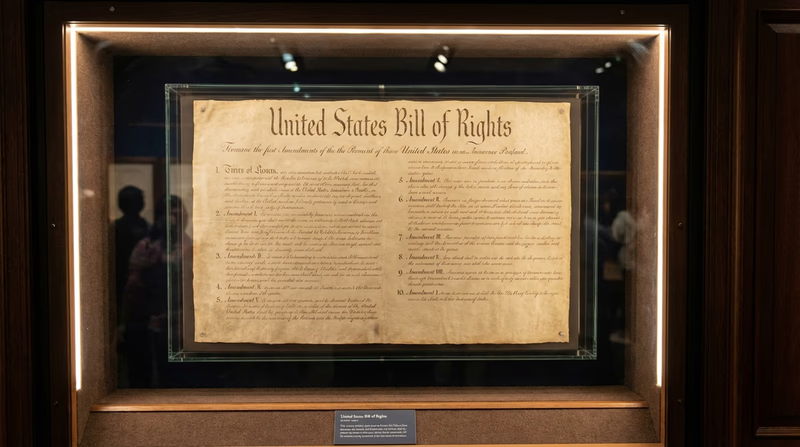
The answer was the Bill of Rights: the first ten amendments to the Constitution, ratified in 1791. These amendments guarantee specific freedoms and protections that the government cannot take away.
The Bill of Rights — Your Freedoms at a Glance
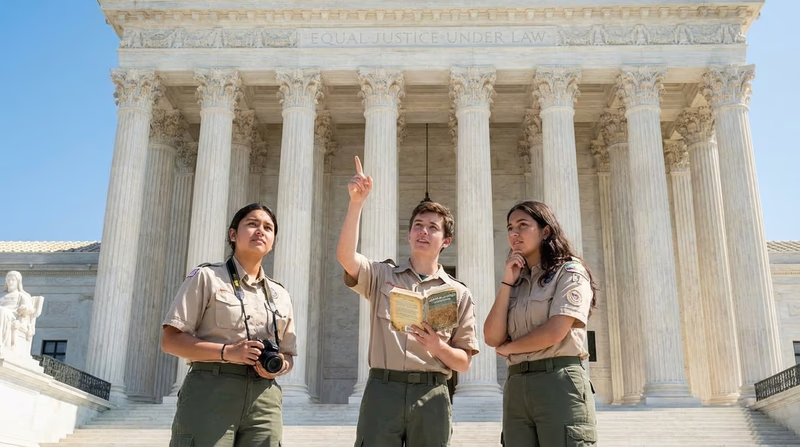
First Amendment — Protects five fundamental freedoms: religion, speech, the press, peaceful assembly, and the right to petition the government. This single amendment is the backbone of American liberty.
Second Amendment — Protects the right to keep and bear arms.
Third Amendment — Prevents the government from forcing you to house soldiers in your home during peacetime. (This was a real problem during the colonial era.)
Fourth Amendment — Protects you from unreasonable searches and seizures. The police generally need a warrant — approved by a judge — before they can search your home or belongings.
Fifth Amendment — Guarantees due process of law. You cannot be tried twice for the same crime, forced to testify against yourself, or have your property taken without fair compensation.
Sixth Amendment — Guarantees the right to a speedy and public trial, an impartial jury, and a lawyer if you are accused of a crime.
Seventh Amendment — Guarantees a jury trial in most civil (non-criminal) cases.
Eighth Amendment — Prohibits excessive bail, excessive fines, and cruel and unusual punishment.
Ninth Amendment — States that the people have rights beyond those specifically listed in the Constitution. Just because a right is not mentioned does not mean it does not exist.
Tenth Amendment — Powers not given to the federal government are reserved for the states or the people. This reinforces the principle of limited government.
The First Amendment in Your Daily Life
The First Amendment affects your life more than you might realize:
- Freedom of religion: You can practice any faith — or none — without government interference.
- Freedom of speech: You can express your opinions, even unpopular ones, without fear of government punishment.
- Freedom of the press: Journalists can investigate and report on the government without censorship.
- Freedom of assembly: You can gather peacefully with others to protest, rally, or demonstrate.
- Right to petition: You can formally ask the government to change a policy or address a problem.
The 14th Amendment — Equal Protection for All
Ratified in 1868, after the Civil War, the 14th Amendment is one of the most important amendments ever added to the Constitution. It has three key provisions:
Citizenship Clause — Anyone born or naturalized in the United States is a citizen. This overturned the Supreme Court’s Dred Scott decision, which had ruled that African Americans could not be citizens.
Due Process Clause — No state can deprive any person of life, liberty, or property without due process of law. This extended the protections of the Bill of Rights to apply against state governments, not just the federal government.
Equal Protection Clause — No state can deny any person the equal protection of the laws. This clause has been the foundation for landmark civil rights cases, including Brown v. Board of Education (which ended school segregation) and Obergefell v. Hodges (which established marriage equality).
Why It Matters
The Bill of Rights and the 14th Amendment work together to protect you from government overreach — at both the federal and state level. Without them, the Constitution would create a powerful government but offer no shield against that power. With them, every citizen has a set of rights that no law, no President, and no court can take away.
Explore More
Bill of Rights Institute Explore each amendment in the Bill of Rights with primary sources, explanations, and lesson resources. Link: Bill of Rights Institute — https://billofrightsinstitute.org/primary-sources/bill-of-rights National Archives — The Bill of Rights View the original document, read the full text, and learn about the ratification process. Link: National Archives — The Bill of Rights — https://www.archives.gov/founding-docs/bill-of-rightsReq 4c — E Pluribus Unum
E Pluribus Unum is a Latin phrase that means “Out of many, one.” It has been a defining idea of the United States since the very beginning — appearing on the Great Seal of the United States, which was adopted in 1782, even before the Constitution was written.
Where Did It Come From?
When the Continental Congress declared independence in 1776, they immediately formed a committee to design a national seal — a symbol that would represent the new nation to the world. Benjamin Franklin, John Adams, and Thomas Jefferson were all on the committee. After six years and three different committees, the final seal was approved.
The motto “E Pluribus Unum” was placed on a ribbon held in the beak of the bald eagle at the center of the seal. The phrase came from an ancient Latin poem and had been used on the cover of a popular colonial magazine called The Gentleman’s Magazine, where it described how many articles came together in a single publication. For the new nation, it described how many states — and many people — came together to form a single country.
What Does It Mean?
On the surface, “Out of many, one” described the thirteen original colonies uniting to form one nation. But the motto has always meant more than that. It captures the idea that the United States is a country made up of people from many different backgrounds, cultures, and beliefs — and that this diversity is a source of strength, not weakness.
Think about it this way:
- Out of many states — one nation
- Out of many backgrounds — one people
- Out of many perspectives — one democracy
Where You Will Find It
The motto appears on many national symbols and places:
- The Great Seal — on official government documents, passports, and the back of the one-dollar bill
- U.S. coins and paper currency — on virtually every denomination
- The Presidential Seal — above the eagle’s head
- Government buildings — carved into stone on federal buildings across Washington, D.C.
- Military insignia — on the seals of many branches and agencies

Why It Matters Today
“E Pluribus Unum” is a reminder that the strength of the United States has always come from its ability to bring together people with different ideas, different traditions, and different stories. The country was founded by immigrants. It has been built by people from every continent on Earth. Every time the nation has faced a challenge — whether a war, a natural disaster, or a social crisis — it has survived because people chose to work together.
As a Scout, you see this principle at work every time your patrol or troop comes together. Each person brings different skills, different strengths, and different perspectives. When you combine them, the whole is greater than the sum of its parts. That is “E Pluribus Unum” in action.
Explore More
U.S. Department of State — The Great Seal Learn about the history and symbolism of the Great Seal, including the motto E Pluribus Unum and every element of the design. Link: U.S. Department of State — The Great Seal — https://www.state.gov/the-great-seal/
Req 5 — Following the News
An informed citizen pays attention to what is happening in the country. This requirement asks you to do something that every good citizen should do regularly: follow the news. For five days, you will keep track of what is happening at the national level and think critically about how these issues affect real people — including you.
How to Follow the News
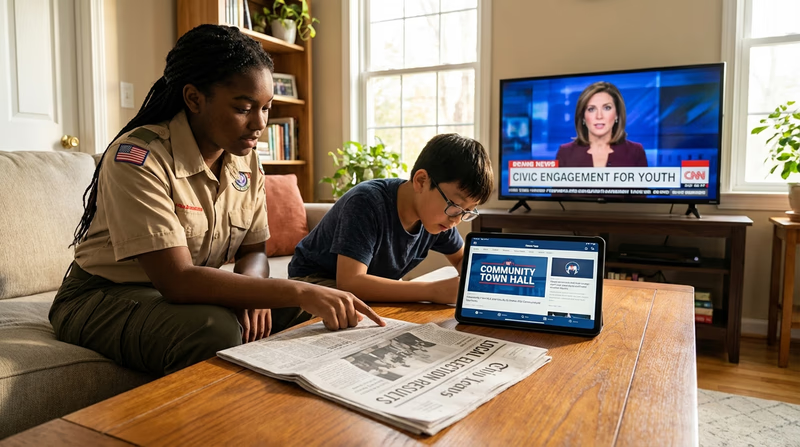
You have two options: watch the national evening news on television or read the main stories on a national news website or in a newspaper. Either one works. Here are some tips for each:
Television news: The major broadcast networks (ABC, CBS, NBC, PBS) air national evening news programs. PBS NewsHour is especially good for in-depth coverage. Set a daily time to watch — treating it like a homework assignment for the week will help you stay consistent.
Newspaper or news website: National outlets like The Washington Post, The New York Times, The Associated Press, NPR, and USA Today all cover national issues. Focus on the main stories — the headlines and top articles — rather than trying to read everything.
What to Look For
As you follow the news each day, pay attention to stories that involve the federal government, national policy, or issues that affect the whole country. Here are some common categories:
- Legislation: Is Congress debating a new law? What is it about?
- Executive actions: Has the President signed an executive order, given a speech, or made a policy announcement?
- Court decisions: Has the Supreme Court or a federal court issued a major ruling?
- National security: Are there stories about the military, international relations, or homeland security?
- Economy: What is happening with jobs, inflation, trade, or the federal budget?
- Social issues: Are there stories about education, healthcare, civil rights, immigration, or the environment?
Daily News Tracker
Record these details each day- Date: What day is it?
- Source: Which news program or website did you use?
- Top stories: List 2–3 main national stories.
- Key people: Who was involved? (President, members of Congress, Supreme Court justices, etc.)
- Branch of government: Which branch was most involved in each story?
- Your reaction: What did you find most interesting or surprising?

Choosing Your Issue
After five days, you need to pick one national issue to discuss in depth with your counselor. Choose an issue that:
- You find genuinely interesting. If you care about the topic, your discussion will be more engaging.
- Has a clear connection to your life. The requirement asks you to explain how it affects you, your family, and your community.
- You can explain clearly. Make sure you understand the basics — who is involved, what the disagreement or challenge is, and what different people think about it.
Connecting the Issue to Your Life
This is the most important part of the requirement. Your counselor does not just want to know what the issue is — they want to know why it matters to you personally.
Thinking Critically About the News
Not all news is the same. Learning to evaluate what you are reading or watching is an essential skill for any citizen.
Here are some questions to ask yourself as you consume the news:
- Who wrote or reported this? Is it a trained journalist working for a known news organization?
- Is this news or opinion? News reports facts. Opinion pieces present someone’s viewpoint. Both are valuable, but they are different.
- Are multiple sides presented? Good journalism shows different perspectives on an issue.
- Can I find this story from other sources? If only one outlet is reporting it, proceed with caution.
Explore More
PBS NewsHour Watch or stream the PBS NewsHour for in-depth, balanced coverage of national and international news. Link: PBS NewsHour — https://www.pbs.org/newshour/ C-SPAN Watch live coverage of Congress, the White House, and the Supreme Court — unfiltered and without commentary. Link: C-SPAN — https://www.c-span.org/Req 6 — A Historic Speech
Throughout American history, leaders have used speeches to inspire, challenge, comfort, and unite the nation. The right words at the right moment can change the course of history. This requirement asks you to choose one of these speeches, study it deeply, and explain why it still matters.
Choosing Your Speech
First, get your counselor’s approval for the speech you want to study. Pick one that genuinely interests you. Here are some well-known speeches to consider — but you are not limited to this list:
- George Washington’s Farewell Address (1796) — Warned against political parties and foreign entanglements as he left office after two terms.
- Abraham Lincoln’s Gettysburg Address (1863) — Redefined the meaning of the Civil War and the promise of equality in just 272 words.
- Frederick Douglass, “What to the Slave Is the Fourth of July?” (1852) — A powerful challenge to the nation to live up to its founding ideals.
- Franklin D. Roosevelt’s First Inaugural Address (1933) — “The only thing we have to fear is fear itself” — spoken during the Great Depression.
- Franklin D. Roosevelt’s “Day of Infamy” Speech (1941) — Asked Congress to declare war after the attack on Pearl Harbor.
- John F. Kennedy’s Inaugural Address (1961) — “Ask not what your country can do for you — ask what you can do for your country.”
- Martin Luther King Jr.’s “I Have a Dream” Speech (1963) — Called for racial equality and justice at the March on Washington.
- Ronald Reagan’s “Tear Down This Wall” Speech (1987) — Called on the Soviet Union to open the Berlin Wall.
How to Analyze Your Speech
Once you have chosen a speech, work through each part of the requirement. Here is a framework to guide your research:
Who the author was (6a): This is more than just a name. Learn about the person’s background. What was their role at the time? What experiences shaped their views? Why were they the person delivering this speech at this moment?
The historical context (6b): What was happening in the country and the world when this speech was given? Was there a war, an economic crisis, a social movement, or a political turning point? Understanding the context helps you understand why the speech mattered so much.
The nation’s difficulties (6c): What specific problems or challenges was the nation facing? Why did the speaker feel compelled to address the public? Was there a crisis of confidence, a threat to the nation’s values, or a need to rally people to action?
What the author said (6d): Summarize the main message of the speech. What was the speaker’s argument? What did they ask the audience to do, believe, or understand? You do not need to memorize the entire speech, but you should be able to explain its key points in your own words.
Why the speech is important (6e): How did this speech affect the nation? Did it change public opinion, lead to new policies, inspire a movement, or unify people during a crisis? Why do we still study it today?
A personally meaningful passage (6f): This is your chance to make a personal connection. Choose one or two sentences that really speak to you and explain why. There is no wrong answer — what matters is that you can articulate why those words resonate with you.
Speech Analysis Checklist
Make sure you cover each point- The speaker: Who they were, their background, and their role at the time.
- The context: What was happening in America and the world when the speech was given.
- The challenge: What difficulties or crises the nation was facing.
- The message: A clear summary of what the speaker said and argued.
- The impact: Why the speech is historically important.
- Your connection: A specific passage that is meaningful to you and why.
Making Your Speech Come Alive
When you discuss the speech with your counselor, think about how to make it vivid and engaging. Here are some ideas:
- Read a key passage aloud. Let your counselor hear the words the way the audience heard them.
- Show a timeline. Place the speech on a timeline with other events of the era to show the context.
- Compare it to today. Are the issues the speech addressed still relevant? How have things changed — or not changed — since then?
- Explain your personal connection. Why does this speech matter to you, specifically? Does it connect to your own values, experiences, or hopes for the country?
Explore More
American Rhetoric — Top 100 Speeches Browse the top 100 American speeches of the 20th century with full texts, audio, and video where available. Link: American Rhetoric — Top 100 Speeches — https://www.americanrhetoric.com/top100speechesall.html National Archives — Milestone Documents Explore 100 milestone documents in American history, including many famous speeches and their historical context. Link: National Archives — Milestone Documents — https://www.archives.gov/milestone-documents
Req 7 — Exploring National Sites
This is your chance to get out into the real world and experience your nation’s history and government firsthand. You need to complete two of the four options listed above. Read through all of them and choose the two that work best for you based on what is available in your area and what interests you most.
Option A: Visit a National Historic Landmark or Historic Place
The United States has over 2,600 National Historic Landmarks and more than 95,000 places on the National Register of Historic Places. There is almost certainly one near you. These sites could be anything from a battlefield to a courthouse, a bridge to a birthplace, a factory to a farmstead.
How to find one:
Use the National Park Service’s search tool (linked below) to find historic landmarks and registered places in your state or county. You might be surprised — there could be one within walking distance of your home.
What to look for during your visit:
- What happened here? What is the historical significance of this place?
- When was it built or when did the historic events occur?
- Who were the key people involved?
- Why was it designated as a historic landmark or added to the National Register?
- What did you find most interesting or surprising?
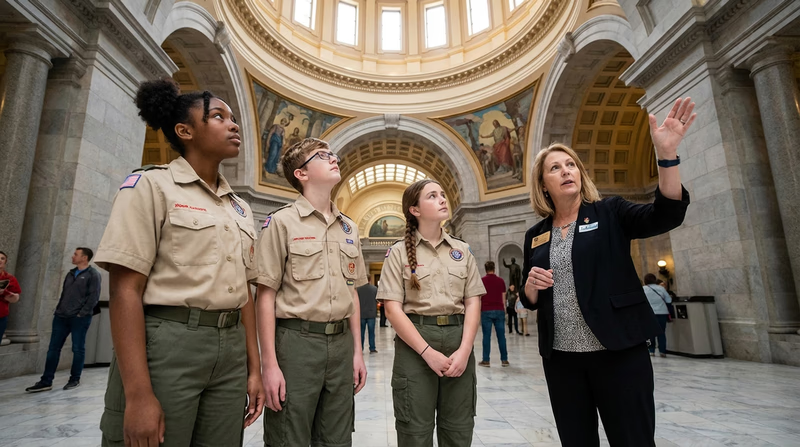
Option B: Tour a Capitol Building
Your state capitol or the U.S. Capitol in Washington, D.C. is where elected representatives meet to debate and pass laws. Touring one of these buildings connects the abstract idea of “the legislative branch” to a real, physical place.
State capitol tips:
- Most state capitols offer free guided tours. Check your state’s legislature website for tour schedules.
- Look for the legislative chambers (House and Senate), the governor’s office, and any historical exhibits.
- Ask your tour guide about the building’s history, architecture, and any famous events that happened there.
U.S. Capitol tips:
- Free tours are available through the U.S. Capitol Visitor Center. Reserve tickets online in advance.
- You can also contact your representative or senator’s office to arrange a staff-led tour, which may include areas not on the public tour.
- The Capitol Visitor Center has excellent exhibits about the history of Congress.
Option C: Tour a Federal Facility
A federal facility is any building or location that is operated by the United States government. This could include:
- A post office — one of the oldest federal services, connecting every community in the country
- A federal courthouse — where federal laws are interpreted and applied
- A military base or installation — where members of the armed forces train and serve (some offer public tours)
- A Veterans Affairs (VA) hospital or clinic — where veterans receive healthcare
- A federal research laboratory — like a NOAA weather station, a USDA research center, or a NASA facility
- A national park visitor center — managed by the National Park Service, a federal agency
What to learn during your visit:
- What is this facility’s mission? What does it do?
- How does it serve the local community?
- How does it serve the nation as a whole?
- Who works here, and what are their roles?
- How is it funded? (Hint: your tax dollars!)
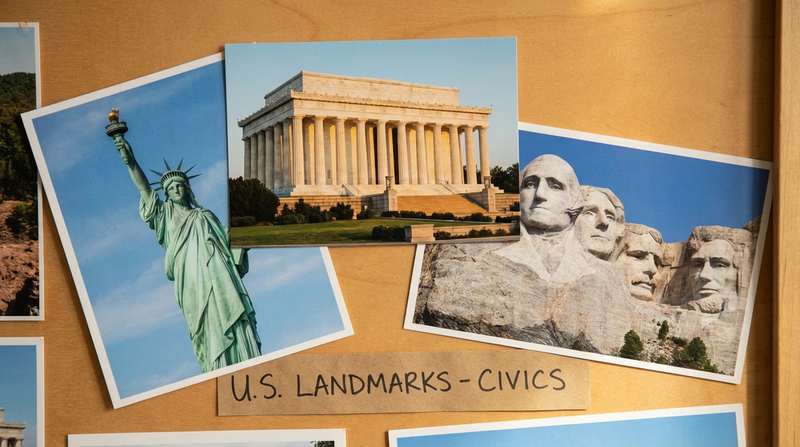
Option D: Research a National Monument
If visiting a physical site is not possible, this option lets you research a United States national monument from home using books, the internet, and other resources.
Some national monuments to consider:
- Statue of Liberty — A gift from France, symbolizing freedom and welcome
- Lincoln Memorial — Honors the 16th President and the preservation of the Union
- Mount Rushmore — Features the carved faces of four Presidents in the Black Hills of South Dakota
- Washington Monument — The tallest structure in Washington, D.C., honoring the first President
- Martin Luther King Jr. Memorial — Honors the civil rights leader on the National Mall
- Pearl Harbor National Memorial — Commemorates the attack that brought the U.S. into World War II
- Statue of Liberty / Ellis Island — Gateway for millions of immigrants arriving in America
- Devils Tower — The first national monument, designated by President Theodore Roosevelt in 1906
What to research:
- When and why was this monument created?
- Who or what does it honor or commemorate?
- What is the monument’s design, and what does the design symbolize?
- Why is it important to the nation’s citizens?
- Would you want to visit it in person? Why or why not?
Explore More
National Park Service — Find a Park Search for national parks, monuments, historic sites, and other NPS-managed places near you. Link: National Park Service — Find a Park — https://www.nps.gov/findapark/index.htm National Register of Historic Places Search the database of over 95,000 historic places across the United States to find one near you. Link: National Register of Historic Places — https://www.nps.gov/subjects/nationalregister/database-research.htm U.S. Capitol Visitor Center Plan your visit to the U.S. Capitol, schedule a free tour, and explore the Capitol's history and architecture. Link: U.S. Capitol Visitor Center — https://www.visitthecapitol.gov/Req 8 — Contacting Congress
This is where everything comes together. You have learned about the Constitution, the branches of government, your rights, and the national issues that affect your life. Now it is time to do what citizens do — contact your elected representatives and tell them what you think.
Who Represents You?
Every American is represented by three people in Congress:
- Two U.S. Senators — Each state has exactly two senators, regardless of population. They serve six-year terms.
- One U.S. Representative — Representatives are assigned by congressional district based on population. They serve two-year terms.
You need to know the names of all three of your representatives. Here is how to find them:
USA.gov — Find Your Elected Officials Enter your address to find your U.S. senators and representative, along with their contact information. Link: USA.gov — Find Your Elected Officials — https://www.usa.gov/elected-officials House.gov — Find Your Representative Enter your zip code to find your U.S. Representative and link directly to their website. Link: House.gov — Find Your Representative — https://www.house.gov/representatives/find-your-representativeWriting Your Letter
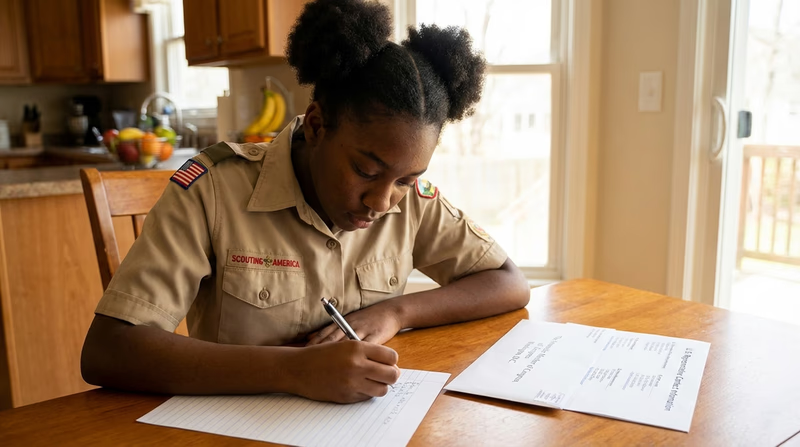
The requirement says to write to your representative explaining your views on a national issue. This is a real letter (or email) to a real person in government. Here is how to write an effective one:
Step 1: Choose your issue. Pick a national issue you care about. It could be the same issue you followed in Requirement 5, or something different. It should be an issue that Congress has the power to act on.
Step 2: Choose your representative. You can write to either of your senators or your representative. Pick the one whose committee assignments are most relevant to your issue, or simply choose the one who represents your congressional district.
Step 3: Write your letter. Keep it clear, respectful, and specific.
Letter Structure
A strong letter to Congress includes these elements- Your name and address: So they know you are a constituent (a person who lives in their district or state).
- A clear subject: State the issue right away. “I am writing about [issue].”
- Your position: Say what you think should happen. “I believe Congress should [action].”
- Your reasons: Give 2–3 specific reasons for your position. Use facts, not just emotions.
- A personal connection: Explain how this issue affects you, your family, or your community.
- A respectful close: Thank them for their time and ask for a response.
- Your signature: Sign your letter if mailing it; include your full name if emailing.
Sample Letter Format
Here is a general format you can follow. Replace the brackets with your own information:
Dear [Senator/Representative] [Last Name],
My name is [Your Name], and I am a [grade/age] from [City, State]. I am a member of [Troop/Pack Number] in the Boy Scouts of America, and I am working on my Citizenship in the Nation merit badge.
I am writing to share my views on [national issue]. I believe that [your position on the issue].
[Reason 1 — a fact or argument supporting your position.]
[Reason 2 — another supporting point.]
This issue matters to me because [personal connection — how it affects you, your family, or your community].
Thank you for taking the time to read my letter. I would appreciate hearing your thoughts on this issue.
Sincerely, [Your Name] [Your Address]
Sending Your Letter
You have several options for getting your letter to your representative:
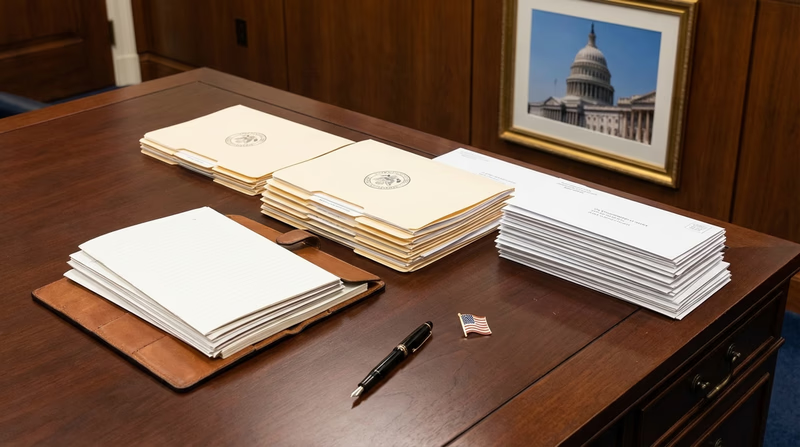
- Email through their website: Every member of Congress has a website with a contact form. This is the fastest method.
- U.S. mail: Address your letter to their Washington, D.C. office or their local district office. Mail may take longer to receive a response.
- Phone call: If you prefer, you can also call their office. A staff member will note your position. (This does not replace the written correspondence required for the merit badge, but it is a good supplement.)
What to Expect
Members of Congress receive thousands of letters, emails, and phone calls. A staff member will read your message and may send a form response, a personalized letter, or both. It can take several weeks to receive a reply.
Explore More
Congress.gov The official source for federal legislative information. Search for bills, resolutions, and congressional activity. Link: Congress.gov — https://www.congress.gov/Extended Learning
A. Introduction
Congratulations — you have worked through every requirement of the Citizenship in the Nation merit badge! You now understand the Constitution, the branches of government, your rights, and how to make your voice heard. But citizenship is not a badge you earn once and put away. It is a lifelong practice, and there is so much more to explore.
B. Deep Dive: How a Supreme Court Case Changes the Country
You have learned that the judicial branch interprets the Constitution. But what does that actually look like in practice? Understanding how a Supreme Court case works helps you see how nine justices can shape the lives of hundreds of millions of people.
A case reaches the Supreme Court when someone believes a law or government action violates the Constitution. The Court receives about 7,000 requests per year but agrees to hear only about 70–80 cases. These are usually cases where lower courts have disagreed or where a major constitutional question needs to be settled.
Once a case is accepted, both sides submit written arguments called “briefs.” Then the justices hear oral arguments — typically 30 minutes per side — where lawyers answer tough questions from the bench. After that, the justices discuss the case privately, take a vote, and the majority writes an opinion explaining their decision and reasoning. Justices who disagree write “dissenting opinions,” which sometimes become the basis for future changes in the law.
Some cases that have shaped modern America:
- Brown v. Board of Education (1954) — Declared racial segregation in public schools unconstitutional, overturning the “separate but equal” doctrine.
- Miranda v. Arizona (1966) — Required police to inform suspects of their rights before questioning (the “Miranda warning” you hear on TV shows).
- Tinker v. Des Moines (1969) — Ruled that students do not lose their First Amendment rights at the schoolhouse door. This case involved students wearing black armbands to protest the Vietnam War.
- New Jersey v. T.L.O. (1985) — Established the rules for when school officials can search a student’s belongings — balancing student privacy against school safety.
C. Deep Dive: The Amendment Process
The Constitution has been amended only 27 times in over 230 years. That is by design — the founders made the process deliberately difficult so that the Constitution could not be changed on a whim. Understanding the amendment process reveals just how significant each change to the Constitution really is.
There are two ways to propose an amendment:
- Congress proposes it. Two-thirds of both the House and the Senate must vote in favor of the proposed amendment. This is how all 27 existing amendments were proposed.
- A national convention. Two-thirds of state legislatures can call a constitutional convention to propose amendments. This method has never been used — though it has come close several times.
Once proposed, an amendment must be ratified (approved) by three-fourths of the state legislatures (38 out of 50 states). This high bar means that any successful amendment must have broad, nationwide support.
Some of the most important amendments beyond the Bill of Rights include:
- 13th Amendment (1865) — Abolished slavery throughout the United States.
- 15th Amendment (1870) — Prohibited denying the right to vote based on race.
- 19th Amendment (1920) — Guaranteed women the right to vote.
- 22nd Amendment (1951) — Limited the President to two terms in office.
- 26th Amendment (1971) — Lowered the voting age from 21 to 18.
The amendment process shows that the Constitution is a living document — designed to grow and improve as the nation’s understanding of justice and equality evolves. Each amendment represents a moment when the country decided to hold itself to a higher standard.
D. Deep Dive: How Elections Work
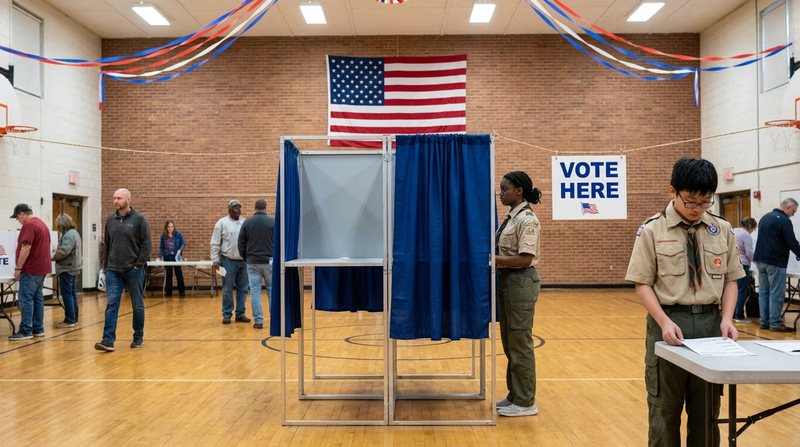
Voting is the most direct way citizens participate in their government, and understanding how elections work prepares you for the day you turn 18 and can cast your first ballot.
Primary elections are held to narrow down the candidates from each political party. Depending on your state, primaries may be “open” (any registered voter can participate) or “closed” (only registered party members can vote). Some states use caucuses instead of primaries — community meetings where voters publicly show their support for a candidate.
General elections are held on the first Tuesday after the first Monday in November. Congressional elections happen every two years (all House seats and one-third of Senate seats). Presidential elections happen every four years.
The President is not elected directly by popular vote. Instead, the Electoral College system gives each state a number of electors equal to its total congressional representation (House members + 2 senators). In most states, the candidate who wins the popular vote in that state receives all of its electoral votes. A candidate needs 270 out of 538 electoral votes to win the presidency.
You may not be old enough to vote yet, but you can still participate. Many states allow 16- and 17-year-olds to pre-register to vote. You can volunteer for campaigns, help with voter registration drives, and attend candidate forums and debates. These activities build the habits of participation that will last a lifetime.
E. Real-World Experiences
Ready to go beyond the badge? These experiences bring national citizenship to life.
Visit Washington, D.C.
Attend a Naturalization Ceremony
Visit Your State Capitol During a Legislative Session
Join a Mock Trial or Model Congress
Participate in a Citizenship Day Event
F. Organizations
These organizations offer resources, programs, and opportunities for young citizens who want to stay engaged.
An interactive museum in Philadelphia dedicated to the U.S. Constitution, with extensive online resources and educational programs for students.
Organization: National Constitution Center — https://constitutioncenter.org/
Founded by Justice Sandra Day O’Connor, iCivics provides free games, lesson plans, and resources that teach students how government works through interactive experiences.
Organization: iCivics — https://www.icivics.org/
Provides educational resources about the Constitution and the Bill of Rights, including primary sources, videos, and lesson plans for students and educators.
Organization: Bill of Rights Institute — https://billofrightsinstitute.org/
Runs civic education programs that bring students to Washington, D.C. to experience government firsthand, including Capitol Hill visits and discussions with policymakers.
Organization: Close Up Foundation — https://www.closeup.org/
Free educational resources built around C-SPAN’s coverage of Congress, the White House, and the courts — including video clips, lesson plans, and discussion guides.
Organization: C-SPAN Classroom — https://www.c-span.org/classroom/