Req 2 — The Preamble
The Preamble is the opening statement of the Constitution. It is only one sentence long, but it packs in six powerful reasons for creating the entire system of government. Think of the Preamble as a mission statement — it tells you what the Constitution is trying to accomplish.
Here it is in full:
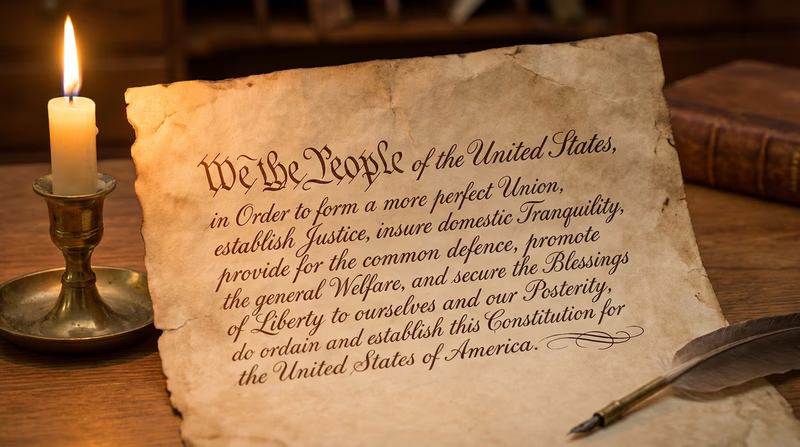
“We the People of the United States, in Order to form a more perfect Union, establish Justice, insure domestic Tranquility, provide for the common defence, promote the general Welfare, and secure the Blessings of Liberty to ourselves and our Posterity, do ordain and establish this Constitution for the United States of America.”
The Six Purposes
Let’s break down each purpose and think about what it means for your life today.
1. Form a More Perfect Union
The founders knew their first attempt at government — the Articles of Confederation — was not working. The states were acting like separate countries, arguing over trade and borders. “A more perfect Union” means a stronger, more united country where the states work together instead of against each other.
How it affects you: You can travel freely between states, use the same currency everywhere, and count on the federal government to handle issues that cross state lines — like interstate highways and national parks.
2. Establish Justice
Justice means fairness under the law. The Constitution created a court system to settle disputes, punish crimes, and protect the rights of individuals. Everyone — rich or poor, powerful or ordinary — is supposed to be treated equally by the law.
How it affects you: If someone wrongs you, you have the right to seek justice in court. If you are accused of something, you are presumed innocent until proven guilty. These protections exist because the Constitution established justice as a core purpose.
3. Insure Domestic Tranquility
“Domestic tranquility” means peace and order within the country. Before the Constitution, there were uprisings and violent conflicts between groups of citizens. The founders wanted a government strong enough to keep the peace.
How it affects you: Law enforcement, emergency services, and the National Guard all work to maintain safety in your community. When natural disasters strike, the federal government can coordinate relief efforts across state lines.
4. Provide for the Common Defence
The common defense means protecting the entire nation from threats — both foreign and domestic. Under the Articles of Confederation, there was no real national military. The Constitution gave Congress the power to raise armies and navies and the President the role of commander-in-chief.
How it affects you: The military, the Coast Guard, and agencies like the Department of Homeland Security all exist because of this purpose. They work to keep you, your family, and your community safe from external threats.
5. Promote the General Welfare
The “general welfare” means the well-being of all the people. The government should work to improve the lives of its citizens — not just the wealthy or powerful, but everyone. This purpose is broad and has been interpreted in many ways over the centuries.
How it affects you: Public schools, clean water standards, food safety inspections, national weather forecasts, and programs that help families in need — all of these are ways the government promotes the general welfare.
6. Secure the Blessings of Liberty
Liberty means freedom. The founders wanted to make sure that the freedoms they fought for would last not just for their generation, but for all future generations — “our Posterity.” That includes you.
How it affects you: Your freedom to speak your mind, practice your faith, and live your life without unnecessary government interference all come from this purpose. The Constitution was designed to protect these freedoms forever.
Making It Personal
When your counselor asks how these purposes affect your family and community, think about specific, real examples from your own life. Here are some questions to get you started:
Reflection Questions
Connect each purpose to your own experience
- Form a more perfect Union: Has your family ever moved to a different state? What made that transition smooth?
- Establish Justice: Do you know anyone who has served on a jury or gone to court to settle a dispute?
- Insure domestic Tranquility: What public safety services operate in your community? Think about police, fire, and emergency responders.
- Provide for the common defence: Do you know anyone who serves or has served in the military?
- Promote the general Welfare: What public services does your family use regularly? Consider schools, libraries, roads, and parks.
- Secure the Blessings of Liberty: What freedoms do you exercise every day without even thinking about them?
Explore More
National Constitution Center — The Preamble An in-depth look at the Preamble with expert analysis of each phrase and its historical context.