Req 3 — Three Branches of Government
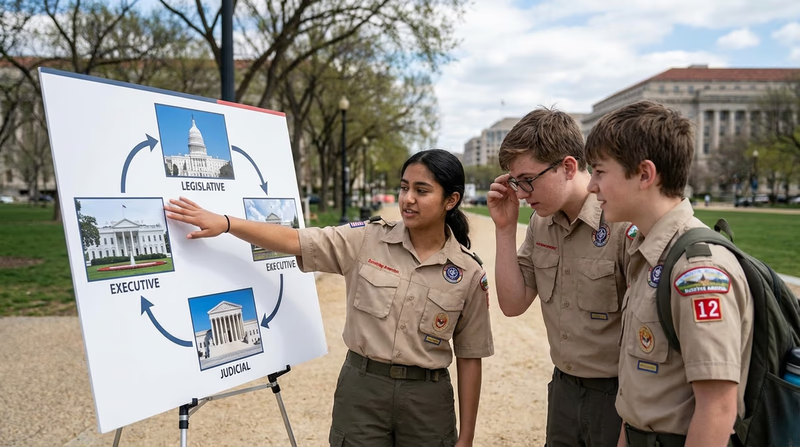
The three branches of the United States government are the Legislative Branch, the Executive Branch, and the Judicial Branch. The founders deliberately split the government into three parts so that no single person or group could hold all the power. This idea — called separation of powers — is one of the most important concepts in American government.
The Legislative Branch — Congress
What it does: Makes the laws. Congress is made up of two chambers: the Senate (100 members, two per state) and the House of Representatives (435 members, divided among the states by population). Together, they debate and vote on new laws, set the federal budget, and declare war.
Key powers:
- Write and pass laws
- Control the federal budget and taxes
- Approve treaties and presidential appointments (Senate)
- Impeach federal officials, including the President
- Declare war
The Executive Branch — The President
What it does: Enforces the laws. The President is the head of the executive branch, which includes the Vice President, the Cabinet (heads of federal departments like Defense, Education, and Justice), and millions of federal employees. The President signs bills into law, commands the military, and represents the nation to the world.
Key powers:
- Sign or veto bills passed by Congress
- Serve as Commander-in-Chief of the armed forces
- Negotiate treaties with other countries
- Appoint federal judges, ambassadors, and Cabinet members
- Issue executive orders
The Judicial Branch — The Courts
What it does: Interprets the laws. The judicial branch is led by the Supreme Court, the highest court in the country. Below it are federal appeals courts and district courts. Judges decide whether laws and government actions follow the Constitution.
Key powers:
- Hear cases involving federal law and the Constitution
- Decide whether laws are constitutional (called judicial review)
- Settle disputes between states
- Interpret what the Constitution means in specific situations
Why Divide Power?
The founders had lived under a king who held all the power. They had seen what happens when one person or group can make the rules, enforce the rules, and judge whether the rules were followed — all at the same time. The result was tyranny.
By dividing power among three branches, they made sure that:
- No single branch can dominate. Each branch has its own job, and none of them can do the other’s job.
- Disagreements are resolved through debate, not force. When branches disagree, they have to negotiate and compromise.
- The government moves deliberately. It is harder to pass a bad law when multiple branches have to agree.
Checks and Balances in Action
Each branch has specific powers to limit the other two. Here are the most important ones:
How the Branches Check Each Other
Key checks and balances
- Congress checks the President: Can override a presidential veto with a two-thirds vote in both chambers. The Senate must approve treaties and major appointments. Congress can impeach and remove the President.
- Congress checks the Courts: Can propose constitutional amendments to override court decisions. The Senate confirms or rejects judicial nominees. Congress sets the number of justices on the Supreme Court.
- The President checks Congress: Can veto bills passed by Congress. Can call special sessions of Congress. Uses the “bully pulpit” to rally public support for or against legislation.
- The President checks the Courts: Nominates all federal judges, including Supreme Court justices. Can grant pardons for federal crimes.
- The Courts check Congress: Can declare laws unconstitutional through judicial review. Interpret what laws actually mean when their language is unclear.
- The Courts check the President: Can declare executive actions unconstitutional. Review executive orders and federal regulations for legality.
How Citizens Get Involved
You do not have to hold office to participate in government. Citizens can be involved with all three branches:
Legislative Branch:
- Contact your senators and representatives by phone, email, or letter
- Attend town halls hosted by members of Congress
- Testify at congressional hearings (some accept written testimony from the public)
- Vote for your representatives (when old enough)
Executive Branch:
- Vote for the President (when old enough)
- Apply for jobs in federal agencies
- Participate in public comment periods on proposed regulations
- Serve in the military or national service programs
Judicial Branch:
- Serve on a jury when called
- Follow and discuss court decisions
- File lawsuits to protect your rights
- Attend court proceedings (most federal courts are open to the public)