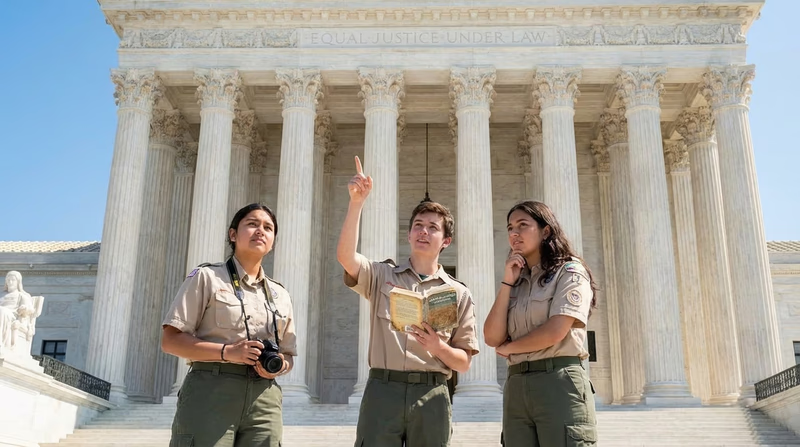
Req 4b — Bill of Rights & 14th Amendment
When the Constitution was first written, it focused on the structure of the government — how Congress works, what the President does, how courts operate. But many people were worried. Where were the protections for individual citizens? What would stop the new government from trampling on the very freedoms the Revolution was fought to win?
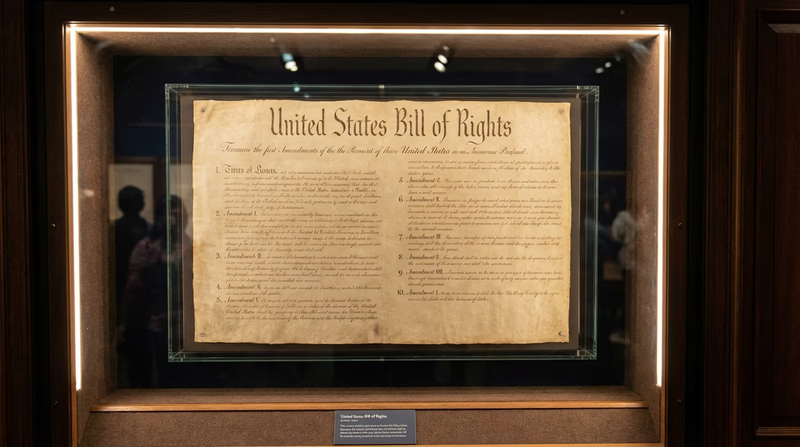
The answer was the Bill of Rights: the first ten amendments to the Constitution, ratified in 1791. These amendments guarantee specific freedoms and protections that the government cannot take away.
The Bill of Rights — Your Freedoms at a Glance
First Amendment — Protects five fundamental freedoms: religion, speech, the press, peaceful assembly, and the right to petition the government. This single amendment is the backbone of American liberty.
Second Amendment — Protects the right to keep and bear arms.
Third Amendment — Prevents the government from forcing you to house soldiers in your home during peacetime. (This was a real problem during the colonial era.)
Fourth Amendment — Protects you from unreasonable searches and seizures. The police generally need a warrant — approved by a judge — before they can search your home or belongings.
Fifth Amendment — Guarantees due process of law. You cannot be tried twice for the same crime, forced to testify against yourself, or have your property taken without fair compensation.
Sixth Amendment — Guarantees the right to a speedy and public trial, an impartial jury, and a lawyer if you are accused of a crime.
Seventh Amendment — Guarantees a jury trial in most civil (non-criminal) cases.
Eighth Amendment — Prohibits excessive bail, excessive fines, and cruel and unusual punishment.
Ninth Amendment — States that the people have rights beyond those specifically listed in the Constitution. Just because a right is not mentioned does not mean it does not exist.
Tenth Amendment — Powers not given to the federal government are reserved for the states or the people. This reinforces the principle of limited government.
The First Amendment in Your Daily Life
The First Amendment affects your life more than you might realize:
- Freedom of religion: You can practice any faith — or none — without government interference.
- Freedom of speech: You can express your opinions, even unpopular ones, without fear of government punishment.
- Freedom of the press: Journalists can investigate and report on the government without censorship.
- Freedom of assembly: You can gather peacefully with others to protest, rally, or demonstrate.
- Right to petition: You can formally ask the government to change a policy or address a problem.
The 14th Amendment — Equal Protection for All
Ratified in 1868, after the Civil War, the 14th Amendment is one of the most important amendments ever added to the Constitution. It has three key provisions:
Citizenship Clause — Anyone born or naturalized in the United States is a citizen. This overturned the Supreme Court’s Dred Scott decision, which had ruled that African Americans could not be citizens.
Due Process Clause — No state can deprive any person of life, liberty, or property without due process of law. This extended the protections of the Bill of Rights to apply against state governments, not just the federal government.
Equal Protection Clause — No state can deny any person the equal protection of the laws. This clause has been the foundation for landmark civil rights cases, including Brown v. Board of Education (which ended school segregation) and Obergefell v. Hodges (which established marriage equality).
Why It Matters
The Bill of Rights and the 14th Amendment work together to protect you from government overreach — at both the federal and state level. Without them, the Constitution would create a powerful government but offer no shield against that power. With them, every citizen has a set of rights that no law, no President, and no court can take away.