Req 5 — Following the News
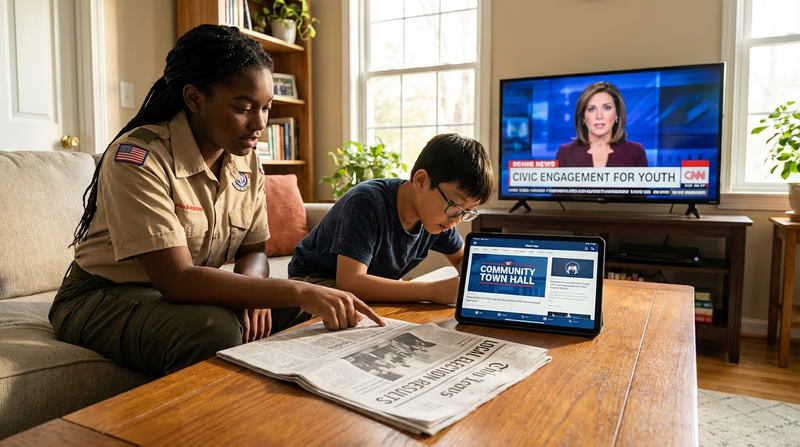
An informed citizen pays attention to what is happening in the country. This requirement asks you to do something that every good citizen should do regularly: follow the news. For five days, you will keep track of what is happening at the national level and think critically about how these issues affect real people — including you.
How to Follow the News
You have two options: watch the national evening news on television or read the main stories on a national news website or in a newspaper. Either one works. Here are some tips for each:
Television news: The major broadcast networks (ABC, CBS, NBC, PBS) air national evening news programs. PBS NewsHour is especially good for in-depth coverage. Set a daily time to watch — treating it like a homework assignment for the week will help you stay consistent.
Newspaper or news website: National outlets like The Washington Post, The New York Times, The Associated Press, NPR, and USA Today all cover national issues. Focus on the main stories — the headlines and top articles — rather than trying to read everything.
What to Look For
As you follow the news each day, pay attention to stories that involve the federal government, national policy, or issues that affect the whole country. Here are some common categories:
- Legislation: Is Congress debating a new law? What is it about?
- Executive actions: Has the President signed an executive order, given a speech, or made a policy announcement?
- Court decisions: Has the Supreme Court or a federal court issued a major ruling?
- National security: Are there stories about the military, international relations, or homeland security?
- Economy: What is happening with jobs, inflation, trade, or the federal budget?
- Social issues: Are there stories about education, healthcare, civil rights, immigration, or the environment?
Daily News Tracker
Record these details each day
- Date: What day is it?
- Source: Which news program or website did you use?
- Top stories: List 2–3 main national stories.
- Key people: Who was involved? (President, members of Congress, Supreme Court justices, etc.)
- Branch of government: Which branch was most involved in each story?
- Your reaction: What did you find most interesting or surprising?

Choosing Your Issue
After five days, you need to pick one national issue to discuss in depth with your counselor. Choose an issue that:
- You find genuinely interesting. If you care about the topic, your discussion will be more engaging.
- Has a clear connection to your life. The requirement asks you to explain how it affects you, your family, and your community.
- You can explain clearly. Make sure you understand the basics — who is involved, what the disagreement or challenge is, and what different people think about it.
Connecting the Issue to Your Life
This is the most important part of the requirement. Your counselor does not just want to know what the issue is — they want to know why it matters to you personally.
Thinking Critically About the News
Not all news is the same. Learning to evaluate what you are reading or watching is an essential skill for any citizen.
Here are some questions to ask yourself as you consume the news:
- Who wrote or reported this? Is it a trained journalist working for a known news organization?
- Is this news or opinion? News reports facts. Opinion pieces present someone’s viewpoint. Both are valuable, but they are different.
- Are multiple sides presented? Good journalism shows different perspectives on an issue.
- Can I find this story from other sources? If only one outlet is reporting it, proceed with caution.