 Getting Started
Introduction & Overview
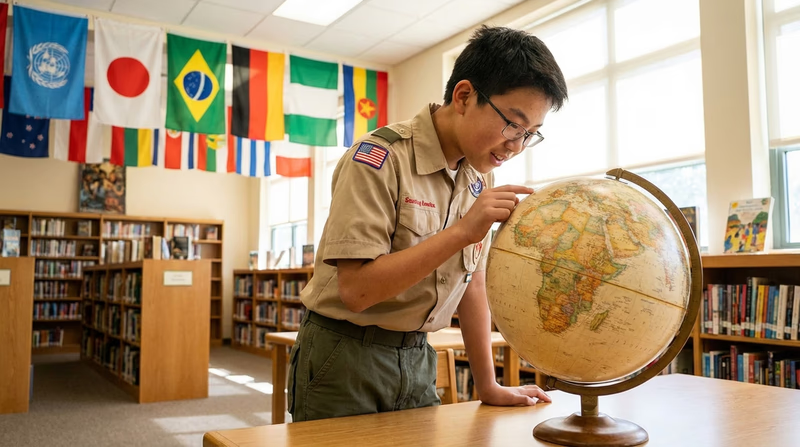
You live in a world where events on the other side of the globe can affect your daily life. A trade agreement between two countries can change the price of your phone. A natural disaster thousands of miles away can inspire your troop to organize a service project. The Citizenship in the World merit badge helps you understand these connections and discover what it means to be a responsible citizen — not just of your town or country, but of the entire world.
This is one of the Eagle-required merit badges, and it is a big one. You will explore how governments work, how nations interact, and how ordinary people like you can make a global difference.
Then and Now
Then — A World of Borders
For most of human history, people lived their entire lives within a few miles of where they were born. Nations fought wars over territory and resources, and contact between distant civilizations was rare. The first major step toward international cooperation came with the Peace of Westphalia in 1648, which established the idea that countries are sovereign — meaning each nation governs itself. Later, treaties like the Geneva Conventions set rules for how nations should treat people during wartime.
- Mindset: “My country comes first, and what happens elsewhere is not my concern.”
- Communication: Letters took weeks or months to cross an ocean.
- Cooperation: Rare, mostly through trade routes and occasional treaties.
Now — A Connected Planet
Today, you can video-call a Scout in Kenya, read a newspaper from Japan, and track a humanitarian crisis in real time — all from your phone. The United Nations, founded in 1945 after the devastation of World War II, brought 193 countries together to work on shared problems like poverty, disease, and conflict. International organizations, trade agreements, and the internet have made the world smaller and more interdependent than ever before.
- Mindset: “What happens across the world affects me, and I can affect it too.”
- Communication: Instant, global, multilingual.
- Cooperation: Constant — through organizations, treaties, trade, technology, and cultural exchange.
Get Ready! You are about to explore how the world works at a level most adults never do. By the time you finish this badge, you will understand how nations govern, cooperate, and sometimes disagree — and you will have a clearer picture of your own place in this interconnected world.
Kinds of World Citizenship
Being a “citizen of the world” means different things depending on how you look at it. Here are the major dimensions of global citizenship — and you are already connected to more of them than you might think.
Political Citizenship
Political citizenship is the legal relationship between a person and a country. It determines your rights (like voting and free speech), your duties (like obeying the law), and your obligations (like paying taxes or serving on a jury). Every country defines citizenship differently, and some people hold citizenship in more than one nation.
Cultural Citizenship
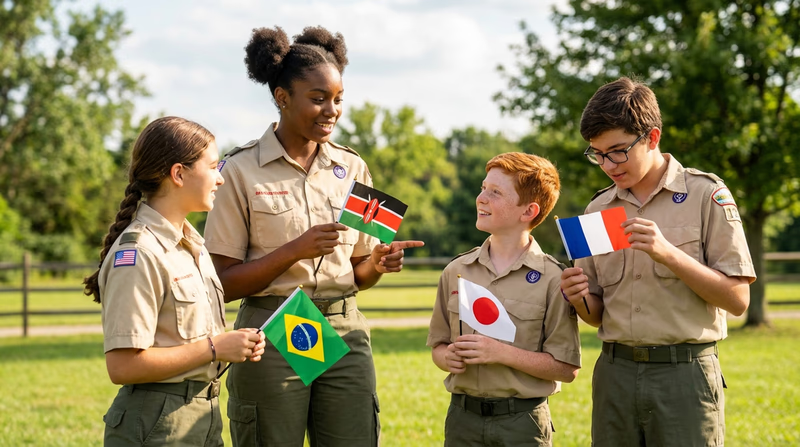
Cultural citizenship is about understanding and respecting the traditions, languages, art, and values of people around the world. When you eat food from another culture, listen to music from another continent, or celebrate a holiday you learned about from a friend, you are practicing cultural citizenship.
Economic Citizenship
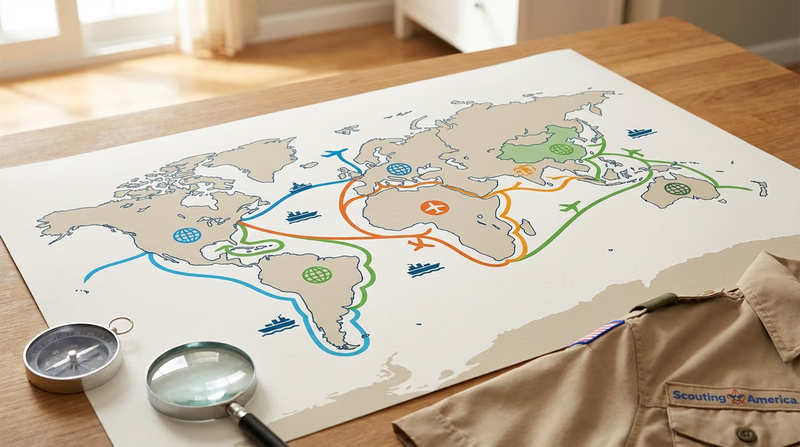
Every time you buy a product, you participate in the global economy. Your shoes might be designed in the United States, manufactured in Vietnam, and shipped through the Panama Canal. Economic citizenship means understanding how trade, investment, and financial systems connect countries and affect people’s lives.
Environmental Citizenship
The air you breathe, the water you drink, and the climate you live in do not stop at national borders. Environmental citizenship means recognizing that humans share one planet and that protecting it requires cooperation. International agreements like the Paris Climate Agreement are examples of countries working together on environmental challenges.
Digital Citizenship
The internet connects billions of people across every border. Digital citizenship means being responsible and respectful online, understanding that your words and actions on the internet can reach people in other countries. It also means being aware of issues like online privacy, misinformation, and the digital divide — the gap between people who have access to technology and those who do not.
Now that you have a sense of what world citizenship looks like, let’s start with the most important question of all.