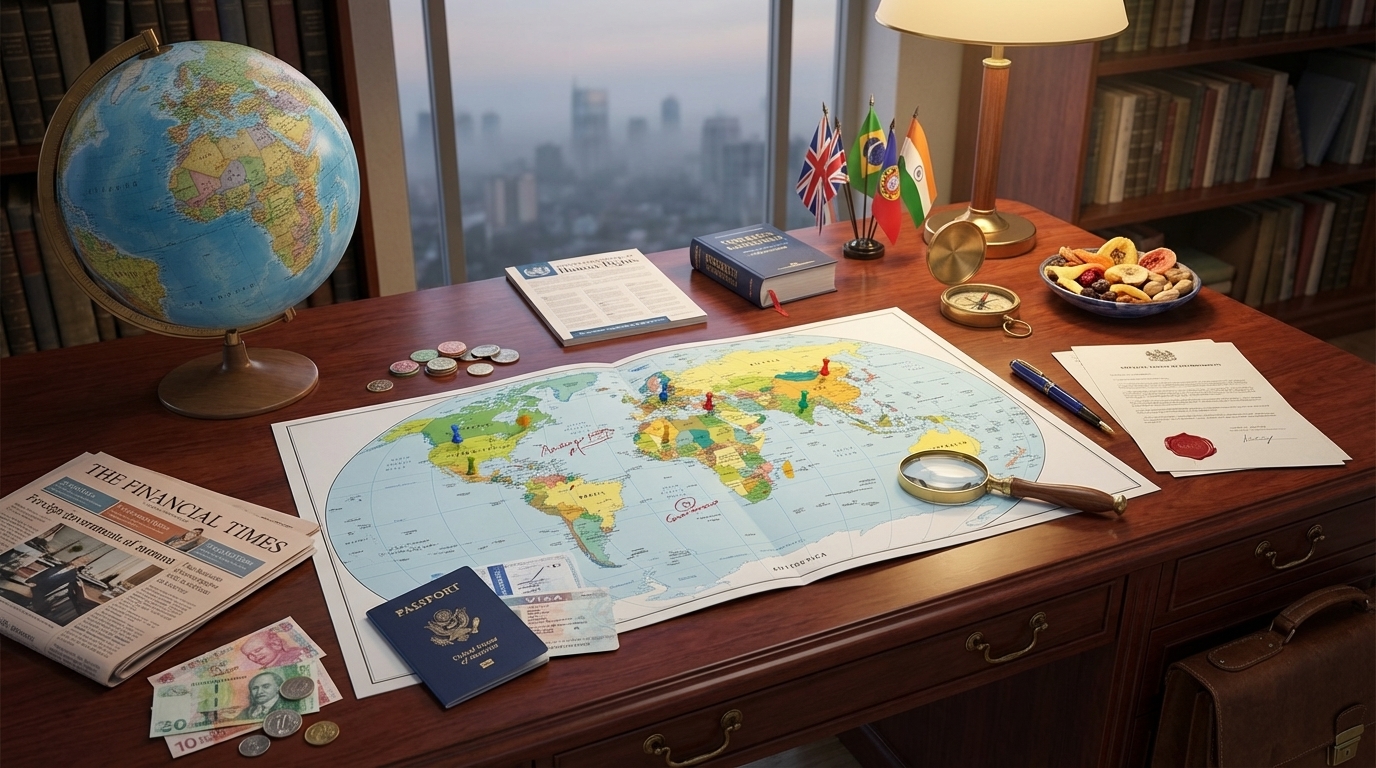
Citizenship in the World Merit Badge — Complete Digital Resource Guide
https://merit-badge.university/merit-badges/citizenship-in-the-world/guide/
Introduction & Overview
You live in a world where events on the other side of the globe can affect your daily life. A trade agreement between two countries can change the price of your phone. A natural disaster thousands of miles away can inspire your troop to organize a service project. The Citizenship in the World merit badge helps you understand these connections and discover what it means to be a responsible citizen — not just of your town or country, but of the entire world.
This is one of the Eagle-required merit badges, and it is a big one. You will explore how governments work, how nations interact, and how ordinary people like you can make a global difference.
Then and Now
Then — A World of Borders
For most of human history, people lived their entire lives within a few miles of where they were born. Nations fought wars over territory and resources, and contact between distant civilizations was rare. The first major step toward international cooperation came with the Peace of Westphalia in 1648, which established the idea that countries are sovereign — meaning each nation governs itself. Later, treaties like the Geneva Conventions set rules for how nations should treat people during wartime.
- Mindset: “My country comes first, and what happens elsewhere is not my concern.”
- Communication: Letters took weeks or months to cross an ocean.
- Cooperation: Rare, mostly through trade routes and occasional treaties.
Now — A Connected Planet
Today, you can video-call a Scout in Kenya, read a newspaper from Japan, and track a humanitarian crisis in real time — all from your phone. The United Nations, founded in 1945 after the devastation of World War II, brought 193 countries together to work on shared problems like poverty, disease, and conflict. International organizations, trade agreements, and the internet have made the world smaller and more interdependent than ever before.
- Mindset: “What happens across the world affects me, and I can affect it too.”
- Communication: Instant, global, multilingual.
- Cooperation: Constant — through organizations, treaties, trade, technology, and cultural exchange.
Get Ready! You are about to explore how the world works at a level most adults never do. By the time you finish this badge, you will understand how nations govern, cooperate, and sometimes disagree — and you will have a clearer picture of your own place in this interconnected world.
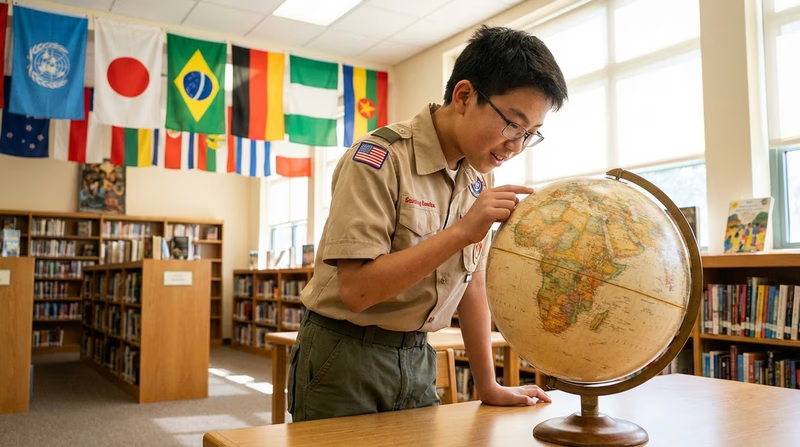
Kinds of World Citizenship
Being a “citizen of the world” means different things depending on how you look at it. Here are the major dimensions of global citizenship — and you are already connected to more of them than you might think.
Political Citizenship
Political citizenship is the legal relationship between a person and a country. It determines your rights (like voting and free speech), your duties (like obeying the law), and your obligations (like paying taxes or serving on a jury). Every country defines citizenship differently, and some people hold citizenship in more than one nation.
Cultural Citizenship
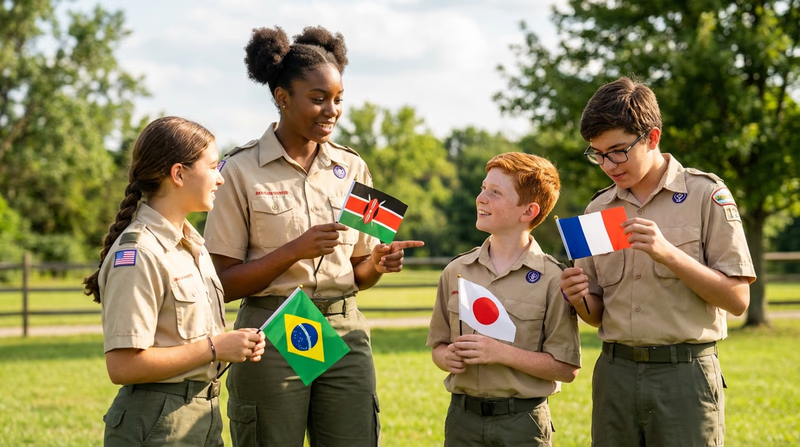
Cultural citizenship is about understanding and respecting the traditions, languages, art, and values of people around the world. When you eat food from another culture, listen to music from another continent, or celebrate a holiday you learned about from a friend, you are practicing cultural citizenship.
Economic Citizenship
Every time you buy a product, you participate in the global economy. Your shoes might be designed in the United States, manufactured in Vietnam, and shipped through the Panama Canal. Economic citizenship means understanding how trade, investment, and financial systems connect countries and affect people’s lives.
Environmental Citizenship
The air you breathe, the water you drink, and the climate you live in do not stop at national borders. Environmental citizenship means recognizing that humans share one planet and that protecting it requires cooperation. International agreements like the Paris Climate Agreement are examples of countries working together on environmental challenges.
Digital Citizenship
The internet connects billions of people across every border. Digital citizenship means being responsible and respectful online, understanding that your words and actions on the internet can reach people in other countries. It also means being aware of issues like online privacy, misinformation, and the digital divide — the gap between people who have access to technology and those who do not.
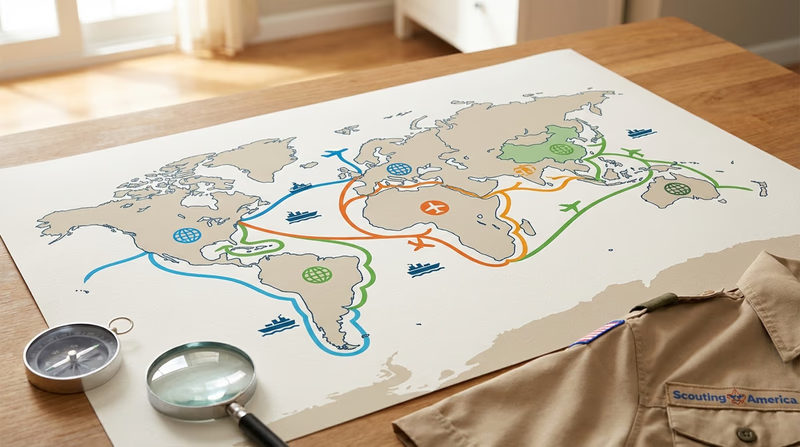
Now that you have a sense of what world citizenship looks like, let’s start with the most important question of all.
Req 1 — Defining World Citizenship
This requirement asks you to think — really think — about what it means to be a citizen of something bigger than your town, your state, or even your country. There is no single “right answer” here, but your counselor will want to see that you have given it serious thought.
What Does “Citizenship in the World” Mean?
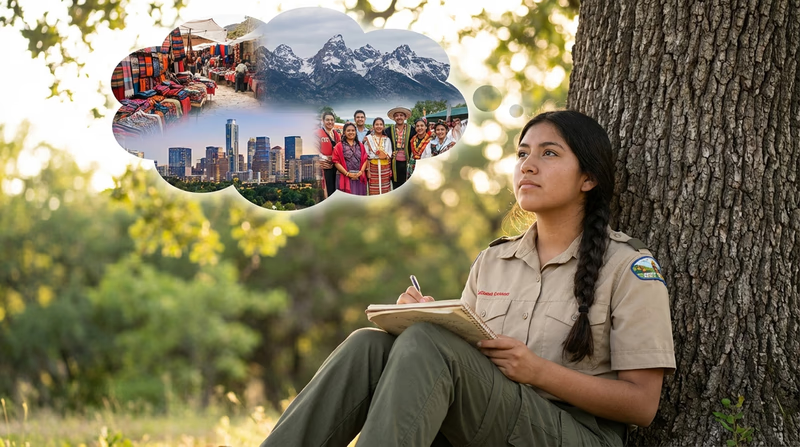
At its most basic level, citizenship in the world means recognizing that you are connected to people everywhere. The food you eat, the clothes you wear, the technology you use, and even the air you breathe link you to communities on every continent.
But world citizenship goes deeper than just being connected. It means:
- Awareness — Understanding that events in other countries affect your life, and that your actions can affect others.
- Responsibility — Feeling a sense of duty toward people beyond your own borders, not just your neighbors.
- Respect — Valuing the cultures, beliefs, and perspectives of people who are different from you.
- Engagement — Taking action to make the world a better place, whether through service, learning, or simply being informed.
What Does It Take to Be a Good World Citizen?
Think about what makes a good citizen in your own community. You follow the rules, help your neighbors, stay informed, and participate. A good world citizen does the same things — just on a larger scale.
Here are some qualities that good world citizens share:
Curiosity
Good world citizens want to learn about other countries, cultures, and perspectives. They read the news, ask questions, and seek out experiences that broaden their understanding of the world.
Empathy
Empathy means putting yourself in someone else’s shoes. A good world citizen can imagine what life is like for a refugee, a farmer in a developing country, or a student in a war zone — even if they have never experienced those things themselves.
Open-mindedness
The world is full of different ways of living, governing, and worshiping. A good world citizen does not assume that their way is the only way. They listen before they judge.
A Sense of Justice
Good world citizens care about fairness — not just for themselves, but for everyone. They speak up when they see injustice, whether it is happening in their school or across an ocean.
Willingness to Act
Awareness without action is not enough. Good world citizens volunteer, donate, advocate, and participate. Even small actions matter — like learning a few words in another language or supporting a fair-trade product.
The Scout Connection
The Scout Oath says a Scout has a duty “to other people.” That does not stop at the border. The Scout Law — trustworthy, loyal, helpful, friendly, courteous, kind — applies to how you treat everyone, everywhere. Scouting itself is a worldwide movement with over 57 million members in more than 170 countries. When you wear your Scout uniform, you are part of a global community.
Now that you have explored what world citizenship means, let’s look at the practical side — how someone actually becomes a citizen.
Req 2 — U.S. Citizenship & Comparing Countries
This requirement has two big parts: understanding U.S. citizenship from the inside, and then comparing it with how citizenship works elsewhere. Let’s break it down.
How Does Someone Become a U.S. Citizen?
There are two main paths to U.S. citizenship:
Birthright Citizenship
If you were born in the United States or certain U.S. territories, you are automatically a citizen. This principle is called jus soli (Latin for “right of the soil”) and is guaranteed by the Fourteenth Amendment to the Constitution. You are also a citizen at birth if at least one of your parents is a U.S. citizen, even if you were born in another country — this is called jus sanguinis (“right of blood”).
Naturalization
People who are not born as U.S. citizens can become citizens through a process called naturalization. Here are the basic steps:
The Naturalization Process
Steps to become a naturalized U.S. citizen- Be at least 18 years old.
- Be a lawful permanent resident (green card holder) for at least 5 years (or 3 years if married to a U.S. citizen).
- Live in the United States continuously during that time.
- Demonstrate good moral character.
- Pass an English language test (reading, writing, and speaking).
- Pass a civics test covering U.S. history and government (100 possible questions, you must answer 6 out of 10 correctly).
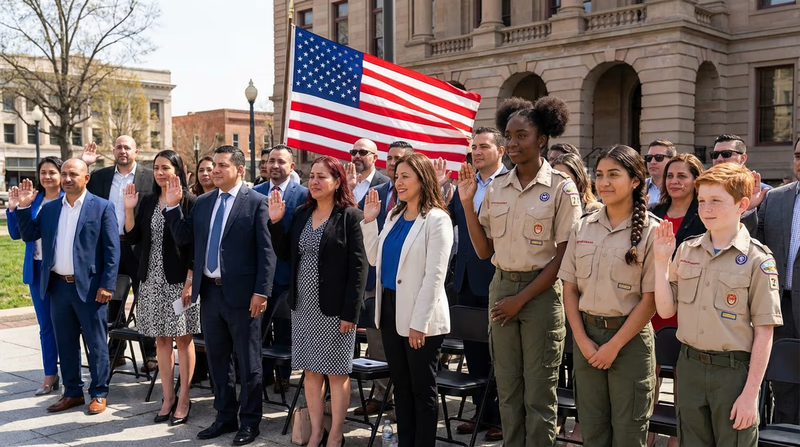
- Take the Oath of Allegiance at a naturalization ceremony.
Rights, Duties, and Obligations of U.S. Citizens
Understanding the difference between rights, duties, and obligations is important:
- Rights are things you are entitled to do or have. The government protects them.
- Duties are things you are expected to do as a citizen. Some are legally required.
- Obligations are moral or civic responsibilities — things good citizens should do, even if no law forces them.
Rights
The Bill of Rights and subsequent amendments guarantee many freedoms, including:
- Freedom of speech, religion, and the press (First Amendment)
- Right to bear arms (Second Amendment)
- Right to a fair trial and due process (Fifth and Sixth Amendments)
- Right to vote (various amendments extended this to all citizens 18 and older)
- Right to run for elected office
- Right to a passport and the freedom to travel
Duties (Legally Required)
- Obey federal, state, and local laws
- Pay taxes
- Serve on a jury when called
- Register with the Selective Service (required for males ages 18–25)
- Attend school (for minors, as required by state law)
Obligations (Civic Responsibilities)
- Vote in elections
- Stay informed about issues and candidates
- Participate in your community
- Respect the rights and opinions of others
- Defend the country if needed
Comparing Citizenship Around the World
Now comes the interesting part — comparing the U.S. system with other countries. You will need to pick two countries for your counselor discussion. Here are some examples to get you thinking:
What to Compare
When you compare countries, look at these areas:
Comparison Framework
Key areas to examine for each country- How does someone become a citizen? (Birth, descent, naturalization, other?)
- What rights do citizens have? (Speech, religion, voting, movement?)
- What duties are legally required? (Military service, voting, taxes?)
- Are there rights that exist in one country but not another?
- How are rights protected? (Constitution, courts, international agreements?)
Example Comparisons
Here are a few countries that make for interesting comparisons:
Germany — Germany uses jus sanguinis (citizenship through parents) as its primary method, though children born in Germany to long-term residents can also qualify. Germany requires military or civilian service registration and has strong protections for free speech, though it bans speech that promotes hatred or denies the Holocaust.
Japan — Japan is one of the strictest countries for citizenship. It does not allow dual citizenship for adults and grants citizenship almost exclusively through parentage. Naturalization is possible but difficult. Japanese citizens have rights similar to Americans, but the culture places a strong emphasis on duties to society.
Australia — Australia grants citizenship by birth (if a parent is a citizen or permanent resident) and through naturalization. One major difference: voting in Australia is compulsory. If you do not vote, you can be fined. Australia also requires a civics test for naturalization, similar to the U.S.
Brazil — Brazil uses jus soli like the United States — anyone born on Brazilian soil is a citizen. Brazil also allows dual citizenship. Voting is compulsory for citizens ages 18–70. Brazil’s constitution guarantees many of the same rights as the U.S., plus some social rights like the right to education and healthcare.
USCIS: Learn About the United States — Quick Civics Lessons Official study materials for the U.S. naturalization civics test — a great way to test your own knowledge. Link: USCIS: Learn About the United States — Quick Civics Lessons — https://www.uscis.gov/citizenship/find-study-materials-and-resources/study-for-the-test CIA World Factbook Detailed profiles of every country in the world, including government type, legal system, and citizenship laws. Link: CIA World Factbook — https://www.cia.gov/the-world-factbook/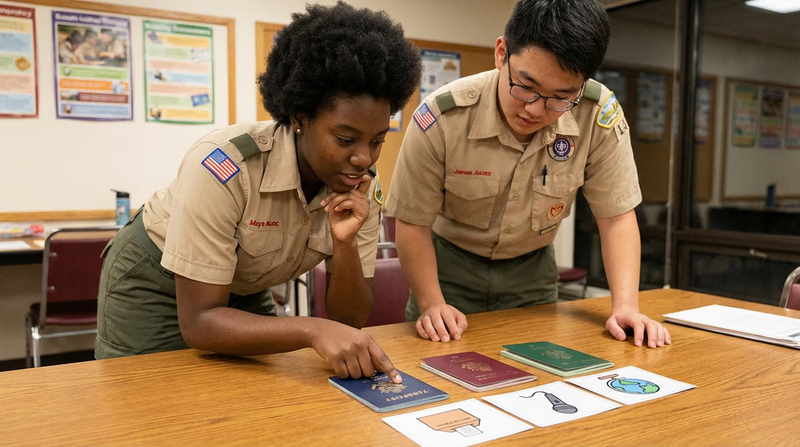
You now understand how citizenship works at home and abroad. Next, you will look at how current events shape the relationships between nations.
Req 3a — Current Events & National Interests
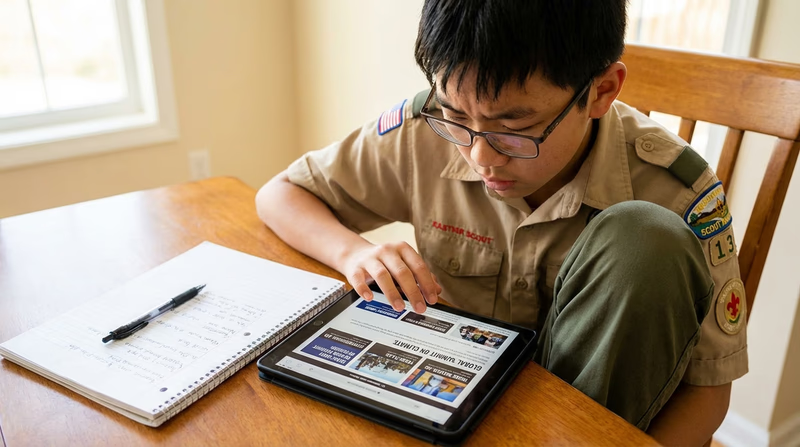
This requirement asks you to connect the dots between what is happening in the news and the bigger forces that drive how countries behave. You are not just reading a headline — you are analyzing why countries act the way they do.
What Is a “National Interest”?
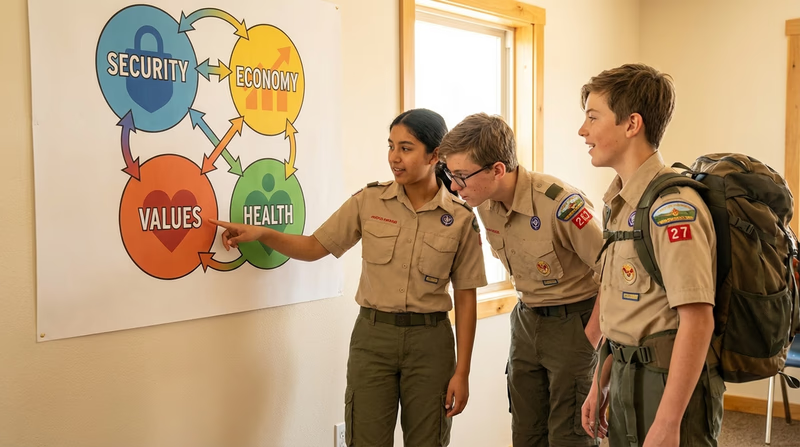
A national interest is anything a country considers important to its survival, prosperity, or identity. Every government makes decisions based on what it believes will protect or advance its national interests. These interests generally fall into four categories:
Security
Security means keeping the country and its people safe from threats — military attacks, terrorism, cyberattacks, and more. When a country builds alliances (like NATO), signs arms treaties, or strengthens its military, it is protecting its security interests.
Economy
A strong economy means jobs, trade, and prosperity. Countries pursue economic interests through trade agreements, tariffs, foreign investment, and control of natural resources like oil, water, and minerals.
Values
Values include things like democracy, human rights, religious freedom, and the rule of law. Countries sometimes promote their values abroad — through diplomacy, foreign aid, or international organizations — because they believe those values make the world more stable.
Health and Well-being
The health of a country’s citizens is a national interest too. Pandemics, food shortages, clean water access, and environmental disasters all affect a nation’s strength and stability. International cooperation on health issues — like the response to COVID-19 or efforts to eradicate polio — shows how health connects countries.
How to Analyze a Current Event
When you pick a world event to discuss with your counselor, use this framework:
Current Event Analysis Framework
Questions to guide your research- What is happening? Summarize the event in 2–3 sentences.
- Which countries are involved? Who are the major players?
- What national interests are at stake for each country? (Security, economy, values, health?)
- How are the countries’ relationships with each other affecting the situation?
- Is there an international organization involved? (UN, NATO, WHO, etc.)
- How might this event affect ordinary people in those countries?
- How might it affect you or the United States?
Examples of National Interests in Action
Here are some examples showing how national interests drive real-world events. You do not need to use these — pick any current event that interests you — but these show the pattern:
Trade Disputes
When countries disagree about tariffs or trade rules, it is usually because their economic interests conflict. One country might want to protect its farmers by taxing imported food, while another wants open markets to sell its products. Trade disputes affect prices, jobs, and the availability of goods in both countries.
Climate Agreements
Climate change affects every country, but not equally. Island nations face rising sea levels. Oil-producing countries depend on fossil fuels for their economy. When countries negotiate climate agreements, they are balancing environmental values against economic interests — and the result depends on each country’s priorities.
Humanitarian Crises
When a natural disaster or conflict creates a refugee crisis, countries must decide how to respond. Their decisions involve security (border control), values (human rights and compassion), economy (cost of aid), and health (preventing disease outbreaks in refugee camps).
You have learned how to analyze a current event through the lens of national interests. Now let’s zoom in on a single country and see how its geography shapes its place in the world.
Req 3b — A Country's Geography & Economy
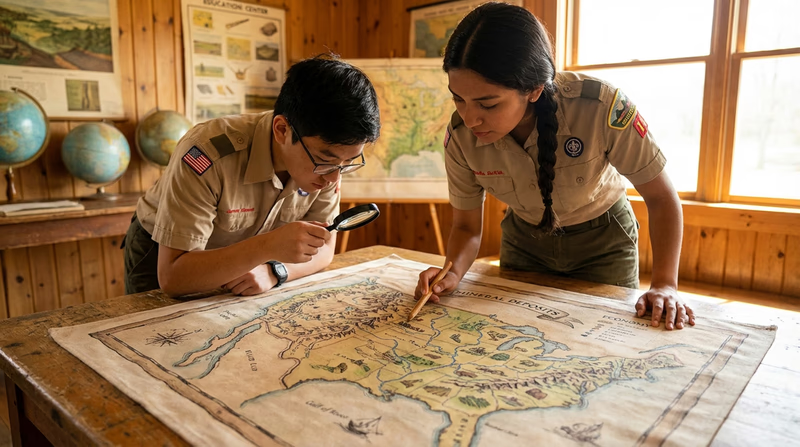
Geography is destiny — or at least a big part of it. Where a country sits on the map, what resources lie beneath its soil, and what kind of weather it gets all play a huge role in how wealthy it becomes, who it trades with, and what alliances it forms.
How Geography Shapes a Country
Location and Access
A country’s position on the globe determines a lot. Countries with coastlines can build ports and trade by sea. Landlocked countries (those with no ocean access) face extra challenges getting goods to market. Countries near major shipping lanes or at the crossroads of continents often become trading hubs.
Natural Resources
Natural resources — oil, minerals, fertile land, forests, fresh water — are unevenly distributed around the world. Countries rich in resources can export them for income, but resources can also be a curse if they lead to corruption, conflict, or over-dependence on a single export.
Climate
Climate affects what crops a country can grow, how much energy it needs for heating or cooling, and how vulnerable it is to natural disasters. Countries with temperate climates and reliable rainfall have agricultural advantages. Countries in extreme heat, drought-prone areas, or flood zones face constant challenges.
A Framework for Your Research
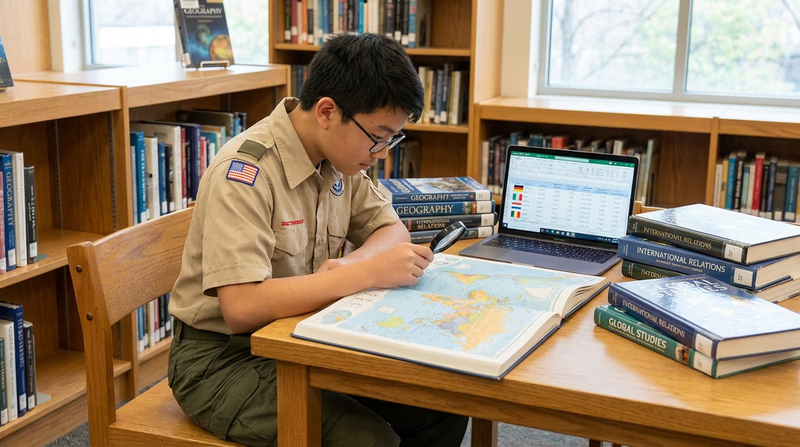
When you pick a country to study, organize your research around these questions:
Country Research Framework
Key questions for your analysis- Where is the country located? Is it coastal, landlocked, or an island nation?
- What are its major natural resources? (Oil, minerals, timber, water, farmland?)
- What is the climate like? How does it affect agriculture and daily life?
- What does the country export? What does it import?
- Who are its major trading partners? Why those countries?
- Is the country part of any trade agreements or economic unions?
- How have geography and resources shaped the country’s history?
Examples to Inspire Your Choice
You can pick any country, but here are a few that make especially interesting case studies:
Saudi Arabia
Saudi Arabia sits on top of some of the largest oil reserves in the world. Oil exports account for a huge portion of the country’s income and have made it one of the wealthiest nations in the Middle East. Its desert climate means it imports most of its food. Saudi Arabia’s global partnerships — especially with the United States, China, and other oil-importing nations — are heavily shaped by the demand for energy.
Japan
Japan is an island nation with very few natural resources. It imports nearly all of its oil, gas, and raw materials. Despite this, Japan became one of the world’s largest economies by investing heavily in technology, manufacturing, and education. Its geography also makes it vulnerable to earthquakes, tsunamis, and typhoons, which has driven it to become a world leader in disaster preparedness.
Brazil
Brazil is the largest country in South America, with vast rainforests, enormous rivers, and some of the most productive farmland on Earth. It is a major exporter of soybeans, beef, coffee, and iron ore. Its climate ranges from tropical in the north to temperate in the south. Brazil’s economic partnerships span every continent, and its management of the Amazon rainforest is a global environmental issue.
Norway
Norway’s long coastline gives it access to rich fishing grounds and offshore oil and gas deposits. Its cold climate and mountainous terrain limit farming, but abundant hydroelectric power (from rivers and waterfalls) gives it nearly 100% renewable electricity. Norway uses its oil wealth to fund a massive sovereign wealth fund — the largest in the world — investing in the future even as it extracts resources today.
You have explored how geography shapes a nation’s economy and partnerships. Now let’s look at the systems that connect countries — international law, trade, and global organizations.
Req 4 — Law, Trade & Global Organizations
You choose TWO of the three options below. Read through all three to decide which ones interest you the most, then focus your preparation on those two.
Option A: International Law
What Is International Law?
International law is the set of rules and agreements that govern how countries interact with each other. Unlike national law — which is created and enforced by a single government within its borders — international law is created through treaties, conventions, and customs agreed upon by multiple nations.
Here is the key difference:
| National Law | International Law | |
|---|---|---|
| Who makes it? | A country’s legislature (like Congress) | Negotiations between countries, international organizations |
| Who enforces it? | Police, courts, government agencies | International courts, treaties, diplomacy, sometimes sanctions |
| Who must follow it? | Everyone within the country | Countries that agree to follow it (signatories) |
| What if you break it? | Arrest, fines, prison | Diplomatic pressure, economic sanctions, international courts |
Sources of International Law
International law comes from several sources:
- Treaties — Written agreements between countries. Examples include the Geneva Conventions (rules of war) and the Paris Climate Agreement.
- Customary international law — Practices that countries have followed for so long that they are considered legally binding, even without a formal treaty. For example, the principle that diplomats cannot be arrested in the country where they serve.
- International organizations — Bodies like the United Nations create resolutions and frameworks that guide international behavior.
International Law and Conflict Resolution
International law provides tools for resolving disputes without war:
- Negotiation — Countries talk directly to work out a solution.
- Mediation — A neutral third party helps the countries reach an agreement.
- Arbitration — Both sides agree to let an independent panel decide the outcome, and they agree to follow the decision.
- Adjudication — A case is brought before an international court, like the International Court of Justice (ICJ), which issues a ruling.
Option B: International Trade
Key Trade Concepts
Before you dive into the news, make sure you understand these terms:
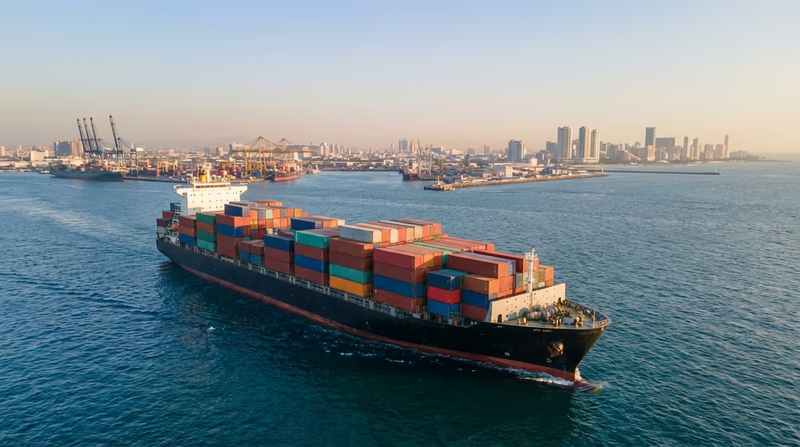
International trade is the exchange of goods and services between countries. The United States exports things like aircraft, machinery, and agricultural products, and imports things like electronics, oil, and clothing.
Foreign exchange is the system for converting one country’s currency into another’s. When you buy something made in Japan, someone has to convert U.S. dollars into Japanese yen to pay the manufacturer. Exchange rates change constantly and affect prices worldwide.
Balance of payments tracks all the money flowing into and out of a country. If a country imports more than it exports, it has a trade deficit. If it exports more, it has a trade surplus.
Tariffs are taxes placed on imported goods. A country might charge a tariff on imported steel to make domestic steel more competitive. Tariffs can protect local jobs, but they also raise prices for consumers.
Free trade is the idea that countries should be able to trade with minimal tariffs or restrictions. Free trade agreements — like the USMCA between the U.S., Mexico, and Canada — reduce barriers and encourage commerce between partner nations.
Why Countries Must Cooperate
No country produces everything its people need. The United States does not grow enough bananas, coffee, or cocoa. Japan does not have enough oil. Saudi Arabia does not have enough farmland. Trade allows countries to specialize in what they do best and buy the rest from others.
When countries cooperate on trade:
- Prices drop because goods come from the most efficient producers
- Consumers get more choices
- Economies grow faster
- Countries become more interdependent, which can reduce conflict
When countries stop cooperating — through trade wars, sanctions, or isolation — prices rise, shortages occur, and tensions increase.
World Trade Organization — What Is the WTO? Learn how the WTO helps countries negotiate trade rules and settle trade disputes. Link: World Trade Organization — What Is the WTO? — https://www.wto.org/english/thewto_e/whatis_e/whatis_e.htmOption C: Global Organizations
Choose TWO of the nine organizations below. For each one you select, be ready to explain what it does, why it exists, and how it affects people around the world.
1. United Nations and UNICEF
The United Nations (UN) was founded in 1945 after World War II to prevent future wars and promote international cooperation. Today, 193 countries are members. The UN works on peace and security, human rights, humanitarian aid, and sustainable development. Its main bodies include the General Assembly, Security Council, and International Court of Justice.
UNICEF (United Nations Children’s Fund) is a UN agency focused on children. It provides vaccines, nutrition, education, and emergency relief to children in more than 190 countries. UNICEF is funded entirely by voluntary contributions.
2. International Court of Justice (The World Court)
The ICJ is the principal judicial body of the United Nations, located in The Hague, Netherlands. It settles legal disputes between countries and gives advisory opinions on international legal questions. Only nations (not individuals or companies) can be parties to cases before the ICJ.
3. International Criminal Police Organization (Interpol)
Interpol helps police forces in 196 member countries work together to fight international crime. It does not send agents to arrest people — instead, it shares information, coordinates investigations, and issues “Red Notices” to help locate wanted criminals. Interpol deals with crimes like human trafficking, cybercrime, terrorism, and drug smuggling.
4. World Organization of the Scout Movement (WOSM)
WOSM is the international body that coordinates Scouting around the world. It supports over 57 million Scouts in more than 170 countries. WOSM organizes events like the World Scout Jamboree and promotes peace, community service, and youth development globally. As a Scout, you are already part of this worldwide movement.
5. World Health Organization (WHO)
The WHO is a UN agency that works to promote health, keep the world safe, and serve the vulnerable. It coordinates international responses to disease outbreaks (like COVID-19 and Ebola), sets health guidelines, and supports vaccination campaigns. WHO’s goal is the highest possible level of health for all people.
6. Amnesty International
Amnesty International is a non-governmental organization (NGO) that campaigns for human rights worldwide. It investigates abuses, publishes reports, and pressures governments to free political prisoners, stop torture, and protect freedom of expression. Amnesty has more than 10 million supporters in over 150 countries.
7. International Federation of Red Cross and Red Crescent Societies (IFRC)
The IFRC coordinates the work of 191 national Red Cross and Red Crescent societies around the world. It responds to natural disasters, armed conflicts, and health emergencies. The Red Cross movement is guided by principles of humanity, impartiality, and neutrality — it helps anyone in need, regardless of nationality, race, or politics.
8. Cooperative for American Relief Everywhere (CARE)
CARE is an international humanitarian organization that fights global poverty. It works in nearly 100 countries, focusing on emergency relief, food security, education, and women’s empowerment. CARE is known for its “CARE Packages,” which were originally sent to survivors of World War II in Europe.
9. European Union (EU)
The European Union is a political and economic union of 27 European countries. Members share a common market, and most use a common currency (the euro). The EU promotes free trade, freedom of movement, and cooperation on issues like security, the environment, and human rights among its member nations.
You have explored international law, global trade, and the organizations that connect countries. Next, let’s look at the different ways countries govern themselves.
Req 5 — Types of Government
These three sub-requirements build on each other. First you learn the big divide (constitutional vs. nonconstitutional), then you identify specific government types, and finally you place them on a map.
Constitutional vs. Nonconstitutional Governments
The most fundamental distinction between governments is whether they are limited by a constitution or not.
Constitutional Government
A constitutional government operates under a written or established set of laws that limit the government’s power and protect the rights of citizens. The constitution is the supreme law — even the most powerful leaders must follow it. Most modern democracies are constitutional governments.
Key features:
- A written or established constitution defines the government’s structure and limits
- Separation of powers (executive, legislative, judicial branches)
- Rule of law — no one is above the law, including the president or prime minister
- Protection of individual rights (speech, religion, assembly, etc.)
- Regular elections and peaceful transfers of power
Examples: United States, Germany, Japan, India, South Africa
Nonconstitutional Government
A nonconstitutional government has no effective constitution limiting its power — or it has one on paper that the leaders ignore. Power is concentrated in one person, one party, or a small group, and citizens have few protections against government overreach.
Key features:
- No meaningful limits on government authority
- Leaders may change laws to benefit themselves
- Citizens have limited or no political rights
- No independent judiciary to check government power
- Power is maintained through force, fear, or control of information
Examples: North Korea, some military dictatorships, absolute monarchies without constitutional limits
Five Types of Government
There are many ways to categorize governments. Here are the major types you will find in the world today:
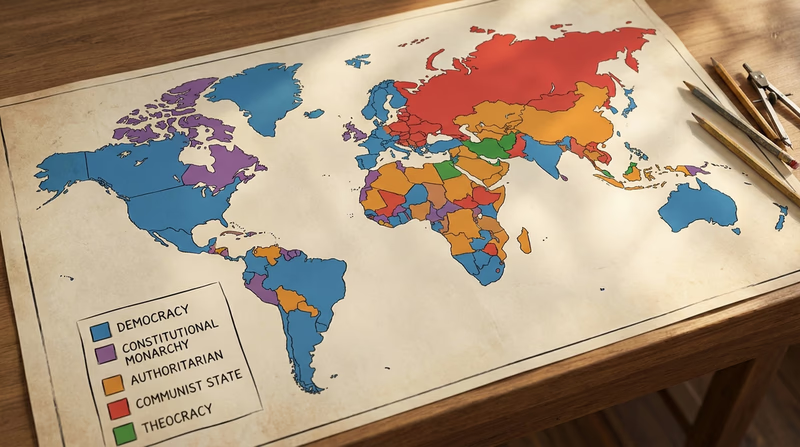
1. Democracy (Representative / Republic)
In a democracy, power belongs to the people. In a representative democracy (also called a republic), citizens vote for leaders who make decisions on their behalf. This is the most common form of democracy in the world.
- How it works: Citizens vote in regular, free elections. Elected officials serve for set terms. An independent judiciary protects rights.
- Examples: United States, France, India, Brazil
2. Constitutional Monarchy
A constitutional monarchy has a king or queen as the head of state, but the monarch’s power is limited by a constitution. The real governing power belongs to an elected parliament and a prime minister.
- How it works: The monarch serves a ceremonial role (representing the country, hosting diplomats). Elected officials make the laws and run the government.
- Examples: United Kingdom, Japan, Sweden, Spain, Canada (under the British Crown)
3. Authoritarian / Dictatorship
In an authoritarian government, power is concentrated in a single leader or a small group. Individual freedoms are restricted, and political opposition is suppressed. Some authoritarian governments hold elections, but they are not genuinely free or fair.
- How it works: The leader or ruling group controls the military, media, and often the economy. Citizens have little say in government decisions.
- Examples: North Korea, Eritrea, various military governments
4. Communist State (Single-Party State)
A communist state is governed by a single political party that controls the government, the economy, and much of daily life. In theory, communism aims for a classless society where everything is shared equally. In practice, communist states are typically authoritarian, with the ruling party holding all power.
- How it works: One party controls the government. The state owns most businesses and land. Opposition parties are banned or powerless.
- Examples: China, Cuba, Vietnam, Laos
5. Theocracy
A theocracy is a government in which religious leaders hold political power, and the law is based on religious texts. The head of state may be a religious figure, and laws reflect religious doctrine rather than secular principles.
- How it works: Religious law is the law of the land. Religious leaders serve as political leaders or hold veto power over elected officials.
- Examples: Iran (where the Supreme Leader is a religious authority), Vatican City
Other Types Worth Knowing
- Absolute monarchy — A king or queen holds nearly all political power with no constitutional limits. Example: Saudi Arabia (though it has been modernizing).
- Federal republic — A republic where power is shared between a central government and regional governments (states or provinces). Example: United States, Germany, Brazil.
- Parliamentary democracy — A democracy where the head of government (prime minister) is chosen by the legislature, not directly by voters. Example: United Kingdom, Canada, India.
Putting Them on the Map
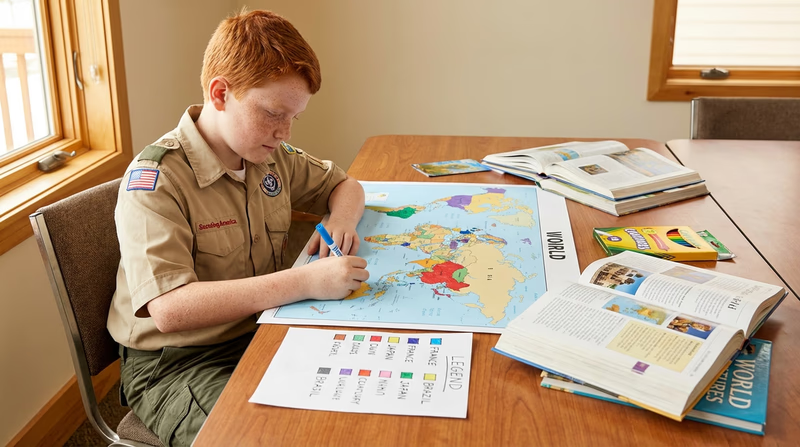
For Requirement 5c, you need to show countries using each of your five government types on a world map. Here is how to prepare:
Map Activity Checklist
Steps to complete your world government map- Get a blank or outline world map (your counselor, library, or a printable map online can provide one).
- Choose a color or symbol for each of your five government types.
- Create a legend (key) that shows what each color or symbol means.
- Label at least one country for each government type.
- Be ready to explain why you classified each country the way you did.
You now know the major types of government and where to find them on the map. Let’s explore how these governments communicate and work with each other.
Req 6 — How Nations Connect
Diplomacy is how countries talk to each other without fighting. It is a complex system of people, offices, and agreements that keeps the world running. This requirement takes you behind the scenes of how nations connect.
How Governments Are Represented Abroad
Every country maintains a network of official representatives in other countries and at international organizations. This network is part of a country’s foreign service.
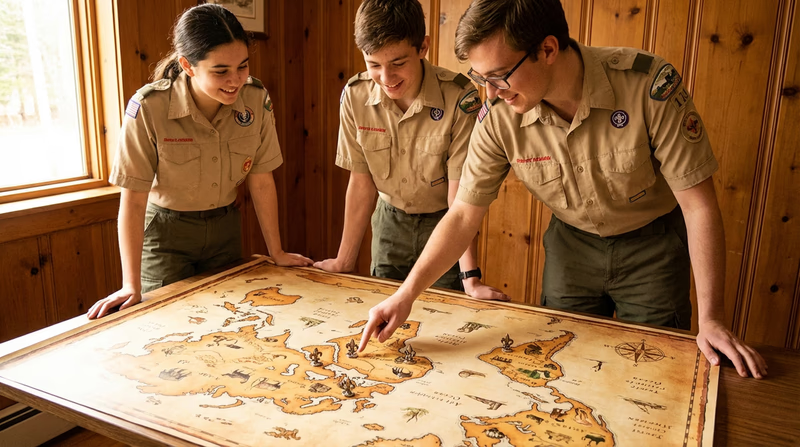
Embassies
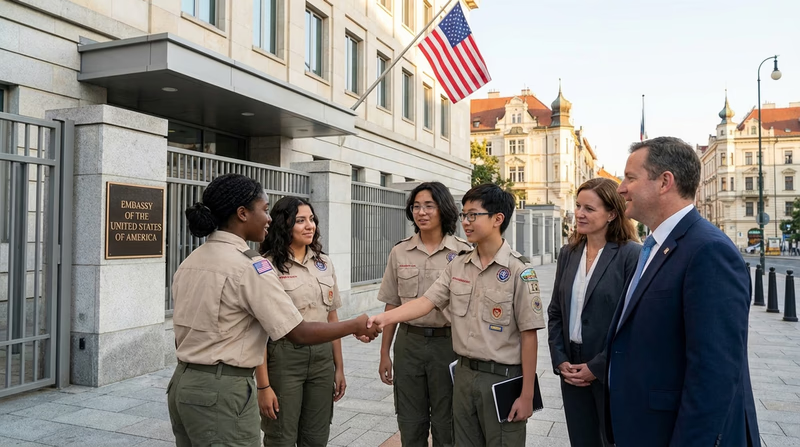
An embassy is a country’s primary diplomatic office in another nation’s capital. The U.S. Embassy in London, for example, represents the United States in the United Kingdom. Embassies handle high-level diplomacy, protect American citizens abroad, and serve as the main communication channel between the two governments.
Consulates
A consulate is a smaller office, usually located in major cities outside the capital. Consulates focus on helping citizens and handling practical matters like issuing visas and passports, assisting with trade, and helping nationals who get into trouble abroad.
Missions to International Organizations
The United States is accredited to (officially represented at) international organizations like the United Nations, NATO, the European Union, and others. The U.S. sends permanent representatives — often called ambassadors — to these organizations. For example, the U.S. Ambassador to the United Nations represents American interests at UN meetings and votes on resolutions on behalf of the United States.
Key Roles in Foreign Relations
Ambassador
An ambassador is the highest-ranking diplomat a country sends to another nation or international organization. The ambassador speaks for the president and the U.S. government, negotiates agreements, represents American interests, and builds relationships with the host country’s leaders. Ambassadors are appointed by the president and confirmed by the Senate.
Consul
A consul is a diplomatic official stationed at a consulate. Consuls focus on:
- Helping American citizens abroad (lost passports, emergencies, arrests)
- Processing visa applications for people who want to visit or immigrate to the U.S.
- Promoting trade between the two countries
- Reporting on local conditions (politics, economics, culture)
Bureau of Global Public Affairs
The Bureau of Global Public Affairs (formerly the Bureau of Public Affairs) is part of the U.S. Department of State. Its job is to communicate American foreign policy to the world. It manages the State Department’s public messaging, handles press briefings, runs social media channels, and helps explain U.S. policies to both domestic and international audiences. Think of it as the State Department’s public communication arm.
United States and Foreign Commercial Service
The U.S. and Foreign Commercial Service is part of the Department of Commerce. It helps American businesses sell their products and services overseas. Commercial Service officers stationed in embassies and consulates around the world connect U.S. companies with foreign buyers, help navigate trade regulations, and promote American exports.
Passports and Visas
What Is a Passport?
A passport is an official government document that certifies your identity and citizenship. It allows you to leave your country and enter others. Your U.S. passport tells foreign governments, “This person is an American citizen, and the United States vouches for their identity.”
Key facts about U.S. passports:
- Issued by the U.S. Department of State
- Valid for 10 years (for adults) or 5 years (for minors under 16)
- Required for almost all international travel
- Contains your photo, name, date of birth, and a unique passport number
- Modern passports include an electronic chip with biometric data
What Is a Visa?
A visa is a permit issued by a foreign country that allows you to enter that country for a specific purpose and time period. While your passport proves who you are, a visa is that country’s permission for you to visit.
Common types of visas:
- Tourist visa — For vacation and sightseeing
- Student visa — For studying at a foreign school or university
- Work visa — For employment in another country
- Transit visa — For passing through a country on the way to somewhere else
- Diplomatic visa — For government officials traveling on official business
Not all countries require visas for U.S. citizens. Many countries have agreements that allow Americans to visit for short periods without a visa. For example, U.S. citizens can visit most European countries for up to 90 days without a visa.
U.S. Department of State — Passports Everything you need to know about applying for, renewing, or replacing a U.S. passport. Link: U.S. Department of State — Passports — https://travel.state.gov/content/travel/en/passports.html U.S. Department of State — About the Bureau of Global Public Affairs Learn about the State Department office responsible for communicating U.S. foreign policy to the world. Link: U.S. Department of State — About the Bureau of Global Public Affairs — https://www.state.gov/about-us-bureau-of-global-public-affairs/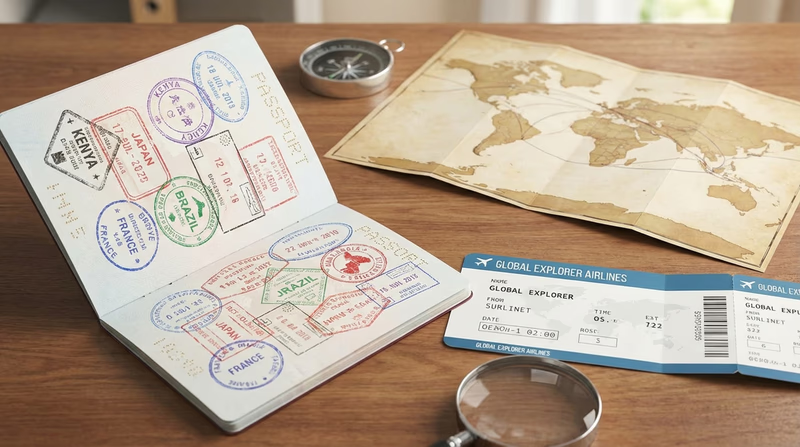
You now understand the machinery of diplomacy — from ambassadors to passports. For your final requirement, you get to explore the world firsthand.
Req 7 — World Exploration Activities
You choose TWO of the five options below. Each one asks you to engage with the world in a different way — through research, conversation, or experience. Read through all five, then pick the two that work best for you.
Option A: U.S. State Department Website
The U.S. State Department’s website is a treasure trove of information about how the United States engages with the rest of the world. You can find country profiles, policy statements, travel advisories, and in-depth discussions of issues like human rights, climate change, arms control, and global health.
How to Explore
- Go to state.gov with a parent or guardian’s permission.
- Browse the “Policy Issues” section to find topics that interest you — everything from counterterrorism to democracy and human rights.
- Check out country profiles to learn about U.S. relations with specific nations.
- Look at the “Traveler’s Checklist” section to see how the State Department helps Americans abroad.
Option B: International News & Human Rights
This option asks you to find a real-world example of a right that Americans enjoy but people in another country do not. This exercise helps you appreciate what you have and understand that rights are not universal.
Human Rights to Look For
Here are some rights guaranteed in the United States that are restricted or absent in certain other countries:
- Freedom of speech — In some countries, criticizing the government can lead to imprisonment.
- Freedom of religion — Some nations have an official state religion and restrict or persecute people of other faiths.
- Freedom of the press — Many countries censor or control news media.
- Right to a fair trial — Some judicial systems lack independence from the government.
- Freedom of assembly — In some places, protesting is illegal or dangerous.
- Equal rights for women — Some countries restrict women’s ability to work, drive, travel, or own property.
Where to Look
- BBC World News (bbc.com/news/world)
- Al Jazeera English (aljazeera.com)
- Deutsche Welle (DW) (dw.com) — Germany’s international broadcaster
- Reporters Without Borders (rsf.org) — Tracks press freedom worldwide
- Your local library may carry foreign newspapers or provide access to international news databases.
Option C: Visit with an International Student or Scout
One of the best ways to learn about another culture is to talk to someone who grew up in it. This option asks you to have a real conversation with someone from another country.
How to Find Someone
- Exchange students at your school or a nearby school
- International Scouts — your council may have connections with visiting Scouts or troops from other countries
- Community members — neighbors, family friends, or members of your place of worship who came from another country
- Cultural organizations — many communities have cultural centers or heritage groups
Conversation Starters
Discussion Topics
Questions to ask your international friend- What holidays does your family celebrate? What do you do on those days?
- What foods are traditional in your culture? What is your favorite?
- What values does your culture emphasize? (Family, respect for elders, education, hospitality?)
- What is school like in your country? How is it different from here?
- What surprised you most about the United States when you first came here?
- What do you miss most about your home country?
- What is Scouting like in your country (if they are a Scout)?
Option D: WOSM Event
WOSM events bring Scouts from around the world together. Some are in-person gatherings, and others happen over the airwaves or the internet — so distance is no barrier.
Types of WOSM Events
World Scout Jamboree — A massive gathering of Scouts from around the world, held every four years in a different country. Tens of thousands of Scouts camp, learn, and build friendships together.
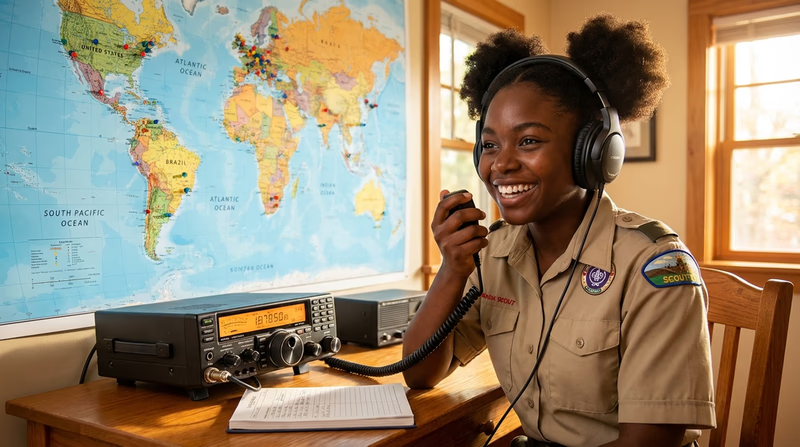
Jamboree Over The Air (JOTA) — An annual event where Scouts use amateur (ham) radio to contact other Scouts in different countries. It happens every October and is one of the largest Scouting events in the world.
Jamboree Over The Internet (JOTI) — Similar to JOTA, but using the internet. Scouts connect through video calls, chat rooms, and online activities. JOTI runs alongside JOTA each October.
World Scout Moot — A gathering for older Scouts and Rovers (ages 18–25), focused on service, adventure, and cultural exchange.
National or Regional Jamborees — Large Scouting gatherings organized by national Scout organizations. The U.S. National Jamboree, for example, draws Scouts from across the country and often hosts international visitors.
World Organization of the Scout Movement — Events Find upcoming WOSM events, including Jamboree Over The Air and Jamboree Over The Internet, which you can participate in from home. Link: World Organization of the Scout Movement — Events — https://www.scout.org/our-work/eventsOption E: International Event in Your Area
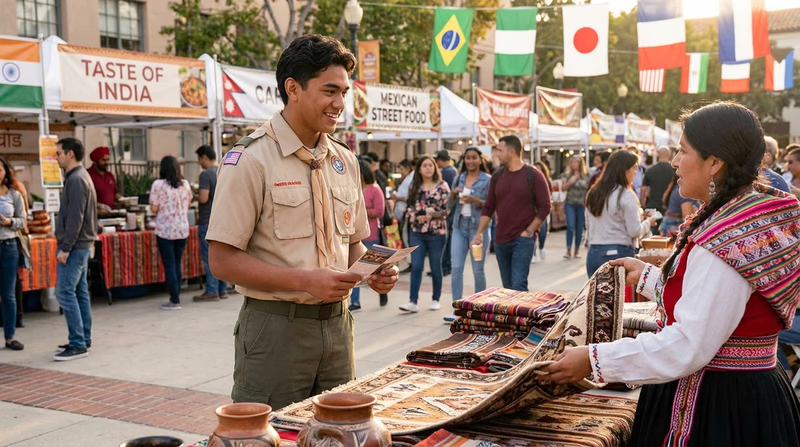
You do not have to travel the world to experience it. Many communities host international events that bring global cultures right to your doorstep.
Events to Look For
- Cultural festivals — Greek festivals, Chinese New Year celebrations, Diwali festivals, Oktoberfest, Cinco de Mayo events, Juneteenth celebrations
- International food fairs — Many cities host food festivals featuring cuisines from around the world
- Music and dance performances — Concerts, recitals, or dance shows featuring international artists or traditional performances
- Film festivals — Some theaters or libraries host foreign film screenings
- Cultural heritage months — Events celebrating Asian American, Hispanic, African American, Native American, and other cultural heritages
- Art exhibits — Museums and galleries often feature international artists
You have completed all seven requirements. But your journey as a world citizen is just beginning.
Extended Learning
A. Introduction
You have completed the requirements for the Citizenship in the World merit badge — congratulations! You now know more about how governments work, how nations interact, and how you fit into the global picture than most people ever learn. But the world keeps changing, and your journey as a global citizen is just getting started.
B. Deep Dive: How International Agreements Are Made
You have learned about international law and organizations, but how do countries actually sit down and hammer out an agreement? The process is fascinating — and surprisingly slow.
Most international agreements begin when countries recognize a shared problem that no single nation can solve alone. Climate change, nuclear weapons, ocean pollution, pandemics — these challenges cross every border. A country or international organization proposes negotiations, and interested nations send delegations of diplomats, lawyers, and subject-matter experts to the table.
Negotiations can take months or even years. Each country arrives with its own interests, red lines, and domestic political pressures. Diplomats draft language, argue over details, make compromises, and revise the text dozens of times. Even the word order in a single sentence can be debated for days because each word carries legal weight.
Once a treaty text is agreed upon, countries “sign” it — but signing is just the beginning. Most treaties require ratification, meaning each country’s legislature must formally approve it before it becomes binding. In the United States, the Senate must ratify treaties by a two-thirds vote. Some treaties have been signed but never ratified, meaning the U.S. agreed in principle but never made it law.
After ratification, implementation begins. Countries must change their own laws, create enforcement mechanisms, and report on compliance. International bodies monitor whether countries are keeping their promises. When disputes arise, they may be resolved through the mechanisms you learned about in Requirement 4 — negotiation, mediation, arbitration, or international courts.
C. Deep Dive: The Universal Declaration of Human Rights
On December 10, 1948, the United Nations General Assembly adopted the Universal Declaration of Human Rights (UDHR) — a document that changed the world. For the first time in history, nations came together to declare that every human being, everywhere, has fundamental rights simply because they are human.
The UDHR was drafted by a committee chaired by Eleanor Roosevelt, the former First Lady of the United States. The committee included representatives from countries on every continent, ensuring that the declaration reflected diverse cultural and legal traditions. The final document contains 30 articles covering civil, political, economic, social, and cultural rights.
Some of the rights it declares:
- The right to life, liberty, and security
- Freedom from slavery and torture
- The right to a fair trial
- Freedom of thought, conscience, and religion
- The right to education
- The right to work and to join trade unions
- Freedom of movement within and between countries
The UDHR is not a legally binding treaty — countries cannot be prosecuted for violating it. But it has inspired more than 70 human rights treaties that are legally binding, and it remains the moral foundation for the global human rights movement. When organizations like Amnesty International or Human Rights Watch report on abuses, they are measuring countries against the standards set by the UDHR.
December 10 is celebrated worldwide as Human Rights Day in honor of the UDHR’s adoption.
United Nations — Universal Declaration of Human Rights Read the full text of the UDHR — all 30 articles that define the rights every person on Earth is entitled to. Link: United Nations — Universal Declaration of Human Rights — https://www.un.org/en/about-us/universal-declaration-of-human-rightsD. Deep Dive: Model United Nations
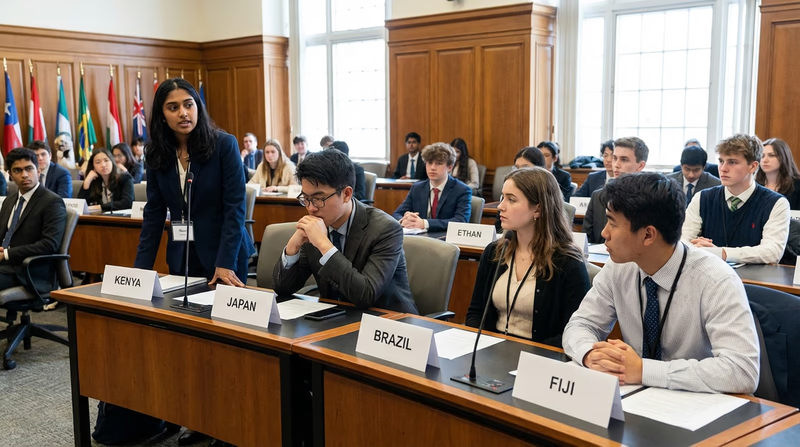
If you enjoyed learning about international organizations and diplomacy, Model United Nations (Model UN or MUN) is one of the best ways to take it further. Model UN is an educational simulation where students role-play as delegates from different countries and debate real-world issues using UN procedures.
In a Model UN conference, you are assigned a country and a committee (like the Security Council, the World Health Assembly, or the Human Rights Council). You research your assigned country’s positions on the issues being debated, write position papers, give speeches, negotiate with other delegates, and draft resolutions — just like real diplomats.
Model UN teaches skills that go far beyond international relations:
- Research — You learn to find and evaluate sources on complex global issues.
- Public speaking — You practice delivering speeches and thinking on your feet.
- Negotiation — You build coalitions, make compromises, and find common ground with people who disagree with you.
- Writing — You draft formal resolutions, position papers, and working papers.
- Empathy — You learn to argue convincingly for a country’s position even if you personally disagree with it.
Many middle schools and high schools have Model UN clubs. If yours does not, you can start one. National conferences like NHSMUN (National High School Model United Nations) and YMUN (Yale Model United Nations) draw students from across the country and around the world.
E. Real-World Experiences
Visit a United Nations Office
Attend a Naturalization Ceremony
Visit an Embassy or Consulate
Participate in JOTA-JOTI
Attend an International Festival
F. Organizations
The international body coordinating Scouting in over 170 countries, promoting peace, development, and youth leadership worldwide.
Organization: World Organization of the Scout Movement (WOSM) — https://www.scout.org/
A global educational program where students simulate UN proceedings, debate international issues, and develop diplomacy skills.
Organization: Model United Nations — https://www.un.org/en/mun
Campaigns for human rights worldwide, with youth programs and volunteer opportunities for young activists.
Organization: Amnesty International USA — https://www.amnestyusa.org/
Connects Americans with the work of the United Nations through advocacy, education, and community engagement.
Organization: United Nations Association of the USA (UNA-USA) — https://unausa.org/
An international education and advocacy organization working to end extreme poverty, with campaigns and events that anyone can join.
Organization: Global Citizen — https://www.globalcitizen.org/
Connects families separated by conflict or disaster, supports international humanitarian law education, and responds to crises worldwide.
Organization: American Red Cross — International Services — https://www.redcross.org/about-us/our-work/international-services.html