Req 1 — Defining World Citizenship
This requirement asks you to think — really think — about what it means to be a citizen of something bigger than your town, your state, or even your country. There is no single “right answer” here, but your counselor will want to see that you have given it serious thought.
What Does “Citizenship in the World” Mean?
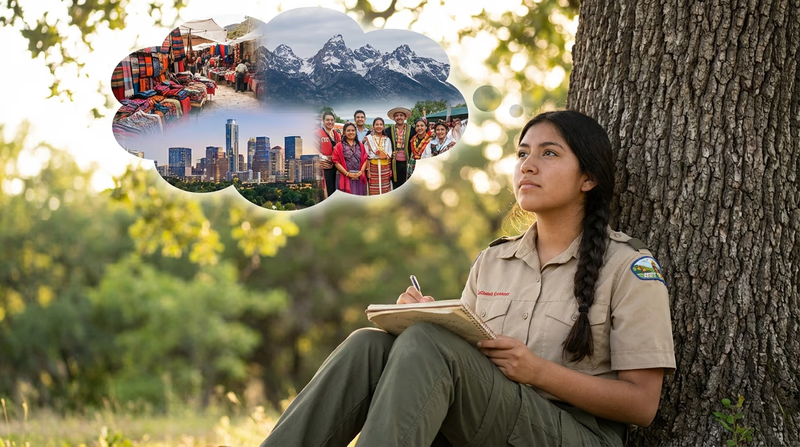
At its most basic level, citizenship in the world means recognizing that you are connected to people everywhere. The food you eat, the clothes you wear, the technology you use, and even the air you breathe link you to communities on every continent.
But world citizenship goes deeper than just being connected. It means:
- Awareness — Understanding that events in other countries affect your life, and that your actions can affect others.
- Responsibility — Feeling a sense of duty toward people beyond your own borders, not just your neighbors.
- Respect — Valuing the cultures, beliefs, and perspectives of people who are different from you.
- Engagement — Taking action to make the world a better place, whether through service, learning, or simply being informed.
What Does It Take to Be a Good World Citizen?
Think about what makes a good citizen in your own community. You follow the rules, help your neighbors, stay informed, and participate. A good world citizen does the same things — just on a larger scale.
Here are some qualities that good world citizens share:
Curiosity
Good world citizens want to learn about other countries, cultures, and perspectives. They read the news, ask questions, and seek out experiences that broaden their understanding of the world.
Empathy
Empathy means putting yourself in someone else’s shoes. A good world citizen can imagine what life is like for a refugee, a farmer in a developing country, or a student in a war zone — even if they have never experienced those things themselves.
Open-mindedness
The world is full of different ways of living, governing, and worshiping. A good world citizen does not assume that their way is the only way. They listen before they judge.
A Sense of Justice
Good world citizens care about fairness — not just for themselves, but for everyone. They speak up when they see injustice, whether it is happening in their school or across an ocean.
Willingness to Act
Awareness without action is not enough. Good world citizens volunteer, donate, advocate, and participate. Even small actions matter — like learning a few words in another language or supporting a fair-trade product.
The Scout Connection
The Scout Oath says a Scout has a duty “to other people.” That does not stop at the border. The Scout Law — trustworthy, loyal, helpful, friendly, courteous, kind — applies to how you treat everyone, everywhere. Scouting itself is a worldwide movement with over 57 million members in more than 170 countries. When you wear your Scout uniform, you are part of a global community.
Now that you have explored what world citizenship means, let’s look at the practical side — how someone actually becomes a citizen.