Req 3b — A Country's Geography & Economy
Geography is destiny — or at least a big part of it. Where a country sits on the map, what resources lie beneath its soil, and what kind of weather it gets all play a huge role in how wealthy it becomes, who it trades with, and what alliances it forms.
How Geography Shapes a Country
Location and Access
A country’s position on the globe determines a lot. Countries with coastlines can build ports and trade by sea. Landlocked countries (those with no ocean access) face extra challenges getting goods to market. Countries near major shipping lanes or at the crossroads of continents often become trading hubs.
Natural Resources
Natural resources — oil, minerals, fertile land, forests, fresh water — are unevenly distributed around the world. Countries rich in resources can export them for income, but resources can also be a curse if they lead to corruption, conflict, or over-dependence on a single export.
Climate
Climate affects what crops a country can grow, how much energy it needs for heating or cooling, and how vulnerable it is to natural disasters. Countries with temperate climates and reliable rainfall have agricultural advantages. Countries in extreme heat, drought-prone areas, or flood zones face constant challenges.
A Framework for Your Research
When you pick a country to study, organize your research around these questions:
Country Research Framework
Key questions for your analysis
- Where is the country located? Is it coastal, landlocked, or an island nation?
- What are its major natural resources? (Oil, minerals, timber, water, farmland?)
- What is the climate like? How does it affect agriculture and daily life?
- What does the country export? What does it import?
- Who are its major trading partners? Why those countries?
- Is the country part of any trade agreements or economic unions?
- How have geography and resources shaped the country’s history?
Examples to Inspire Your Choice
You can pick any country, but here are a few that make especially interesting case studies:
Saudi Arabia
Saudi Arabia sits on top of some of the largest oil reserves in the world. Oil exports account for a huge portion of the country’s income and have made it one of the wealthiest nations in the Middle East. Its desert climate means it imports most of its food. Saudi Arabia’s global partnerships — especially with the United States, China, and other oil-importing nations — are heavily shaped by the demand for energy.
Japan
Japan is an island nation with very few natural resources. It imports nearly all of its oil, gas, and raw materials. Despite this, Japan became one of the world’s largest economies by investing heavily in technology, manufacturing, and education. Its geography also makes it vulnerable to earthquakes, tsunamis, and typhoons, which has driven it to become a world leader in disaster preparedness.
Brazil
Brazil is the largest country in South America, with vast rainforests, enormous rivers, and some of the most productive farmland on Earth. It is a major exporter of soybeans, beef, coffee, and iron ore. Its climate ranges from tropical in the north to temperate in the south. Brazil’s economic partnerships span every continent, and its management of the Amazon rainforest is a global environmental issue.
Norway
Norway’s long coastline gives it access to rich fishing grounds and offshore oil and gas deposits. Its cold climate and mountainous terrain limit farming, but abundant hydroelectric power (from rivers and waterfalls) gives it nearly 100% renewable electricity. Norway uses its oil wealth to fund a massive sovereign wealth fund — the largest in the world — investing in the future even as it extracts resources today.
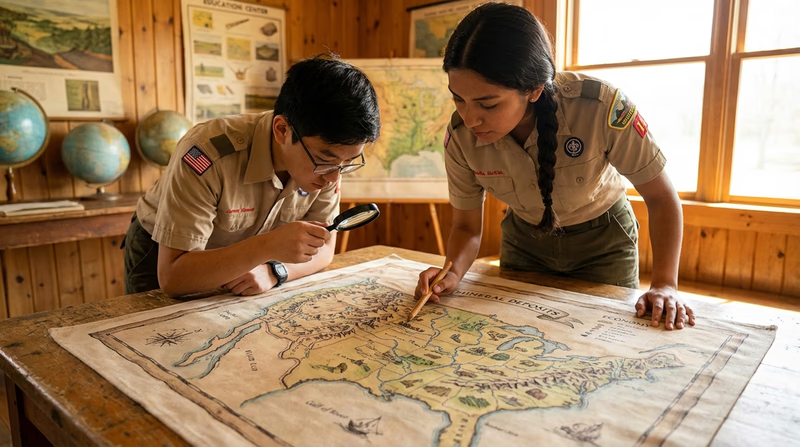
You have explored how geography shapes a nation’s economy and partnerships. Now let’s look at the systems that connect countries — international law, trade, and global organizations.