Req 6 — How Nations Connect
Diplomacy is how countries talk to each other without fighting. It is a complex system of people, offices, and agreements that keeps the world running. This requirement takes you behind the scenes of how nations connect.
How Governments Are Represented Abroad
Every country maintains a network of official representatives in other countries and at international organizations. This network is part of a country’s foreign service.
Embassies
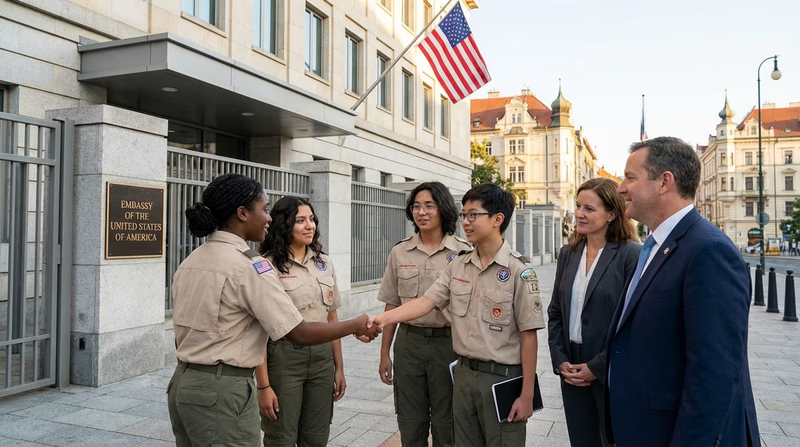
An embassy is a country’s primary diplomatic office in another nation’s capital. The U.S. Embassy in London, for example, represents the United States in the United Kingdom. Embassies handle high-level diplomacy, protect American citizens abroad, and serve as the main communication channel between the two governments.
Consulates
A consulate is a smaller office, usually located in major cities outside the capital. Consulates focus on helping citizens and handling practical matters like issuing visas and passports, assisting with trade, and helping nationals who get into trouble abroad.
Missions to International Organizations
The United States is accredited to (officially represented at) international organizations like the United Nations, NATO, the European Union, and others. The U.S. sends permanent representatives — often called ambassadors — to these organizations. For example, the U.S. Ambassador to the United Nations represents American interests at UN meetings and votes on resolutions on behalf of the United States.
Key Roles in Foreign Relations
Ambassador
An ambassador is the highest-ranking diplomat a country sends to another nation or international organization. The ambassador speaks for the president and the U.S. government, negotiates agreements, represents American interests, and builds relationships with the host country’s leaders. Ambassadors are appointed by the president and confirmed by the Senate.
Consul
A consul is a diplomatic official stationed at a consulate. Consuls focus on:
- Helping American citizens abroad (lost passports, emergencies, arrests)
- Processing visa applications for people who want to visit or immigrate to the U.S.
- Promoting trade between the two countries
- Reporting on local conditions (politics, economics, culture)
Bureau of Global Public Affairs
The Bureau of Global Public Affairs (formerly the Bureau of Public Affairs) is part of the U.S. Department of State. Its job is to communicate American foreign policy to the world. It manages the State Department’s public messaging, handles press briefings, runs social media channels, and helps explain U.S. policies to both domestic and international audiences. Think of it as the State Department’s public communication arm.
United States and Foreign Commercial Service
The U.S. and Foreign Commercial Service is part of the Department of Commerce. It helps American businesses sell their products and services overseas. Commercial Service officers stationed in embassies and consulates around the world connect U.S. companies with foreign buyers, help navigate trade regulations, and promote American exports.
Passports and Visas
What Is a Passport?
A passport is an official government document that certifies your identity and citizenship. It allows you to leave your country and enter others. Your U.S. passport tells foreign governments, “This person is an American citizen, and the United States vouches for their identity.”
Key facts about U.S. passports:
- Issued by the U.S. Department of State
- Valid for 10 years (for adults) or 5 years (for minors under 16)
- Required for almost all international travel
- Contains your photo, name, date of birth, and a unique passport number
- Modern passports include an electronic chip with biometric data
What Is a Visa?
A visa is a permit issued by a foreign country that allows you to enter that country for a specific purpose and time period. While your passport proves who you are, a visa is that country’s permission for you to visit.
Common types of visas:
- Tourist visa — For vacation and sightseeing
- Student visa — For studying at a foreign school or university
- Work visa — For employment in another country
- Transit visa — For passing through a country on the way to somewhere else
- Diplomatic visa — For government officials traveling on official business
Not all countries require visas for U.S. citizens. Many countries have agreements that allow Americans to visit for short periods without a visa. For example, U.S. citizens can visit most European countries for up to 90 days without a visa.
U.S. Department of State — Passports Everything you need to know about applying for, renewing, or replacing a U.S. passport. U.S. Department of State — About the Bureau of Global Public Affairs Learn about the State Department office responsible for communicating U.S. foreign policy to the world.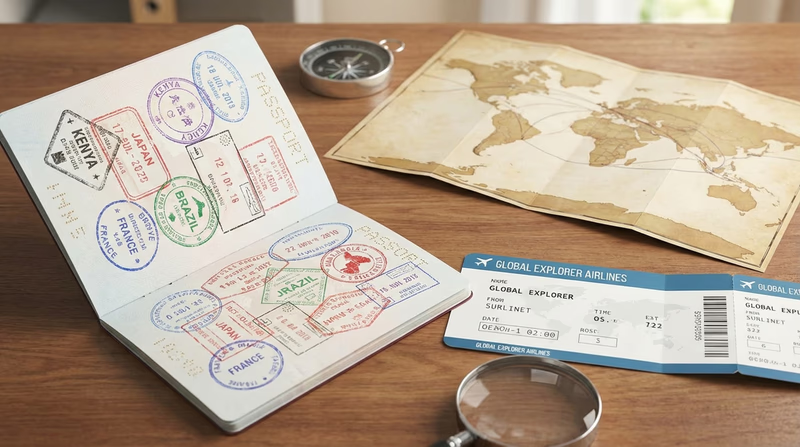
You now understand the machinery of diplomacy — from ambassadors to passports. For your final requirement, you get to explore the world firsthand.