Req 7 — World Exploration Activities
You choose TWO of the five options below. Each one asks you to engage with the world in a different way — through research, conversation, or experience. Read through all five, then pick the two that work best for you.
Option A: U.S. State Department Website
The U.S. State Department’s website is a treasure trove of information about how the United States engages with the rest of the world. You can find country profiles, policy statements, travel advisories, and in-depth discussions of issues like human rights, climate change, arms control, and global health.
How to Explore
- Go to state.gov with a parent or guardian’s permission.
- Browse the “Policy Issues” section to find topics that interest you — everything from counterterrorism to democracy and human rights.
- Check out country profiles to learn about U.S. relations with specific nations.
- Look at the “Traveler’s Checklist” section to see how the State Department helps Americans abroad.
Option B: International News & Human Rights
This option asks you to find a real-world example of a right that Americans enjoy but people in another country do not. This exercise helps you appreciate what you have and understand that rights are not universal.
Human Rights to Look For
Here are some rights guaranteed in the United States that are restricted or absent in certain other countries:
- Freedom of speech — In some countries, criticizing the government can lead to imprisonment.
- Freedom of religion — Some nations have an official state religion and restrict or persecute people of other faiths.
- Freedom of the press — Many countries censor or control news media.
- Right to a fair trial — Some judicial systems lack independence from the government.
- Freedom of assembly — In some places, protesting is illegal or dangerous.
- Equal rights for women — Some countries restrict women’s ability to work, drive, travel, or own property.
Where to Look
- BBC World News (bbc.com/news/world)
- Al Jazeera English (aljazeera.com)
- Deutsche Welle (DW) (dw.com) — Germany’s international broadcaster
- Reporters Without Borders (rsf.org) — Tracks press freedom worldwide
- Your local library may carry foreign newspapers or provide access to international news databases.
Option C: Visit with an International Student or Scout
One of the best ways to learn about another culture is to talk to someone who grew up in it. This option asks you to have a real conversation with someone from another country.
How to Find Someone
- Exchange students at your school or a nearby school
- International Scouts — your council may have connections with visiting Scouts or troops from other countries
- Community members — neighbors, family friends, or members of your place of worship who came from another country
- Cultural organizations — many communities have cultural centers or heritage groups
Conversation Starters
Discussion Topics
Questions to ask your international friend
- What holidays does your family celebrate? What do you do on those days?
- What foods are traditional in your culture? What is your favorite?
- What values does your culture emphasize? (Family, respect for elders, education, hospitality?)
- What is school like in your country? How is it different from here?
- What surprised you most about the United States when you first came here?
- What do you miss most about your home country?
- What is Scouting like in your country (if they are a Scout)?
Option D: WOSM Event
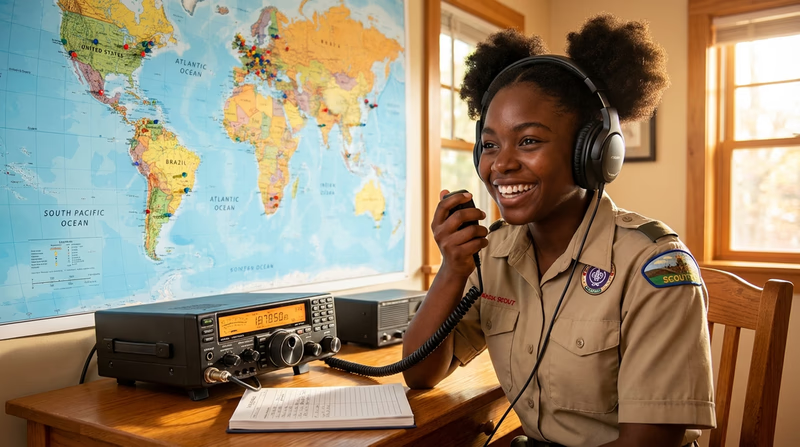
WOSM events bring Scouts from around the world together. Some are in-person gatherings, and others happen over the airwaves or the internet — so distance is no barrier.
Types of WOSM Events
World Scout Jamboree — A massive gathering of Scouts from around the world, held every four years in a different country. Tens of thousands of Scouts camp, learn, and build friendships together.
Jamboree Over The Air (JOTA) — An annual event where Scouts use amateur (ham) radio to contact other Scouts in different countries. It happens every October and is one of the largest Scouting events in the world.
Jamboree Over The Internet (JOTI) — Similar to JOTA, but using the internet. Scouts connect through video calls, chat rooms, and online activities. JOTI runs alongside JOTA each October.
World Scout Moot — A gathering for older Scouts and Rovers (ages 18–25), focused on service, adventure, and cultural exchange.
National or Regional Jamborees — Large Scouting gatherings organized by national Scout organizations. The U.S. National Jamboree, for example, draws Scouts from across the country and often hosts international visitors.
World Organization of the Scout Movement — Events Find upcoming WOSM events, including Jamboree Over The Air and Jamboree Over The Internet, which you can participate in from home.Option E: International Event in Your Area
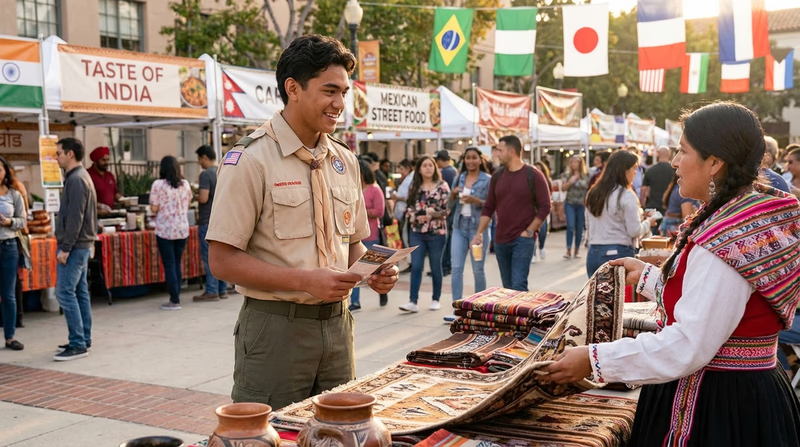
You do not have to travel the world to experience it. Many communities host international events that bring global cultures right to your doorstep.
Events to Look For
- Cultural festivals — Greek festivals, Chinese New Year celebrations, Diwali festivals, Oktoberfest, Cinco de Mayo events, Juneteenth celebrations
- International food fairs — Many cities host food festivals featuring cuisines from around the world
- Music and dance performances — Concerts, recitals, or dance shows featuring international artists or traditional performances
- Film festivals — Some theaters or libraries host foreign film screenings
- Cultural heritage months — Events celebrating Asian American, Hispanic, African American, Native American, and other cultural heritages
- Art exhibits — Museums and galleries often feature international artists
You have completed all seven requirements. But your journey as a world citizen is just beginning.