 Getting Started
Introduction & Overview
Thirty feet off the ground, your fingertips curl over a ledge you cannot see. Your legs push against tiny footholds. Your belayer watches every inch of rope. In that moment, climbing is not just exercise — it is a conversation between your body, the rock, and the person holding your lifeline. Few merit badges demand this kind of trust, focus, and physical problem-solving all at once.
Climbing teaches you to read terrain, manage risk, and rely on a partner whose attention could save your life. Whether you scramble up a granite face in the backcountry or clip into a colorful route at your local gym, the skills you build here transfer to every outdoor adventure you will ever take.
Then and Now
Then
People have climbed mountains for centuries — to hunt, to explore, and to prove it could be done. Modern rock climbing traces its roots to the European Alps in the mid-1800s, when mountaineers like Edward Whymper made the first ascent of the Matterhorn in 1865. Back then, climbers wore hobnail boots, tied hemp ropes around their waists, and hammered iron pitons into cracks for protection. Falls were often fatal.
In the 1950s and 1960s, a group of climbers in Yosemite Valley pushed the sport forward. Royal Robbins, Yvon Chouinard, and Warren Harding developed techniques for scaling massive granite walls like El Capitan. They invented new gear — hexagonal chocks, spring-loaded camming devices — and debated the ethics of leaving permanent anchors in the rock. Their innovations shaped the sport we know today.
Now
Climbing exploded in popularity when sport climbing debuted at the 2020 Tokyo Olympics. Today, over 45 million people climb worldwide. Indoor climbing gyms have made the sport accessible to anyone — no mountain required. Modern dynamic ropes stretch to absorb falls. Lightweight harnesses, sticky-rubber shoes, and precision-engineered carabiners make climbing safer and more comfortable than ever before. Route-setting has become an art form, and competitions draw millions of viewers.
Yet the core challenge remains the same: you, the wall, and the next hold.
Get Ready!
Kinds of Climbing
Top-Rope Climbing
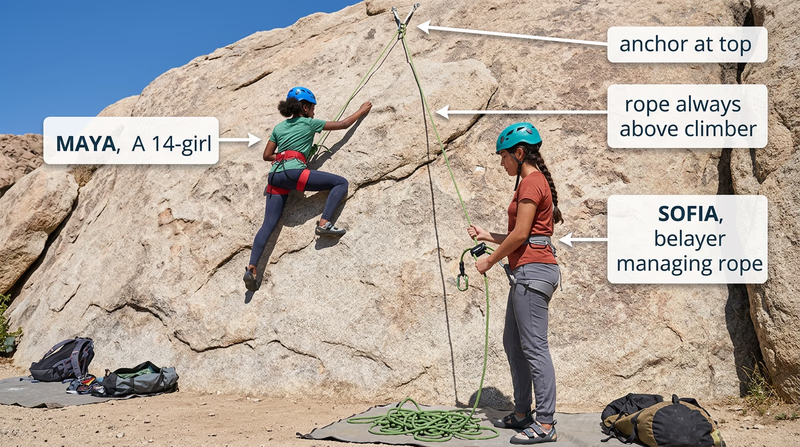
In top-rope climbing, the rope runs from the climber up to an anchor at the top of the route and back down to the belayer on the ground. Because the rope is always above you, a fall is short — usually just a few inches. This is how most Scouts will learn to climb and how you will complete several requirements for this badge. Top-roping is the safest form of roped climbing and the best way to build confidence on the wall.
Lead Climbing
Lead climbing raises the stakes. The climber carries the rope up and clips it into protection points (called quickdraws) along the route. If you fall, you drop to below your last clip — potentially a much longer distance than in top-roping. Lead climbing demands more experience, better technique, and stronger nerves. Your counselor will explain this style, though the merit badge focuses on top-rope skills.
Bouldering
Bouldering strips climbing down to its essentials: no rope, no harness, just you and a short wall (usually under 20 feet). Climbers use thick crash pads on the ground and rely on spotters — people standing below ready to guide a falling climber onto the pad. Bouldering builds strength, balance, and creative problem-solving because routes (called “problems”) often require unusual body positions.
Sport Climbing
Sport climbing uses pre-placed bolts drilled into the rock for protection. Climbers clip quickdraws into these bolts as they ascend. Because the protection is already in place, sport climbers can focus on movement and difficulty rather than gear placement. Most indoor climbing routes mimic sport climbing.
Traditional (Trad) Climbing
Traditional climbers place their own removable protection — cams, nuts, and hexes — into natural cracks as they ascend, then remove the gear on the way down. Trad climbing requires deep knowledge of gear placement and rock features. It is the style closest to climbing’s historical roots and remains popular in areas like Yosemite, the Gunks in New York, and Red River Gorge in Kentucky.
Indoor Climbing
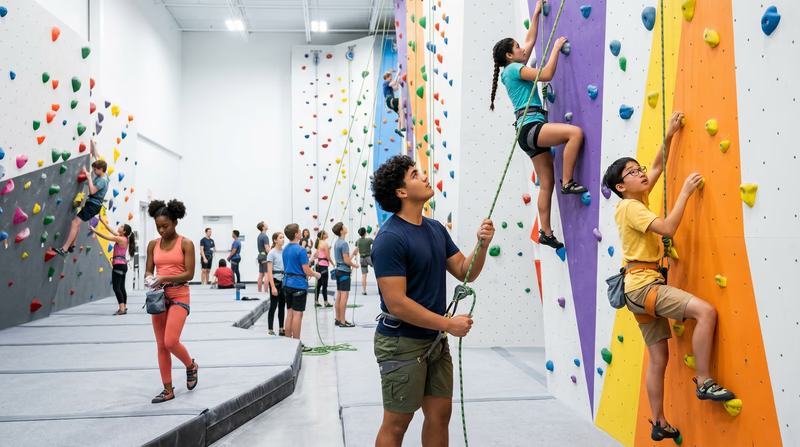
Indoor climbing gyms offer manufactured walls with artificial holds bolted to plywood panels. Routes are color-coded by difficulty and regularly reset by route-setters. Gyms provide a controlled environment for learning — consistent temperatures, no weather worries, and trained staff nearby. Many Scouts will complete their climbing requirements at an indoor facility.
Start Your Ascent
This guide walks you through every requirement of the Climbing merit badge, from safety fundamentals and rope skills to the hands-on climbing and rappelling you will do with your counselor. Each section teaches the knowledge you need so you arrive prepared and confident.