Req 12 — Rappelling Technique
This requirement has three parts:
- 12a — Show the correct way to directly tie a belay rope to your harness
- 12b — Using a carabiner and a rappel device, attach a rappel rope to your harness
- 12c — Rappel down three different rock faces or rappel routes, using verbal signals and demonstrating good technique
Walking to the edge of a cliff with nothing but a rope and a small metal device between you and the ground below — rappelling feels intimidating at first. Your brain is telling you not to lean backward over a drop. But once you trust the system, rappelling becomes one of the most exhilarating skills in climbing. The rope, the device, the belayer below, and your braking hand all work together to give you complete control of your descent.
Tying In for Rappelling (12a)
The tie-in process for rappelling is identical to climbing. Use a figure eight follow-through knot threaded through both tie-in points on your harness. This belay rope — managed by someone at the bottom using a fireman’s belay — is your safety backup during the rappel.
Review the tie-in steps in Req 11a if you need a refresher. The same knot, the same harness points, the same partner check.
Setting Up the Rappel Device (12b)
The rappel device creates friction on the rope so you can control your descent speed. You will most likely use an ATC (tubular device) or a similar device.
Setup Steps
- Thread the rappel rope through the slot in the device (for a single-rope rappel, one strand goes through one slot)
- Clip a locking carabiner through the device’s cable or loop and through your harness’s belay loop
- Lock the carabiner — check that the gate is fully closed and the lock is engaged
- Check the braking direction — the rope should feed so that pulling your brake hand down and back creates maximum friction
- Run through the CHECK system — have your partner verify the setup
The Belay Rope
In addition to the rappel rope running through your device, your belayer manages a separate belay rope (or the other end of the same rope) using a fireman’s belay from below. This is your backup — if you lose control, the belayer pulls the rope taut and stops your descent.
Rappelling Technique (12c)
Good rappelling technique is smooth, controlled, and deliberate. Jerky movements and excessive speed are the signs of a nervous or untrained rappeller.
Getting Started
The hardest part of rappelling is the first move — leaning back over the edge. Here is how to do it:
- Face the anchor with the rope running through your device
- Feet at the edge, shoulder-width apart
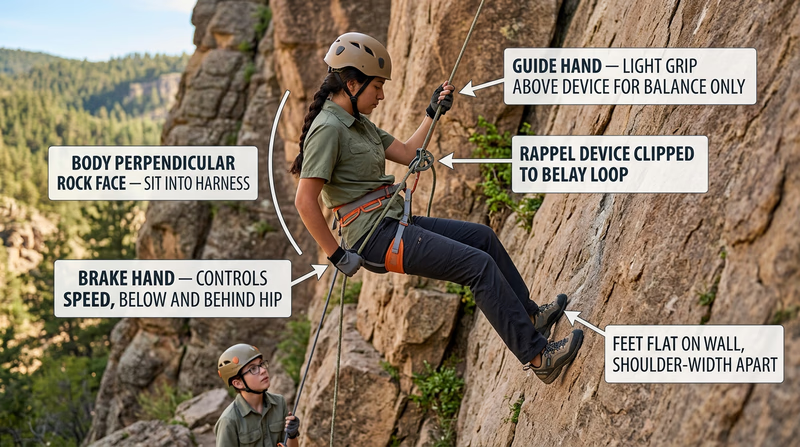
- Hold the rope with your brake hand below the device (this is your speed control)
- Hold the rope above the device lightly with your guide hand (for balance only — never use it for braking)
- Slowly lean back, walking your feet to the edge until your body forms an L-shape — feet flat on the wall, torso perpendicular to the rock face
- Begin feeding rope through the device with your brake hand
Descending
- Feet flat on the wall, shoulder-width apart, legs slightly bent
- Body perpendicular to the rock face — sit back into the harness
- Feed rope smoothly with your brake hand — small, controlled movements
- Walk down the wall in steady steps, matching your footwork to your rope feed
- Do not bounce or jump — this shocks the system and can damage the rope or anchor
- Look down periodically to check your path and landing zone
Speed Control
Your brake hand is your throttle. The tighter you grip and the more you bend the rope, the slower you go. To stop completely, pull the rope behind your hip — this maximizes friction and locks you in place.
Communication
Use the rappelling signals from Req 5:
- You: “On rappel?”
- Belayer: “Rappel on.”
- You: “Rappelling!”
- (Descend the route)
- You: “Off rappel.”
- Belayer: “Belay off.”
Three Rappels, Three Routes
Like climbing, your counselor will have you rappel three different routes. Use each one to improve:
- Rappel 1 — Focus on getting comfortable leaning back and controlling speed. It is okay to go slowly.
- Rappel 2 — Work on smooth, steady footwork. Walk down the wall in even steps.
- Rappel 3 — Put it together. Smooth descent, confident signals, controlled speed, clean landing.