Req 1c — CPR Readiness
A climbing partner takes a long fall, swings hard into the wall, and hangs motionless on the rope. Your belayer lowers them to the ground. They are not moving. You shout their name — no response. In that moment, you need to know exactly when CPR is appropriate and when it is not. Starting CPR on someone who does not need it can cause harm. Not starting it on someone who does can cost their life.
What Is CPR?
CPR stands for cardiopulmonary resuscitation. It is a combination of chest compressions and rescue breaths designed to keep blood and oxygen flowing through the body when the heart has stopped beating or a person has stopped breathing. CPR does not restart the heart on its own — it buys time until advanced medical help arrives or a defibrillator (AED) can be used.
The Three Conditions for CPR
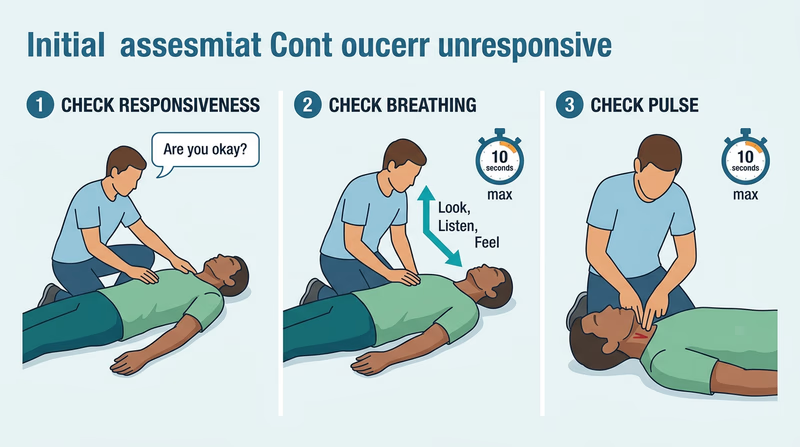
All three of these conditions must be present before you begin CPR:
1. The Person Is Unresponsive
Tap their shoulders firmly and shout, “Are you okay?” If they do not respond — no movement, no sound, no eye opening — they are unresponsive. A person who moans, pulls away from pain, or opens their eyes does not need CPR, even if they are confused or injured.
2. The Person Is Not Breathing Normally
Once you determine unresponsiveness, check for breathing. Look for chest rise and fall. Listen for breath sounds. Feel for air on your cheek. Take no more than 10 seconds to check.
Gasping is not normal breathing. Occasional gasping breaths (called agonal breathing) can occur when the heart stops. These look like irregular, labored gulps of air. If you see gasping but no steady, regular breathing, treat it as “not breathing” and begin CPR.
3. There Is No Pulse (or You Cannot Find One)
Check for a pulse at the carotid artery — the side of the neck, between the windpipe and the large muscle. Use two fingers (not your thumb, which has its own pulse). Check for no more than 10 seconds.
If you cannot find a pulse within 10 seconds, begin CPR. In a high-stress situation, finding a pulse can be difficult even on a living person. Current guidelines from the American Heart Association say that if a person is unresponsive and not breathing normally, you should begin CPR even if you are unsure about the pulse.
When NOT to Perform CPR
CPR is only for people who are unresponsive, not breathing normally, and have no pulse. Do not perform CPR if:
- The person is conscious and talking
- The person is breathing normally, even if unconscious (place them in the recovery position instead)
- The person has a clear pulse
- The scene is unsafe for you (active rockfall, unstable terrain, electrical hazard) — you cannot help anyone if you become a second victim
CPR in a Climbing Context
Climbing adds complications that make CPR scenarios more challenging:
- Vertical terrain: You cannot perform CPR on someone hanging from a rope. The person must be lowered to flat ground first. This is why belaying skill and rescue knowledge are so critical.
- Remote locations: Outdoor climbing areas may be far from emergency services. Cell phone reception is unreliable in canyons and mountain areas. In Req 4d, you will plan how to summon help.
- Limited help: You may be the only trained person at the crag. This makes CPR and first aid training even more important for everyone in your climbing group.
Get Trained
Reading about CPR is not the same as practicing it. To be truly prepared, take a hands-on CPR course where you practice on a training mannequin with a certified instructor. Many Scout councils offer CPR training, and the First Aid merit badge covers CPR in detail.
American Heart Association — CPR Training Find CPR courses and certification near you through the American Heart Association.