Req 3 — Dressing for the Climb
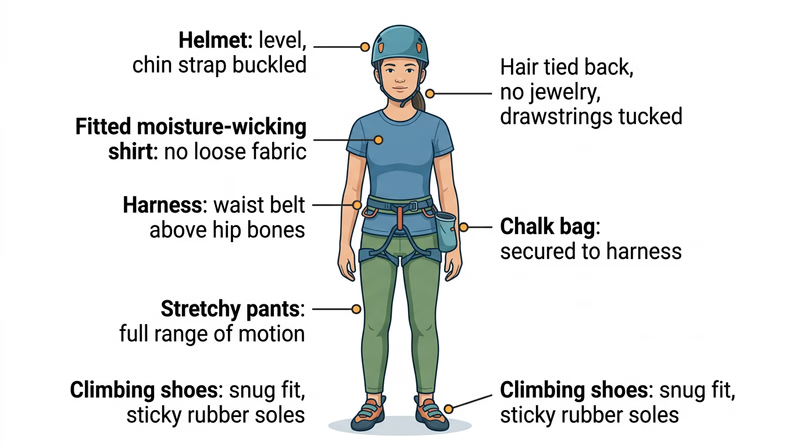
Your clothing is gear. A loose hoodie string that catches in your belay device. Baggy shorts that snag on a quickdraw. Jeans so stiff you cannot high-step to the next foothold. What you wear directly affects how safely and comfortably you climb. Your counselor will ask you to present yourself dressed and ready — and to explain every choice.
Easy Movement
Climbing demands a huge range of motion. You will high-step, reach overhead, twist sideways, and squat deep against the wall. Your clothing needs to move with you, not against you.
Pants or shorts: Choose stretchy, lightweight pants or shorts that allow you to lift your knee to your chest. Many climbers prefer pants with a gusseted crotch — an extra panel of fabric that adds freedom of movement. Athletic shorts or stretchy hiking pants work well. Avoid jeans, cargo pants, or anything stiff.
Shirt: A fitted, moisture-wicking T-shirt or long-sleeve shirt works best. It should be snug enough that it does not catch on gear but loose enough for full arm extension. Synthetic fabrics or merino wool dry faster than cotton.
Entanglement Free
Anything dangling from your body can get caught in a belay device, carabiner, or crack in the rock. Entanglement while belaying or rappelling can jam your system and create a dangerous situation.
Specific entanglement risks:
- Drawstrings on hoodies and jackets — tuck them in or tie them short
- Jewelry — remove necklaces, bracelets, and dangling earrings
- Long hair — tie it back in a bun or braid and tuck it under your helmet
- Loose straps on backpacks or chalk bags — secure all dangling webbing
- Watch bands and fitness trackers — remove or cover them
Weather Protection and Comfort
Outdoor climbing means dealing with sun, wind, rain, and temperature swings — sometimes all in one day.
Sun Protection
At the crag, you may be exposed to direct sun for hours. Apply sunscreen before you start climbing (it is hard to reapply when your hands are chalked). A lightweight, brimmed hat works during belaying. Some climbers wear a thin sun hoodie for UV protection.
Wind and Cold
Wind accelerates heat loss, especially when you are standing at a belay station waiting your turn. Bring a lightweight wind shell that packs into your harness or a small bag. A thin insulating layer (fleece or puffy jacket) should be accessible at the base.
Rain
If rain is possible, carry a waterproof shell. Rain makes rock extremely slippery and increases the risk of hypothermia. As you learned in Req 1a, wet conditions are a serious hazard — you should stop climbing in rain.
Layering System
The classic layering system works perfectly for climbing:
| Layer | Purpose | Examples |
|---|---|---|
| Base layer | Wicks sweat away from skin | Synthetic or merino wool T-shirt |
| Mid layer | Insulates and retains heat | Fleece pullover, thin puffy jacket |
| Outer layer | Blocks wind and rain | Lightweight wind shell or rain jacket |
Remove and add layers as your activity level changes. You will be warm while climbing and cool while belaying — plan for both.
Footwear
Climbing shoes are specialized footwear with sticky rubber soles that grip rock. They fit tightly — much tighter than street shoes — to give you precise control over your foot placement. Your counselor or gym will help you find the right size. Climb in the shoes, but walk around in approach shoes or hiking shoes.
Approach shoes or hiking shoes get you to the crag. They should have good ankle support and grippy soles for rough terrain.
Putting It All Together
When your counselor asks you to present yourself dressed for climbing, think through these three principles: Can I move freely? Is anything dangling that could snag? Am I prepared for the weather? If you can say yes, yes, and yes — you are ready.
Pre-Climb Clothing Check
Run through this before every climb
- Stretchy pants or shorts that allow full range of motion.
- Fitted, moisture-wicking shirt (no loose fabric).
- All drawstrings tucked in or removed.
- Jewelry removed; long hair secured.
- Climbing shoes fitted and comfortable.
- Weather layers accessible (not worn while climbing if not needed).
- Sunscreen applied.