Req 4b — Climbing Styles
These three styles of climbing look similar from a distance — someone going up a wall — but the rope systems, risk profiles, and skills involved are fundamentally different. Understanding these distinctions helps you choose the right style for your experience level and communicate knowledgeably with your counselor.
Top-Rope Climbing
In top-rope climbing, the rope is anchored at the top of the route before the climber begins. The rope runs from the belayer on the ground, up through the anchor, and back down to the climber’s harness. As the climber ascends, the belayer takes in slack so the rope stays taut above.
What makes it safer: If the climber falls, they only drop a few inches — the distance of whatever slack was in the rope. There is no long fall. This makes top-roping the standard style for beginners and the method you will use for most of your merit badge climbing.
Setup: Someone must first get the rope to the top. This can be done by hiking to the top of the cliff and building an anchor, or by a lead climber ascending first and setting the anchor for everyone else.
Limitations: You can only top-rope routes where you can safely access the top or where an experienced climber can lead the route first. The rope creates friction through the top anchor, which means the belayer has to pull harder as the climber gets higher.
Lead Climbing
In lead climbing, the climber starts from the ground with the rope trailing below, clipping it into protection points (quickdraws on bolts, or removable gear in cracks) as they ascend. The belayer feeds rope out as the climber moves up.
The key difference: If a lead climber falls, they drop twice the distance to their last clip, plus rope stretch. For example, if you are 5 feet above your last quickdraw, you will fall 10 feet (5 feet down to the quickdraw, plus 5 feet below it) before the rope catches you.
Why it matters: Lead falls are longer, more dynamic, and demand more from both the climber and the belayer. The belayer must feed rope smoothly and catch falls without being pulled off balance. Lead climbing requires advanced skills and more experience than top-roping.
Gear: Sport lead climbing uses pre-placed bolts and quickdraws. Traditional (trad) lead climbing requires the climber to place removable protection in cracks — a skill that takes significant training.
Bouldering
Bouldering is climbing without ropes on short walls or boulders, typically under 20 feet. Instead of a belay system, boulderers use thick foam crash pads on the ground and rely on spotters.
The appeal: Bouldering strips climbing down to pure movement. Routes (called “problems”) are short but intensely difficult. Each problem is a puzzle — figuring out the sequence of moves is half the challenge. Bouldering builds strength, flexibility, and creative problem-solving faster than any other climbing style.
Spotting: A spotter does not catch the falling climber. Instead, the spotter guides the climber’s upper body so they land feet-first on the crash pad. Spotting is a skill that requires attention and positioning — you will practice it in Req 5d.
Risks: Even at low heights, awkward falls cause injuries. Ankle sprains and wrist fractures are the most common. Always use crash pads, keep the landing zone clear of rocks and gear, and have at least one attentive spotter.
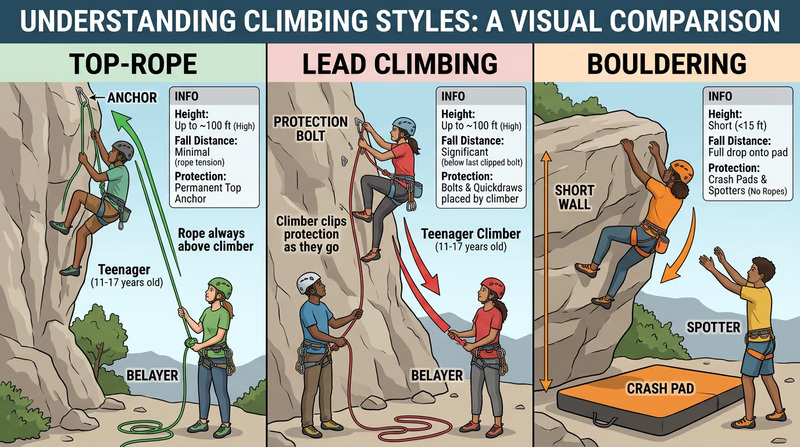
Comparing the Three Styles
| Feature | Top-Rope | Lead | Bouldering |
|---|---|---|---|
| Rope | Anchored at top | Climber clips as they go | No rope |
| Fall distance | Inches | Feet to tens of feet | Full height to ground |
| Protection | Top anchor | Bolts or removable gear | Crash pads + spotter |
| Best for | Beginners, skill building | Experienced climbers | Strength, problem-solving |
| Height | Full wall height | Full wall height | Under 20 feet |