Req 4c — Site Safety Evaluation
Two climbing areas rated the same difficulty can have wildly different risk profiles. One crag has solid granite, good bolts, and a flat approach. Another has crumbly sandstone, rusty anchors, and a loose scree slope at the base. The rating tells you how hard the climbing moves are. The site evaluation tells you whether it is safe to climb there today.
Weather Assessment
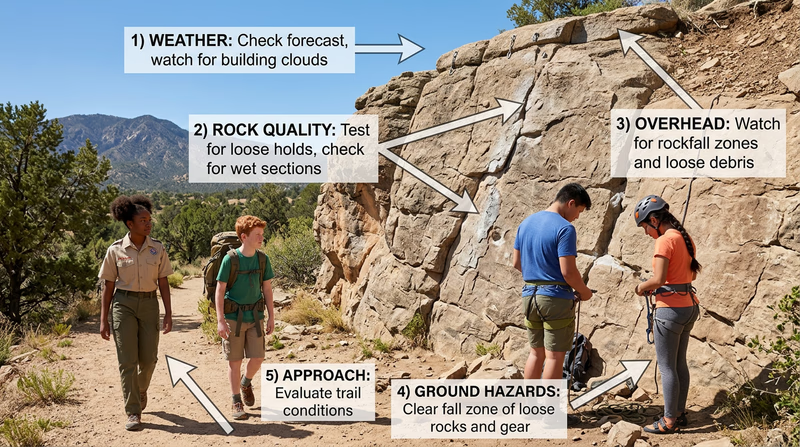
Weather is the most dynamic safety factor. It can change within hours and turn a safe crag into a dangerous one.
Before you leave home:
- Check the forecast for the climbing area — not just your town. Mountain weather can differ dramatically from the valley.
- Look for precipitation chances, wind speed, and temperature highs and lows.
- Check for thunderstorm warnings. Lightning and exposed rock are a lethal combination.
At the crag:
- Scan the sky for building cumulus clouds (the tall, puffy ones that signal thunderstorms).
- Feel for sudden temperature drops or wind shifts — both signal incoming weather.
- If rain has fallen recently, rock may still be wet and slippery even under clear skies. Sandstone is particularly dangerous when wet because it weakens structurally.
Visibility
Good visibility keeps everyone safe. You need to see your climber, your climber needs to see holds, and everyone needs to spot rockfall.
Factors that reduce visibility:
- Fog or low clouds at the crag
- Fading daylight (never climb in the dark)
- Sun glare — early morning or late afternoon sun can blind belayers looking up
- Dust kicked up by wind or nearby activity
What to do: If visibility is poor, move to routes where the belayer can see the climber clearly. Adjust your position to avoid sun glare. Plan to finish climbing well before sunset — packing up in the dark on uneven terrain invites ankle injuries.
Climbing Surface Condition
The rock itself can be the biggest hazard. Evaluate it before trusting it with your life.
What to look for:
| Condition | Risk | What to Do |
|---|---|---|
| Loose or flaky rock | Holds break off, rockfall danger | Avoid the route or test holds carefully |
| Wet rock | Slippery holds and reduced friction | Wait for it to dry; sandstone may need 24–48 hours |
| Lichen or moss | Extremely slippery, hides hold quality | Avoid covered areas |
| Fractured or cracked rock | Entire sections can shift | Assess whether cracks are stable or active |
| Sandy or dirty holds | Reduced grip, especially on slabs | Brush holds before climbing |
Environmental Hazards
Look beyond the rock face itself. The entire area around the climbing site affects safety.
Ground hazards: Uneven or sloping ground at the base makes belaying difficult and landing from bouldering falls dangerous. Look for tripping hazards — roots, loose rocks, gear scattered on the ground.
Overhead hazards: Are there climbers above you who might knock down rocks? Are there dead trees or loose boulders above the crag that could come down in wind? Is there an active trail above the cliff edge where hikers might kick rocks over?
Biological hazards: Check for poison ivy, poison oak, or stinging nettle near the base and on approach trails. Look for wasp nests in cracks and on ledges. In snake country, watch where you put your hands at ground level.
Access and terrain: Evaluate the approach trail. A dangerous approach hike increases overall risk even if the climbing itself is safe. Steep scree slopes, river crossings, and scrambling sections all add hazard.
Making the Call
Site evaluation is not just an exercise for your counselor — it is a decision-making process. After assessing all factors, you should be able to answer: Is it safe to climb here, right now?
Sometimes the answer is “not today.” Maybe the rock is wet. Maybe weather is moving in. Maybe the only available routes are above your skill level. A good climber knows when to walk away. That takes more judgment than any move on the wall.
American Alpine Club — Know Before You Go Safety resources for climbers, including accident reports that highlight real-world consequences of poor site evaluation.