Req 4d — Emergency Planning
A climber breaks an ankle on a ledge forty feet up. The nearest road is a twenty-minute hike through the woods. Cell service is spotty. Who calls for help? What do you tell them? How does the rescue team find you? These questions need answers before anyone ties into the rope — not while someone is screaming in pain on the wall.
Building an Emergency Plan
Every climbing outing needs a simple, written emergency plan. It does not have to be complicated, but it must cover four questions:
1. How Do We Call for Help?
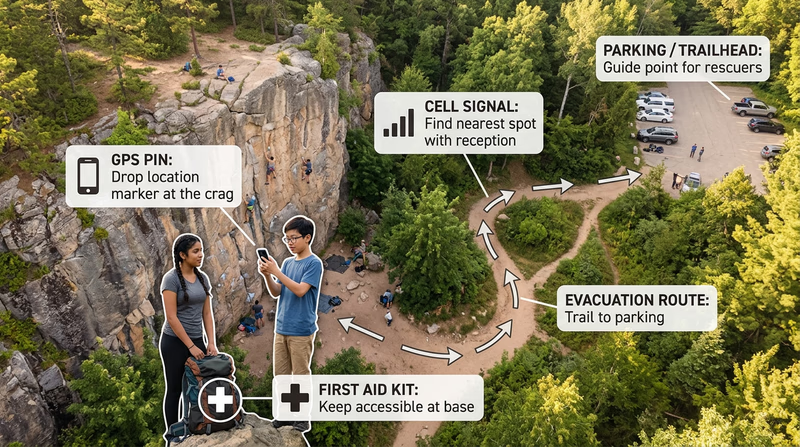
- Cell phone coverage: Test your phone at the climbing area before you start climbing. Many crags have dead zones. If you cannot get a signal at the base, walk the area and find the closest spot where you can. Note that location.
- Designated caller: Assign one person in the group who carries a fully charged phone and knows they are the emergency caller.
- Alternative communication: If cell service is unreliable, consider carrying a personal locator beacon (PLB) or satellite messenger. These devices send emergency signals via satellite from anywhere.
2. What Do We Tell Them?
When calling 911 or emergency services, provide:
Emergency Call Information
Have this ready before you need it
- Your name and the number of people in your group.
- Exact location: GPS coordinates, trail name, and landmark descriptions.
- Nature of the injury: what happened, what hurts, level of consciousness.
- Current conditions: weather, time of day, terrain description.
- Access information: how rescue teams can reach you (trail name, parking area, approach directions).
3. How Does the Rescue Team Find Us?
Remote climbing areas can be hard to locate from the air or the trail. Help the rescue team by:
- Providing GPS coordinates (latitude/longitude, not just an address)
- Describing landmarks: “The cliff face is 200 yards north of the creek crossing on the Blue Trail”
- Sending someone to the trailhead or parking area to guide rescuers in
- Using a whistle, mirror, or bright-colored gear to signal if a helicopter is searching
4. What Do We Do While Waiting?
- Keep the injured person calm, warm, and still
- Treat injuries with your first aid knowledge from Req 1b
- Do not move someone with a suspected spinal injury unless they are in immediate danger
- Monitor their condition and note any changes to report to responders
- Clear the landing zone if helicopter evacuation is possible
Medical Training for Your Group
The remoteness of the climbing area determines how much medical training your group needs. More remote means more self-reliance.
| Setting | Minimum Training | Why |
|---|---|---|
| Indoor gym | Basic first aid | Staff and EMS are minutes away |
| Roadside crag (near parking) | First aid + CPR | EMS can reach you in 15–30 minutes |
| Backcountry crag (1+ hour from road) | Wilderness First Aid (WFA) | You may need to stabilize injuries for hours before help arrives |
| Remote alpine (multi-day approach) | Wilderness First Responder (WFR) | Days from medical care; advanced skills essential |
For most Scout climbing activities, at least one adult leader should hold current first aid and CPR certification. For remote locations, Wilderness First Aid (WFA) is strongly recommended — it is a 16-hour course that teaches you how to assess and manage injuries when a hospital is hours away.
Indoor Climbing Emergencies
If you are completing your merit badge at an indoor climbing gym, the emergency plan is simpler but still necessary. Know where the first aid kit is. Know where the AED (automated external defibrillator) is located. Know the gym’s emergency procedures — most gyms have posted protocols and trained staff. Your counselor should orient you to these before climbing begins.
NOLS Wilderness Medicine — Course Finder Find Wilderness First Aid and Wilderness First Responder courses near you.