Req 8 — Personal Protective Equipment
This requirement covers three pieces of personal protective equipment:
- Commercially made climbing harness (8a)
- Climbing helmet (8b)
- Climbing or rappelling gloves (8c)
These three items protect you from the three most common categories of climbing injury: falls (harness), head impact (helmet), and rope friction (gloves). None of them help if they are fitted wrong or worn incorrectly.
Climbing Harness (8a)
A climbing harness distributes the force of a fall across your hips and thighs — the strongest parts of your body. Without a harness, a fall onto a rope tied around your waist could break ribs, damage internal organs, or cut off circulation in minutes.
Parts of a Harness
| Part | Purpose |
|---|---|
| Waist belt | Wraps around the waist above the hip bones; carries most of the load |
| Leg loops | Encircle each upper thigh; distribute force and prevent you from flipping upside down |
| Belay loop | The reinforced loop on the front where you attach your belay device and clip into anchors |
| Tie-in points | Two hard points (above and below the belay loop) where you thread the rope for the figure eight follow-through |
| Gear loops | Loops on the sides for carrying quickdraws, carabiners, and other hardware |
| Buckles | Secure the waist belt and leg loops; must be doubled back on older designs |
Putting It On
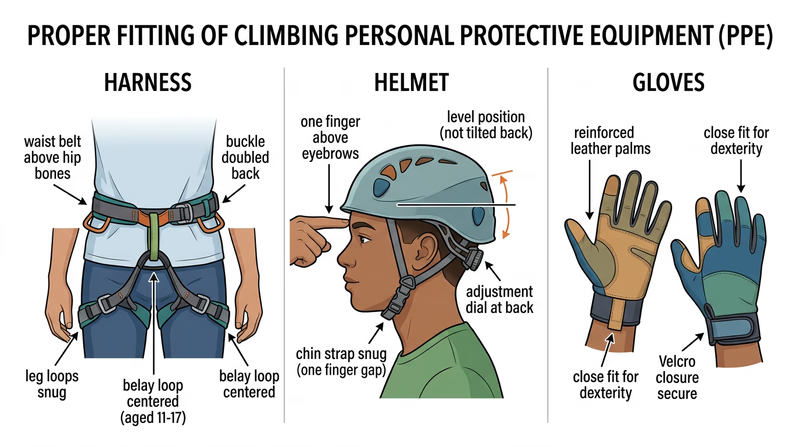
- Hold the harness in front of you with the belay loop facing forward and the waist belt at the top
- Step into the leg loops — left leg in the left loop, right leg in the right
- Pull the harness up so the waist belt sits above your hip bones, not on your hips
- Tighten the waist belt snugly — you should be able to fit a flat hand between the belt and your body, but not a fist
- Tighten the leg loops comfortably — snug but not restrictive
- If your harness has buckles that require doubling back, thread the webbing through the buckle and back through again. Many modern harnesses have auto-locking buckles that eliminate this step.
Climbing Helmet (8b)
A climbing helmet protects against two threats: objects falling from above (rockfall, dropped gear) and impacts during falls (swinging into the wall, hitting a ledge).
Types of Helmets
| Type | Construction | Characteristics |
|---|---|---|
| Hardshell | ABS plastic outer shell with foam suspension | Durable, affordable, heavier |
| In-mold | EPS foam with thin polycarbonate shell | Lighter, better ventilation, less durable to multiple impacts |
| Hybrid | Combination of both | Balances weight, protection, and durability |
Putting It On
- Adjust the sizing system (dial or strap at the back) to fit your head snugly
- The helmet should sit level on your head — not tilted back like a baseball cap
- The front edge should be about one finger-width above your eyebrows
- Buckle the chin strap and tighten it so you can fit one finger between the strap and your chin
- Shake your head side to side and up and down — the helmet should not shift or wobble
When to Wear It
Wear a helmet for all outdoor climbing, rappelling, and belaying. Indoor climbing gyms generally do not require helmets because there is no rockfall risk, but some programs and counselors may require them. When in doubt, wear the helmet.
Climbing or Rappelling Gloves (8c)
Gloves protect your hands from rope friction, especially during rappelling where the rope slides through your braking hand under load. Without gloves, a fast rappel or a sudden stop can cause painful rope burns.
When to Wear Gloves
- Rappelling: Always. The rope generates significant friction and heat through your braking hand.
- Belaying: Optional but recommended, especially for long belaying sessions or when lowering heavy climbers.
- Climbing: Generally not worn while climbing — gloves reduce the sensitivity you need to grip holds. Remove them before you start climbing.
Choosing the Right Gloves
Climbing and rappelling gloves are not regular work gloves. Look for:
- Leather or reinforced palms for heat and abrasion resistance
- Close fit that allows you to operate belay devices and carabiners
- Secure closure (usually Velcro) so they do not slip off
- Reinforced fingers if you plan to belay for extended sessions
A Note on Equipment Standards
All climbing harnesses, helmets, and carabiners sold by reputable manufacturers meet certification standards set by the UIAA (International Climbing and Mountaineering Federation) or CE (European conformity). Look for these markings on your gear. Never use homemade harnesses, improvised helmets, or uncertified equipment for climbing.
UIAA — Safety Standards Learn about the international safety standards that climbing equipment must meet to be certified for use.