Req 9 — Pre-Climb Safety Check
A climber ties in, the belayer loads the rope into the device, and someone calls “Climbing!” Everything looks fine — but the belayer’s carabiner gate is not locked. One wrong move and the rope unclips from the belay device. This near-miss happens more often than anyone wants to admit, and it is exactly what the CHECK system prevents.
The CHECK system is a pre-climb safety inspection that both the climber and belayer perform before anyone leaves the ground. It takes thirty seconds and catches the mistakes that cause accidents.
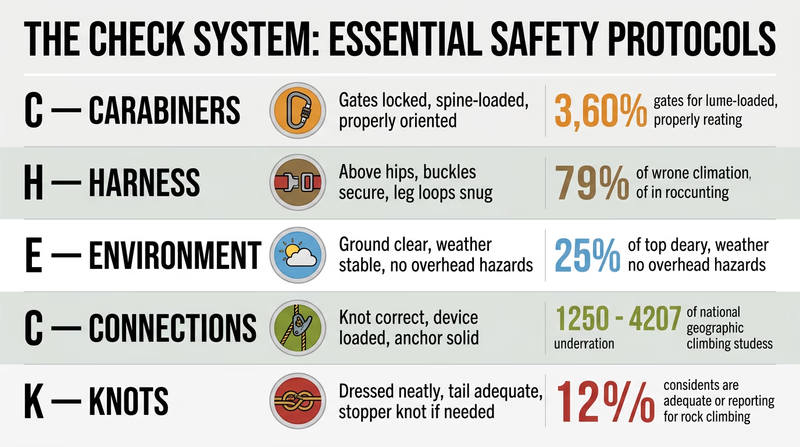
C — Carabiners
Check every carabiner in the system. Is each one:
- Locked? Screw-gate carabiners should be screwed shut. Auto-locking carabiners should click into the locked position. An unlocked carabiner can open under load and release the rope.
- Properly oriented? The carabiner gate should face away from the rock and away from the direction of loading. A gate pressed against rock can be forced open.
- Loaded on the spine? Carabiners are strongest when the load runs along the spine (the solid side opposite the gate). Cross-loading — where the force pulls across the gate — reduces strength by up to 70%.
H — Harness
Check both the climber’s and belayer’s harnesses:
- Waist belt above the hip bones? A low belt can allow the climber to slip out during an inverted fall.
- Buckles doubled back? (If the harness requires it.) Modern auto-locking buckles do not need doubling back, but many rental and older harnesses do.
- Leg loops snug? Loose leg loops let the climber slide down in the harness during a fall.
- Belay loop intact? No fraying, cuts, or visible wear.
- Gear loops clear? Nothing is clipped to a gear loop that should be on the belay loop.
E — Environment
Look around you. Assess the immediate climbing environment:
- Is the ground clear? Remove loose rocks, gear, water bottles, and anything else from the fall zone and the belayer’s stance.
- Is the weather stable? Any signs of incoming rain or lightning?
- Are other climbing parties nearby? Could their activities (rappelling, knocking rocks) create hazards?
- Is there enough light? Can you see the route clearly?
C — Connections
Check every point where the system connects:
- Climber’s knot: Is the figure eight follow-through tied correctly with a sufficient tail? Are the strands parallel through the knot?
- Rope through the harness: Is the rope threaded through both tie-in points (not just the belay loop)?
- Belay device threaded correctly? Is the rope loaded properly into the ATC, GriGri, or other device?
- Anchor connections (if applicable): Is the top-rope anchor built correctly and equalized?
K — Knots
The final check focuses specifically on knots:
- Figure eight follow-through: Parallel strands, dressed neatly, tail at least 6 inches
- Stopper knot on the rope end: If the rope is shorter than twice the route height, tie a stopper knot in the free end so the belayer cannot accidentally feed all the rope through the device during a lower
- Any knots in the anchor system: Properly tied, dressed, and loaded correctly
Make It a Habit
The CHECK system is not a formality. It is a structured way to catch the mistakes that experience alone does not prevent. Even professional climbing guides run through a safety check before every pitch. Make it a habit from your very first climb, and it will protect you for the rest of your climbing life.
CHECK Quick Reference
Run through before every climb
- Carabiners: Locked, properly oriented, loaded on the spine.
- Harness: Waist belt above hips, buckles secure, leg loops snug.
- Environment: Ground clear, weather stable, no overhead hazards.
- Connections: Knot to harness correct, belay device loaded properly, anchor solid.
- Knots: Figure eight dressed, stopper knot on rope end if needed.