 Getting Started
Introduction & Overview
Every coin tells a story. The Lincoln cent in your pocket has traveled through thousands of hands since it left the Mint. The quarter in your change jar might feature a national park you have visited — or one you dream of seeing. And somewhere in a forgotten drawer, a coin from 1943 made of steel instead of copper is waiting for a collector sharp enough to spot it.
Coin collecting — called numismatics when you get serious about it — is one of the oldest hobbies in the world. Kings, presidents, and ordinary people have all been drawn to the art, history, and mystery packed into these small metal discs. This merit badge will teach you how coins are made, how to read their designs, and how to start building a collection of your own.
Then and Now
Then
Coin collecting has been called the “Hobby of Kings” — and that is not just a saying. Roman Emperor Augustus collected ancient Greek coins in the first century AD. During the Renaissance, Italian nobles competed to assemble the finest “cabinets of curiosities,” with rare coins as the crown jewels. When the United States was young, collectors saved early American copper cents and silver dollars, recognizing that these coins captured the spirit of a brand-new nation.
For most of history, collecting meant examining coins by eye, trusting your own judgment about condition, and storing them in wooden cabinets or velvet-lined trays. There were no standardized grades, no certification services, and no internet — just collectors trading knowledge and coins at local shops and through the mail.
Now
Modern numismatics is a blend of tradition and technology. Third-party grading services like PCGS and NGC use expert teams and precise scales (from 1 to 70) to authenticate and grade coins in tamper-evident holders. Online marketplaces let you buy a Roman denarius from a seller in London while sitting at your kitchen table. Digital cataloging apps help you track every coin in your collection with photos, grades, and estimated values.
The U.S. Mint itself has become a collector’s best friend, releasing special programs like the 50 State Quarters, America the Beautiful series, and American Women Quarters that turn pocket change into a nationwide treasure hunt. More people collect coins today than at any point in history — and many of them started exactly where you are right now.
Get Ready!
You are about to dive into a hobby that connects you to history, art, geography, and economics — all through objects small enough to fit in your palm. By the time you finish this badge, you will know how to read a coin like a book, spot the details most people walk right past, and build a collection that is uniquely yours.
Kinds of Coin Collecting
There is no single “right way” to collect coins. Most collectors start with one approach and branch out as their interests grow. Here are the main styles you will encounter.
Date and Series Collecting
This is the classic approach: pick a coin series and try to collect one from every year and mint mark. A Lincoln cent collection from 1959 to the present, for example, means tracking down coins from Philadelphia, Denver, and San Francisco across more than sixty years. The thrill is in the hunt — checking your change, visiting coin shops, and slowly filling every slot in your album.
Type Collecting
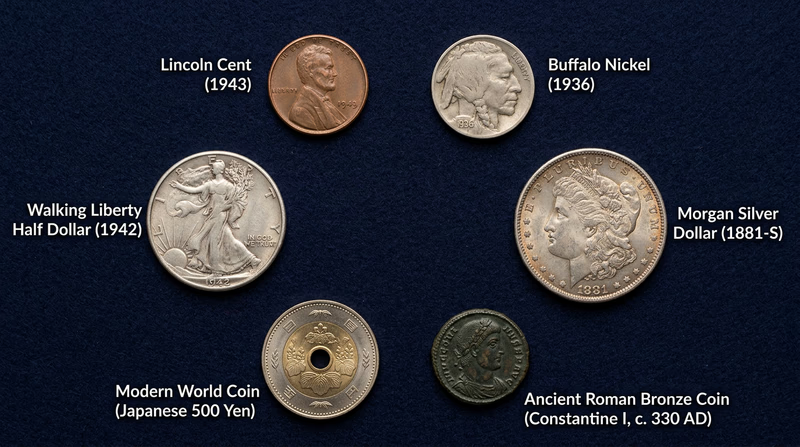
Instead of chasing every date, type collectors aim for one example of each major design. A U.S. type set might include a Buffalo nickel, a Mercury dime, a Walking Liberty half dollar, and a Morgan silver dollar — one coin representing each era and style. Type collecting gives you a broad survey of American coinage without needing hundreds of coins.
Commemorative Collecting
The U.S. Mint issues special coins to honor people, places, and events. These include the Bicentennial quarters of 1976, the 50 State Quarters program, and modern gold and silver commemoratives. Commemorative collectors focus on these special releases, often buying directly from the Mint.
Error Coin Collecting
Minting is a high-speed industrial process, and mistakes happen. A die might strike a blank off-center. Two images might overlap, creating a “doubled die.” A wrong metal blank might slip into the press. Error collectors hunt for these oddities, and rare errors can be worth far more than their perfect counterparts.
World Coin Collecting
Every country that has ever existed has produced coins, and many of them are beautiful, strange, or historically significant. Some world coin collectors focus on a single country. Others collect by theme — animals, ships, famous buildings. A handful of ancient Roman or Greek coins can be surprisingly affordable and put two thousand years of history in your hands.
Ancient Coin Collecting
Speaking of ancient coins — yes, you can actually own them. Bronze coins from the Roman Empire regularly sell for under $20, and holding a coin that was last used to buy bread in a Roman market town is an experience no photograph can match. Ancient coin collecting requires learning about different civilizations, their leaders, and the symbols they chose to put on their money.
Your Collecting Journey Starts Here
Whether you are drawn to the history of the Lincoln cent, the artistry of the Walking Liberty, or the mystery of a coin with no country you recognize, this badge gives you the foundation to explore it all. The first step is understanding where coins come from — and that starts at the United States Mint.