Req 3 — Storing Your Collection
A coin that survived 100 years in a bank vault can be ruined in a week by improper storage. The oils on your fingers, the chemicals in cheap plastic holders, and even the humidity in your bedroom can damage a coin’s surface permanently. Before you start building your collection, you need to know how to protect it.
Three Common Storage Methods
1. Coin Albums (Folders)
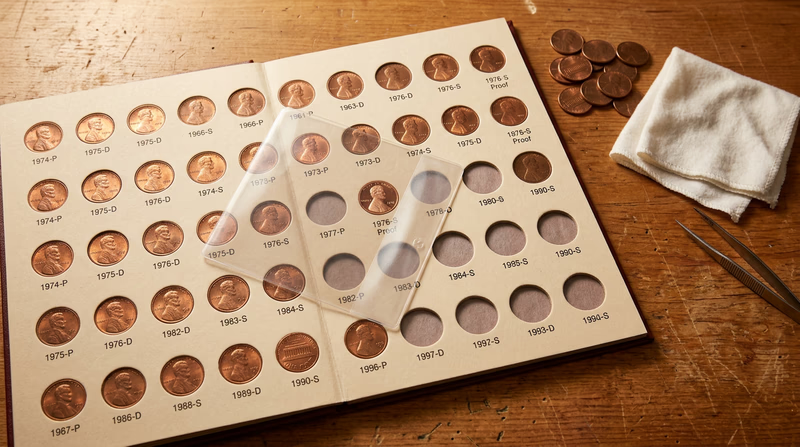
Coin albums are the most popular storage method for beginners. A standard coin folder — like the classic blue Whitman folders — has labeled slots for each date and mint mark in a series. You press each coin into its slot, where it sits in a die-cut cardboard opening. More advanced albums (like Dansco albums) use clear plastic slides that cover both sides of the coin, letting you view the obverse and reverse without removing it.
Benefits:
- Organized by date and mint mark — you can see your progress at a glance
- Relatively compact and easy to display
- Albums with slides protect both sides of the coin
- Fun and satisfying to fill, which keeps you motivated to collect
Drawbacks:
- Basic folders expose one side of the coin to air and contact
- Inserting and removing coins can cause scratches if you are not careful
- Not airtight — humidity and pollutants can still reach the coin
- Folders work best for circulated coins; they are not ideal for high-grade uncirculated coins
Cost: Basic folders run $5–$10 each. Higher-end albums with clear slides cost $25–$50.
2. Individual Holders (Flips and Capsules)
For coins that deserve individual attention, collectors use two main types of holders:
- 2×2 cardboard flips are small cardboard squares with a clear window. You place the coin in the window and staple or fold the cardboard shut. They are the standard way dealers and collectors store and trade individual coins.
- Plastic capsules (also called coin holders or “AirTites”) are rigid, airtight containers sized to fit specific denominations. The coin sits inside a clear plastic shell that snaps or screws shut.
Benefits:
- Each coin is individually protected from contact with other coins
- Capsules provide excellent protection against air, moisture, and handling
- Easy to label and organize in boxes
- You can examine both sides of the coin without touching it
- Great for valuable or high-grade coins
Drawbacks:
- More time-consuming to organize than an album
- Capsules take up more space
- Cardboard flips can contain PVC (a type of plastic that breaks down over time and damages coins) — you must buy “Mylar” or “archival” flips to avoid this
- Buying individual holders for a large collection adds up
Cost: Cardboard flips cost about $5–$10 per 100. Hard plastic capsules cost $0.50–$1.50 each depending on size.
3. Slabbed (Third-Party Grading Service) Holders
For valuable coins, many collectors send their coins to a third-party grading service like PCGS (Professional Coin Grading Service) or NGC (Numismatic Guaranty Company). The service authenticates the coin, assigns a grade on the 1–70 Sheldon scale, and encapsulates it in a tamper-evident hard plastic holder called a “slab.” The slab includes a label with the coin’s grade, description, and a unique certification number.
Benefits:
- Professional authentication — you know the coin is genuine
- Standardized grade accepted by the entire hobby
- Excellent physical protection in a sonically sealed holder
- Certification number lets you verify the coin’s grade online
- Enhances resale value and buyer confidence
Drawbacks:
- Expensive — grading fees typically start at $20–$40 per coin and go up
- Turnaround time can be weeks or months
- Not practical for low-value coins (the grading fee may exceed the coin’s worth)
- You cannot touch or examine the coin’s edge once it is slabbed
- Bulkier than other storage methods
Cost: Grading fees range from $20 to $150+ per coin depending on service level and coin value. You also pay for shipping and insurance both ways.
General Storage Tips
No matter which method you choose, a few universal rules apply:
Coin Storage Essentials
- Hold coins by the edges: Never touch the obverse or reverse with bare fingers. The oils on your skin can leave permanent marks.
- Store in a cool, dry place: Heat and humidity accelerate toning and corrosion. Avoid attics, basements, and bathrooms.
- Never clean your coins: Cleaning removes the natural surface (called “luster”) and almost always reduces a coin’s value. Collectors and dealers can spot a cleaned coin instantly.
- Keep coins away from rubber bands, cardboard, and paper: These materials contain sulfur and acids that cause toning and corrosion over time.
- Use PVC-free materials only: Check labels before buying storage supplies.