Req 4a — The One-Cent Coin
The Lincoln cent is the longest-running coin design in U.S. history — Abraham Lincoln has appeared on the obverse since 1909. But the reverse has changed dramatically, and 2009 was a year unlike any other. Finding these coins is straightforward, but understanding their story is what sets you apart as a collector.
The Lincoln Memorial Reverse (1959–2008)
In 1959 — the 150th anniversary of Lincoln’s birth — the Mint replaced the “Wheat Ears” reverse with a new design showing the Lincoln Memorial in Washington, D.C. This design, created by Frank Gasparro, ran for nearly fifty years, making it one of the most familiar images in American coinage.
Design features to know:
- Obverse: Lincoln’s portrait facing right, designed by Victor David Brenner in 1909. Look for the designer’s initials “VDB” on the truncation of Lincoln’s shoulder (they are tiny — a magnifying glass helps). The date and mint mark appear below and to the right of the portrait.
- Reverse: The Lincoln Memorial building with the words “UNITED STATES OF AMERICA” above and “ONE CENT” below. The designer’s initials “FG” (Frank Gasparro) appear to the right of the Memorial near the base.
The Union Shield Reverse (2010–Present)
In 2010, the Mint introduced the Union Shield reverse, designed by Lyndall Bass and sculpted by Joseph Menna. The shield represents Lincoln’s preservation of the United States as a single, united country during the Civil War.
Design features:
- Obverse: Same Lincoln portrait by Brenner, updated slightly over the years but essentially unchanged since 1909.
- Reverse: A heraldic shield with a horizontal bar across the top inscribed “ONE CENT,” a vertical stripe pattern below, and a scroll banner across the middle reading “E PLURIBUS UNUM.” The designer’s initials “LB” (Lyndall Bass) appear below the shield.
The Special Year: 2009
The year 2009 marked the 200th anniversary of Lincoln’s birth and the 100th anniversary of the Lincoln cent. To celebrate, the Mint issued four different reverse designs, each representing a chapter of Lincoln’s life:
Birth and Early Childhood (Kentucky) — A log cabin in the woods, designed by Richard Masters (initials “RM”). This represents Lincoln’s humble beginnings in Hodgenville, Kentucky.
Formative Years (Indiana) — A young Lincoln reading a book while sitting on a log, designed by Charles Vickers (initials “CV”). Lincoln was a voracious reader despite having very little formal schooling.
Professional Life (Illinois) — Lincoln standing before the Old State Capitol in Springfield, Illinois, designed by Joel Iskowitz (initials “JI”). This represents his career as a lawyer and politician.
Presidency (Washington, D.C.) — A half-completed U.S. Capitol dome, designed by Susan Gamble (initials “SG”). The dome was under construction during Lincoln’s presidency, and he insisted work continue as a symbol that the Union would endure.
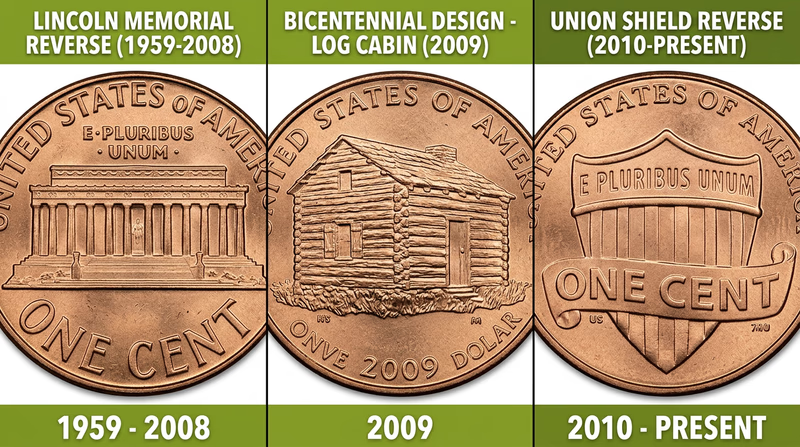
Finding the Designer Initials
Part of this requirement asks you to locate the designer’s name and initials on each coin. Here is a quick reference:
| Coin | Designer | Initials | Location |
|---|---|---|---|
| Obverse (all years) | Victor David Brenner | VDB | Truncation of Lincoln’s shoulder |
| Reverse (1959–2008) | Frank Gasparro | FG | Right of the Lincoln Memorial, near the base |
| Reverse (2010–present) | Lyndall Bass | LB | Below the shield |
| 2009 reverses | Various (RM, CV, JI, SG) | Varies | Near the bottom of each design |
What to Collect
For this requirement, you need:
- One cent dated 1959–2008 (Lincoln Memorial reverse)
- One cent dated 2010 or later (Union Shield reverse)
Check your pockets, your family’s coin jars, or ask at the bank for rolls of pennies. The Lincoln Memorial cent is becoming less common in circulation as older coins get worn out and replaced, but they are still out there. The Union Shield cent is in your change right now.
Be ready to explain to your counselor what makes each design different, who designed it, and where to find the initials. And do not forget the 2009 story — your counselor will want to hear why that year was special.