 Getting Started
Introduction & Overview
A single stamp purchased for a few cents in 1856 sold for nearly $10 million more than a century later. A shoebox of baseball cards forgotten in a grandparent’s attic turned out to hold a rookie card worth thousands. Behind every great collection is a story — of curiosity, patience, and the thrill of finding that next perfect piece.
Collecting is one of humanity’s oldest hobbies, and it is far more than just gathering stuff. A good collector learns research skills, develops an eye for quality, understands history, and practices careful organization. Whether you collect coins, rocks, trading cards, vinyl records, or anything else that fascinates you, this merit badge will teach you how to do it well.
Then and Now
Then
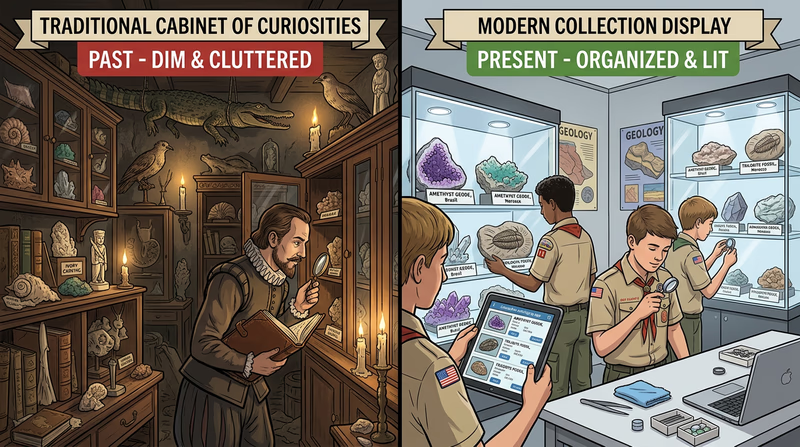
People have been collecting for as long as civilization has existed. Ancient Roman emperors amassed collections of Greek sculptures and coins. During the Renaissance, wealthy Europeans built cabinets of curiosities — rooms packed with shells, fossils, minerals, dried plants, and artifacts from distant lands. These private collections eventually became the first public museums. The British Museum, for example, grew from the personal collection of Sir Hans Sloane in 1753.
Stamp collecting exploded in the 1860s, just two decades after the first postage stamp was issued. By the early 1900s, coin collecting and baseball card collecting had become national pastimes. Kids traded cards on stoops and schoolyards, often without realizing the future value of what they held.
Now
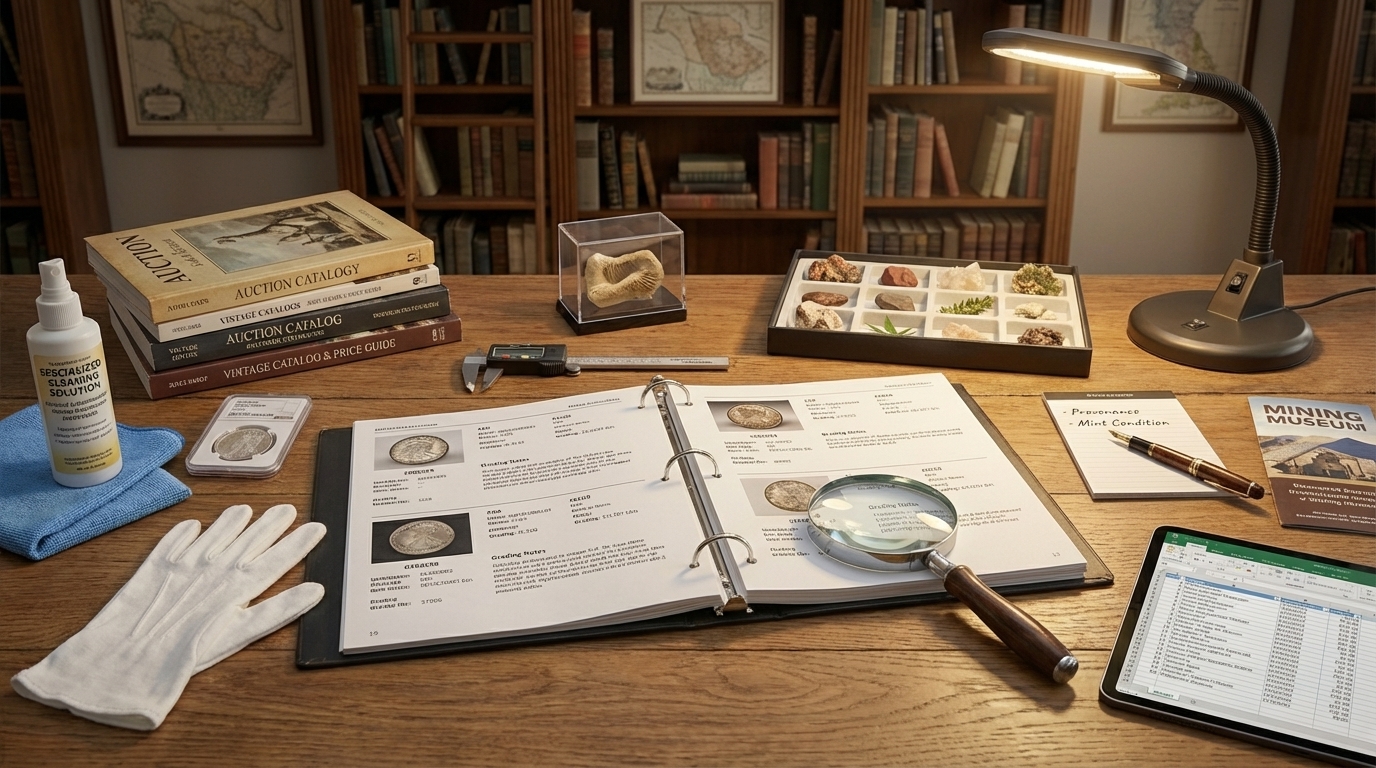
Today’s collectors have tools that earlier generations could not have imagined. Online marketplaces like eBay connect buyers and sellers worldwide. Professional grading services — PSA for cards, NGC and PCGS for coins — assign standardized condition grades that help determine value. Digital cataloging apps let you photograph, tag, and track every item from your phone.
The definition of “collection” has expanded too. People collect sneakers, Lego sets, vintage video games, enamel pins, and concert posters. Some collectors even focus on digital items. But the core skills remain the same: research, organization, preservation, and the patience to build something meaningful over time.
Get Ready!
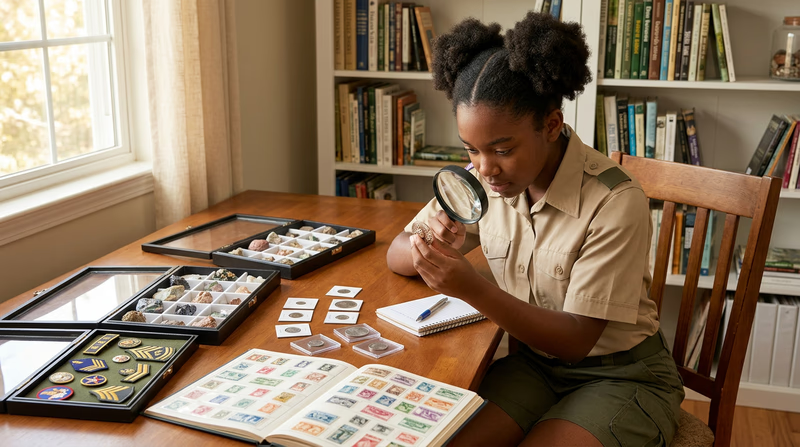
This badge is all about your collection — the one you already have or the one you are about to start. You will learn how to preserve what you have, display it with pride, understand its value, and talk about it like an expert. By the end, you will look at your collection with completely new eyes.
Kinds of Collecting
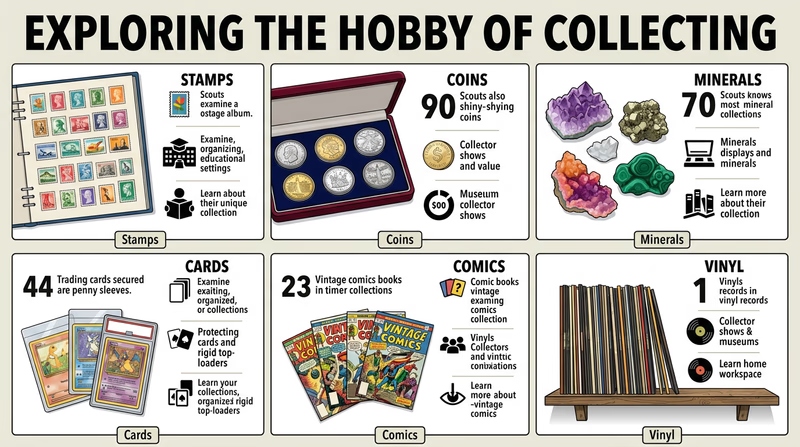
The world of collecting is enormous. Here are some of the most popular categories, but your collection does not have to fit neatly into any one of them.
Stamps (Philately)
Stamp collecting is one of the most popular hobbies in the world. Collectors seek out stamps by country, era, theme (animals, space, famous people), or printing error. A single misprinted stamp can be worth far more than a perfect one. Stamps are small and easy to store, making this a great hobby for any budget.
Coins & Currency (Numismatics)
Coin collectors study mint marks, metal composition, year of issue, and circulation history. Some focus on a single country or era, while others chase rare dates and errors. Paper currency (banknotes) has its own devoted following. Numismatics teaches history, geography, and economics all at once.
Natural Specimens
Rocks, minerals, fossils, seashells, pressed flowers, and insects are all popular natural collections. If you have earned the Geology merit badge, you already have a head start on mineral identification. Natural specimen collecting connects you to earth science, biology, and the outdoors.
Sports Memorabilia & Trading Cards
From baseball cards to autographed jerseys, sports collecting is a billion-dollar industry. Condition is everything — a card with a bent corner can be worth a fraction of a mint-condition copy. Professional grading services like PSA and BGS assign numerical grades that dramatically affect value.
Art, Antiques & Vintage Items
Some collectors focus on paintings, pottery, or furniture from a specific period. Others seek out vintage toys, comic books, movie posters, or advertising signs. Age alone does not make something valuable — rarity, condition, and demand all play a role.
Modern & Niche Collections
Vinyl records, enamel pins, stickers, sneakers, Lego sets, patches, keychains, vintage video games — if it exists, someone collects it. Niche collections can be the most rewarding because you often become an expert in a subject that few others know deeply.