Collections Merit Badge — Complete Digital Resource Guide
https://merit-badge.university/merit-badges/collections/guide/
Introduction & Overview
A single stamp purchased for a few cents in 1856 sold for nearly $10 million more than a century later. A shoebox of baseball cards forgotten in a grandparent’s attic turned out to hold a rookie card worth thousands. Behind every great collection is a story — of curiosity, patience, and the thrill of finding that next perfect piece.
Collecting is one of humanity’s oldest hobbies, and it is far more than just gathering stuff. A good collector learns research skills, develops an eye for quality, understands history, and practices careful organization. Whether you collect coins, rocks, trading cards, vinyl records, or anything else that fascinates you, this merit badge will teach you how to do it well.
Then and Now
Then
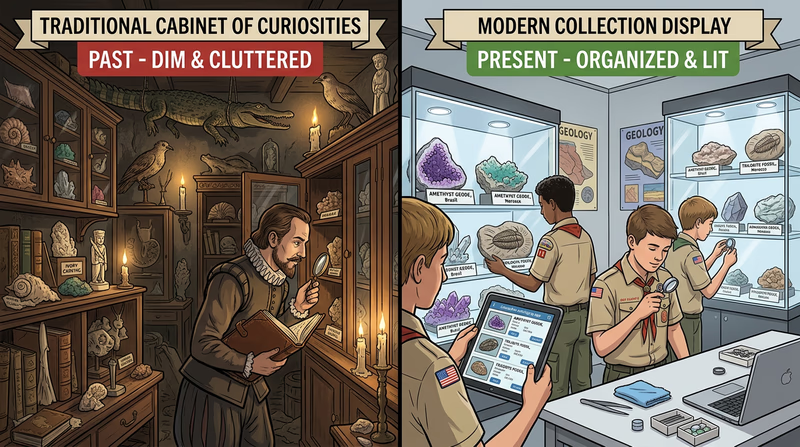
People have been collecting for as long as civilization has existed. Ancient Roman emperors amassed collections of Greek sculptures and coins. During the Renaissance, wealthy Europeans built cabinets of curiosities — rooms packed with shells, fossils, minerals, dried plants, and artifacts from distant lands. These private collections eventually became the first public museums. The British Museum, for example, grew from the personal collection of Sir Hans Sloane in 1753.
Stamp collecting exploded in the 1860s, just two decades after the first postage stamp was issued. By the early 1900s, coin collecting and baseball card collecting had become national pastimes. Kids traded cards on stoops and schoolyards, often without realizing the future value of what they held.
Now
Today’s collectors have tools that earlier generations could not have imagined. Online marketplaces like eBay connect buyers and sellers worldwide. Professional grading services — PSA for cards, NGC and PCGS for coins — assign standardized condition grades that help determine value. Digital cataloging apps let you photograph, tag, and track every item from your phone.
The definition of “collection” has expanded too. People collect sneakers, Lego sets, vintage video games, enamel pins, and concert posters. Some collectors even focus on digital items. But the core skills remain the same: research, organization, preservation, and the patience to build something meaningful over time.
Get Ready!
This badge is all about your collection — the one you already have or the one you are about to start. You will learn how to preserve what you have, display it with pride, understand its value, and talk about it like an expert. By the end, you will look at your collection with completely new eyes.
Kinds of Collecting
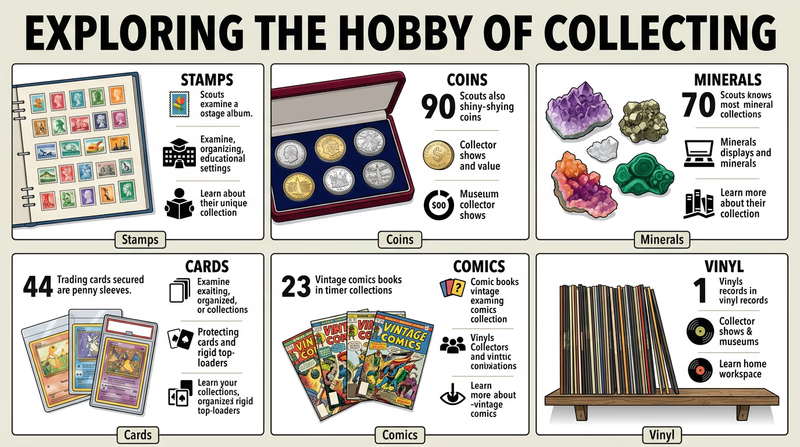
The world of collecting is enormous. Here are some of the most popular categories, but your collection does not have to fit neatly into any one of them.
Stamps (Philately)
Stamp collecting is one of the most popular hobbies in the world. Collectors seek out stamps by country, era, theme (animals, space, famous people), or printing error. A single misprinted stamp can be worth far more than a perfect one. Stamps are small and easy to store, making this a great hobby for any budget.
Coins & Currency (Numismatics)
Coin collectors study mint marks, metal composition, year of issue, and circulation history. Some focus on a single country or era, while others chase rare dates and errors. Paper currency (banknotes) has its own devoted following. Numismatics teaches history, geography, and economics all at once.
Natural Specimens
Rocks, minerals, fossils, seashells, pressed flowers, and insects are all popular natural collections. If you have earned the Geology merit badge, you already have a head start on mineral identification. Natural specimen collecting connects you to earth science, biology, and the outdoors.
Sports Memorabilia & Trading Cards
From baseball cards to autographed jerseys, sports collecting is a billion-dollar industry. Condition is everything — a card with a bent corner can be worth a fraction of a mint-condition copy. Professional grading services like PSA and BGS assign numerical grades that dramatically affect value.
Art, Antiques & Vintage Items
Some collectors focus on paintings, pottery, or furniture from a specific period. Others seek out vintage toys, comic books, movie posters, or advertising signs. Age alone does not make something valuable — rarity, condition, and demand all play a role.
Modern & Niche Collections
Vinyl records, enamel pins, stickers, sneakers, Lego sets, patches, keychains, vintage video games — if it exists, someone collects it. Niche collections can be the most rewarding because you often become an expert in a subject that few others know deeply.
Req 1 — Writing Your Collection Report
A blank page can feel intimidating, but this report is really just you telling the story of your collection — something you already know better than anyone. Your counselor wants to hear your voice and your enthusiasm, not a textbook summary.
What to Include
Your report should cover four main areas. Think of each one as a paragraph or short section:
1. Description of Your Collection
Start with the basics. What do you collect? How many items do you have? What is the range — oldest to newest, most common to most rare, least to most valuable? Give your counselor a clear picture of what they would see if they could look through your collection right now.
2. A Short History
When did you start collecting? What was the first item in your collection? Was there a moment that got you hooked — a gift from a grandparent, a find at a yard sale, a cool rock on a hike? Trace the timeline from that first item to where your collection stands today.
3. Why You Enjoy It
This is the heart of your report. What keeps you going back? Is it the thrill of the hunt? The satisfaction of completing a set? The history behind each piece? The community of other collectors you have found? Be honest — your counselor is not grading you on having the “right” answer.
4. What You Have Learned
Collecting teaches you things you might not expect. Maybe you have learned about geography from stamps, metallurgy from coins, geology from rocks, or graphic design from trading cards. Maybe you have learned patience, budgeting, or negotiation. Think beyond the obvious.
Report or Outline?
The requirement says “report or outline.” A report is a few paragraphs of flowing prose. An outline uses bullet points and headers to organize the same information. Either format works — pick whichever feels more natural. If you are more comfortable talking than writing, try jotting an outline first and then expanding the key points into sentences.
Why This Collection?
Do not forget the last sentence of the requirement: explain why you chose this particular type of collection or collecting method. Maybe you chose coins because your grandfather was a numismatist. Maybe you collect rocks because you love hiking and want a souvenir from every trail. Whatever your reason, share it.
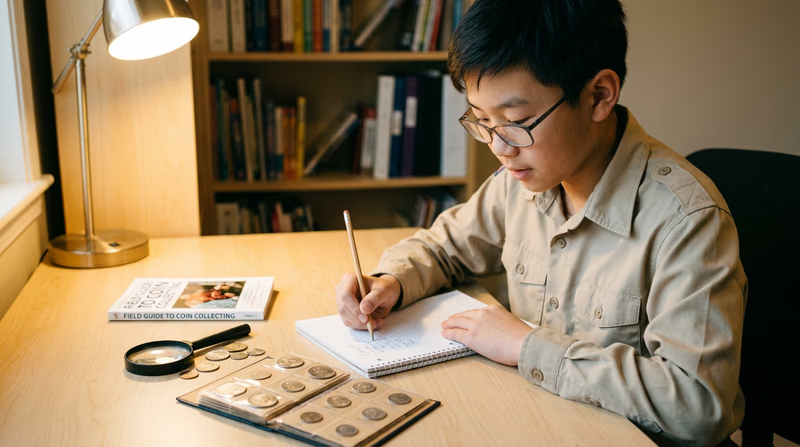
Report Checklist
Make sure your report covers each of these- What you collect: Type, size, and scope of your collection.
- History: When and how you started.
- Enjoyment: Why you love this hobby.
- Lessons learned: Skills and knowledge you have gained.
- Why this collection: The reason you chose this particular type.
Req 2 — Growth & Development
Every collection has a story arc. It starts somewhere — maybe a single coin your uncle handed you — and it evolves as your knowledge, taste, and ambitions grow. This requirement asks you to step back and look at the big picture: how did your collection get from Point A to where it is today?
Phases of Growth
Most collections pass through recognizable stages. Thinking about which phase you are in can help you explain your collection’s development to your counselor.
The Accumulation Phase
In the beginning, you gather everything you can find. A rock collector picks up every interesting stone. A card collector saves every pack’s worth of cards. Quantity matters more than quality, and that is perfectly normal — you are learning what is out there.
The Focusing Phase
As you learn more, you start getting selective. You realize you cannot collect everything, so you narrow your focus. Maybe you shift from “all coins” to “Mercury dimes” or from “all rocks” to “minerals from my home state.” This is when collecting gets really interesting, because you are making deliberate choices.
The Refining Phase
Now you are upgrading. You trade duplicates, sell lower-quality pieces, and replace them with better examples. You might start targeting specific rare items you have been researching for months. Quality overtakes quantity.
How to Explain Your Growth
When discussing this with your counselor, consider these questions:
- Starting point: How many items did you begin with? What was your first acquisition?
- Milestones: What were the key moments — a significant find, a gift, a trade, a show where you found something special?
- Changes in direction: Did your focus shift over time? Did you start collecting one thing and pivot to another?
- Knowledge growth: How has your understanding of the subject deepened? Can you spot details now that you would have missed a year ago?
- Sources: Where do your items come from — shops, online, shows, trades, family, nature?
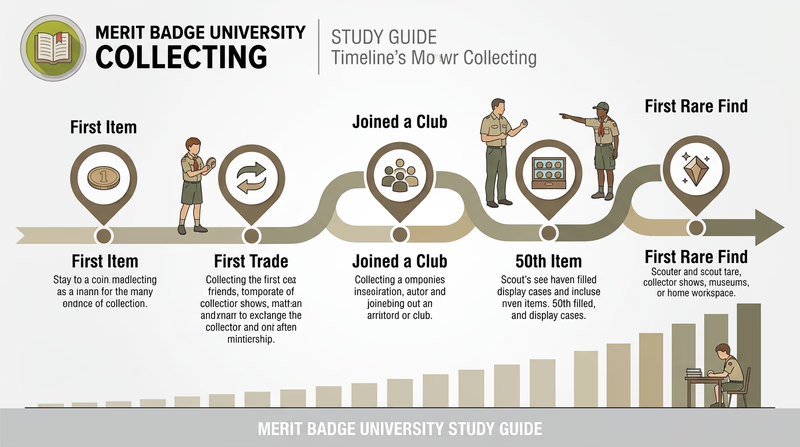
Tracking Growth Over Time
Keeping a simple log helps you remember and explain your collection’s journey. You do not need anything fancy — a notebook, a spreadsheet, or even a note on your phone works. Record:
- Date acquired: When did you get the item?
- Source: Where did it come from?
- Cost: What did you pay (or was it a gift/find)?
- Significance: Why is this item notable?
This log becomes the raw material for your counselor discussion — and it connects directly to the cataloging skills you will learn in Req 3d.
American Numismatic Association — Building a Collection Practical advice on growing a coin collection — many principles apply to any type of collecting. Link: American Numismatic Association — Building a Collection — https://www.money.org/coin-collecting-basics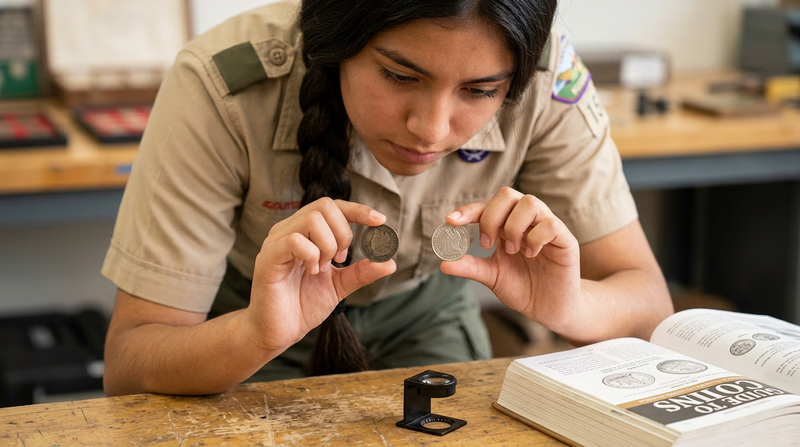
Req 3a — Handling, Cleaning & Storage
This requirement covers three essential preservation skills:
- Handling — how to touch and move items without causing damage
- Cleaning — when and how to clean (and when not to)
- Storage — protecting your collection from environmental threats
A single careless moment — a fingerprint on a rare coin, a stamp peeled with too much force, a fossil dropped on a hard floor — can permanently reduce an item’s condition and value. Preservation is the foundation of good collecting.
Handling
The Golden Rule: Less Contact Is Better
Every time you touch a collectible, you risk transferring oils, moisture, and dirt from your skin. Over time, these tiny deposits cause tarnishing, staining, and corrosion.
Surface Protection
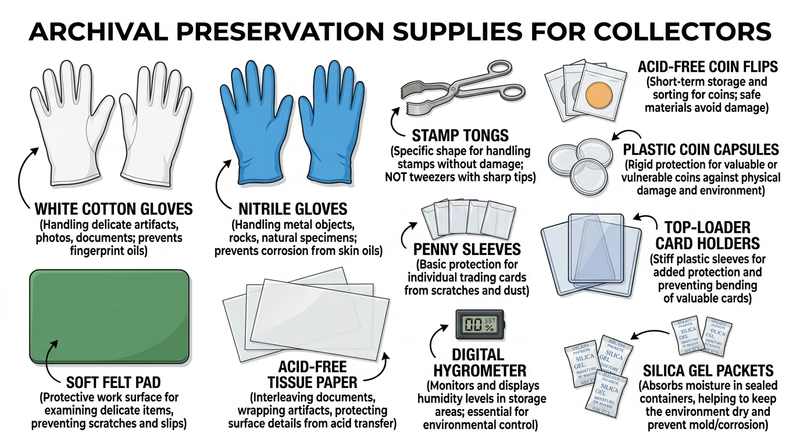
Work over a soft, clean surface. A felt pad, a clean towel, or a padded tray prevents damage if you accidentally drop an item. This is especially important for coins, minerals, and figurines.
Cleaning
The Most Important Rule
When in doubt, do not clean. Improper cleaning destroys more collectibles than neglect ever has. Many collectors and grading services actually prefer items in their original, uncleaned state — even if they look a little worn.
| Collection Type | Safe Cleaning Method | Never Do This |
|---|---|---|
| Coins | Gentle rinse in distilled water, pat dry | Polish, scrub, use chemical cleaners |
| Stamps | Light dusting with soft brush | Soak in water unless you know the ink is waterproof |
| Rocks & minerals | Soft brush, distilled water | Use acids without expert guidance |
| Trading cards | Soft microfiber cloth (dry) | Use water or cleaning sprays |
| Fossils | Soft brush, dental pick for matrix | Scrub with hard brushes |
When Cleaning Is Appropriate
Some items do benefit from careful cleaning — a fossil still embedded in rock matrix, a mineral caked with clay, or a vintage toy covered in surface dust. The key is research: learn the accepted cleaning methods for your specific type of collection before you touch anything.
Storage
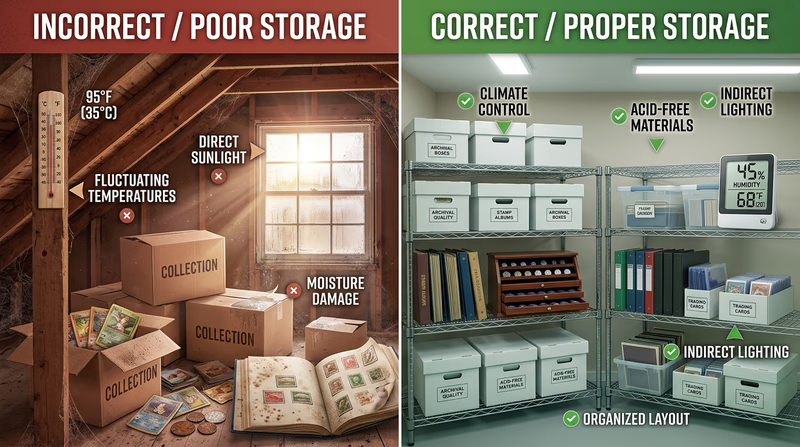
Good storage protects against five enemies of collectibles:
- Moisture — causes rust, mold, foxing (brown spots on paper), and mineral degradation
- Light — fades colors, yellows paper, and degrades plastics
- Temperature extremes — expansion and contraction crack, warp, and delaminate
- Dust and pollutants — abrade surfaces and cause chemical reactions
- Pests — insects and rodents can destroy paper, fabric, and natural specimens
Storage Solutions by Collection Type
- Coins: Acid-free flips, capsules, or slabs (hard plastic holders used by grading services)
- Stamps: Stamp mounts (hingeless) in acid-free albums
- Cards: Penny sleeves inside top-loaders or magnetic holders, stored upright in boxes
- Rocks & minerals: Padded compartment boxes or display cases with individual wells
- Paper items: Acid-free sleeves, flat storage in archival boxes, away from light
Storage Environment Checklist
Keep your collection safe from environmental damage- Stable temperature: Aim for 65–72°F with minimal fluctuation.
- Low humidity: 30–50% relative humidity is ideal for most collections.
- No direct sunlight: UV light is the top cause of fading and deterioration.
- Clean air: Avoid attics, basements, and garages where dust, moisture, and temperature swing.
- Pest prevention: Keep food away from storage areas and inspect regularly.
Req 3b — Displaying Your Collection
A collection hidden in boxes is like a library with locked doors — it has value, but nobody gets to appreciate it. A good display shows off your best pieces while keeping them safe. The trick is balancing visibility with the preservation principles you learned in Req 3a.
Display Principles
Tell a Story
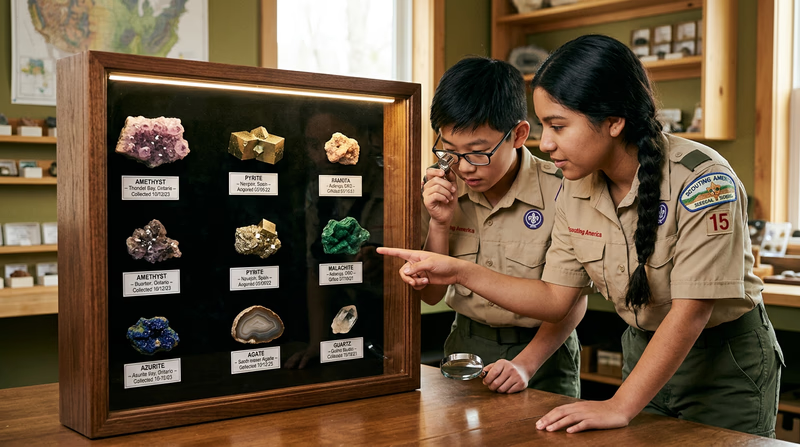
The best displays are not just rows of items — they guide the viewer through a narrative. You might arrange pieces chronologically, geographically, by theme, or by rarity. Think about what you want someone to notice first and what you want them to discover as they look closer.
Label Everything
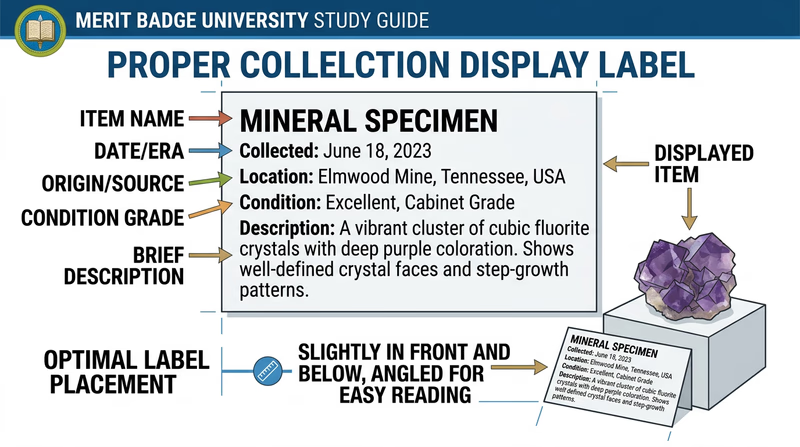
Every displayed item should have a label or caption. At minimum, include:
- What it is (name, type, variety)
- When and where it was made or found
- Why it matters (rarity, historical significance, personal story)
Clear labels turn a pile of objects into an educational experience. Museum professionals call this interpretation — helping viewers understand what they are seeing.
Protect While Displaying
Everything you learned in Req 3a still applies. Your display should:
- Keep items out of direct sunlight (UV light fades and degrades)
- Prevent casual handling by visitors (display cases with lids help)
- Use acid-free mats, mounts, and backings for paper items
- Allow air circulation to prevent moisture buildup in closed cases
Display Methods by Collection Type
| Collection Type | Recommended Display | Preservation Notes |
|---|---|---|
| Coins | Felt-lined display cases, frames with coin capsules | Never glue coins; use friction-fit holders |
| Stamps | Stockbooks or framed pages under UV-filtering glass | Use hingeless mounts, never tape |
| Rocks & minerals | Shadow boxes, compartmented display cases | Keep specimens separated to prevent scratching |
| Cards | Binder pages, framed slabs, tabletop stands | UV-filtering frames prevent fading |
| Insects | Riker mounts, Schmitt boxes with pinned specimens | Mothballs or naphthalene keep pests away |
| Fossils | Display stands, padded cases, museum putty | Use putty, not glue, for positioning |
Building a Display for Your Counselor
When you meet with your counselor, you will want to show your collection (or photographs of it). A thoughtful presentation makes a strong impression.
Display Preparation
Get ready to show your collection- Select your best pieces: Choose items that show range, rarity, and condition.
- Arrange them logically: Group by theme, date, type, or another organizing principle.
- Add labels: Name each item and include one interesting fact.
- Consider lighting: Natural indirect light or a desk lamp angled to avoid glare.
- Have a backup: If your collection is too large to transport, prepare clear photographs.
Req 3c — Events for Collectors
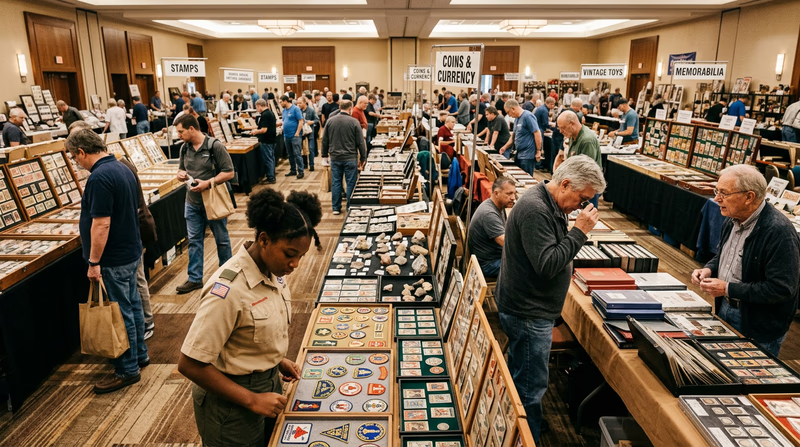
Collecting can feel like a solo hobby until you walk into your first show and realize thousands of people share your passion. Events are where collectors learn, trade, buy, sell, and connect. Knowing what is available in your hobby helps you grow faster and enjoy collecting more.
Types of Collector Events
Shows and Expos
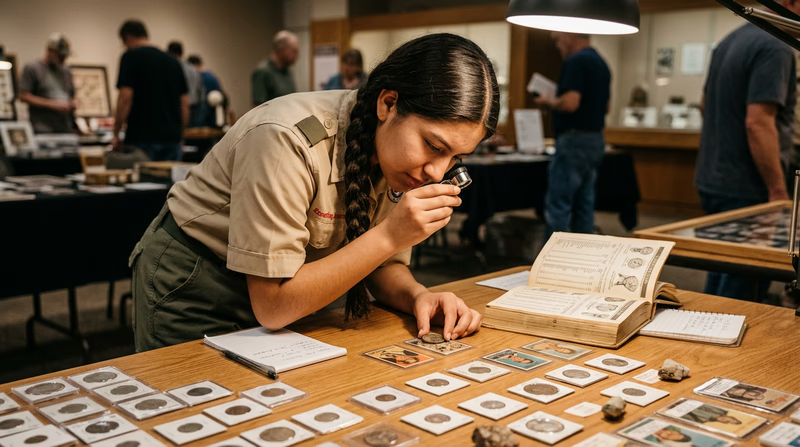
Collector shows are the bread and butter of the hobby world. Dealers set up tables with items for sale, and attendees browse, negotiate, and buy. Most shows charge a small admission fee (sometimes free for kids) and run for a day or weekend.
- Coin shows are held in nearly every state, from local club shows to the massive ANA World’s Fair of Money
- Stamp shows range from local bourse events to the Great American Stamp Show
- Card shows have exploded in popularity, with events like the National Sports Collectors Convention drawing tens of thousands of attendees
- Gem and mineral shows happen year-round, with the Tucson Gem and Mineral Show being the world’s largest
Seminars and Workshops
Many collector organizations host educational events where experts teach specific skills — grading techniques, authentication methods, conservation approaches, or the history of a particular collecting area. These are goldmines for building knowledge quickly.
Conventions
Full-scale conventions combine shows, seminars, auctions, and social events into multi-day gatherings. National organizations like the American Numismatic Association (ANA) and American Philatelic Society (APS) hold annual conventions that are the highlight of their members’ year.
Contests and Competitions
Many shows feature competitive exhibits where collectors display their best work and receive judged scores. The ANA’s exhibit competition, for example, awards prizes for the most complete, best-researched, and best-presented collections. Contests motivate you to improve your display and deepen your expertise.
Museum Programs and Exhibits
Museums often partner with collector organizations to host special exhibits, lectures, and hands-on workshops. The Smithsonian National Postal Museum, the American Numismatic Money Museum, and many local natural history museums all offer programming for young collectors.
Finding Events for Your Specific Collection
| Collection Type | Where to Find Events |
|---|---|
| Coins | ANA event calendar, local coin club websites |
| Stamps | APS show schedule, local stamp club newsletters |
| Cards | Beckett events page, hobby shop bulletin boards |
| Rocks & minerals | Local gem and mineral society, Mindat.org |
| Vintage items | Antique show directories, flea market guides |
| Any hobby | Facebook groups, Reddit communities, Meetup.com |
Req 3d — Cataloging Your Collection
Without a catalog, your collection is just a pile of stuff you like. With one, it becomes an organized, searchable, insurable record of everything you own. A good catalog answers three questions instantly: What do I have? Where is it? What is it worth?
Why Catalog?
Cataloging is not busywork — it solves real problems:
- Insurance: If your collection is damaged or stolen, an itemized catalog with photos and values is essential for an insurance claim.
- Trading and selling: Knowing exactly what you have (and what condition it is in) makes every transaction smoother.
- Tracking gaps: A catalog reveals what is missing from a set or series, so you know what to look for next.
- Personal history: Years from now, you will want to remember when and where you acquired each piece.
Cataloging Methods
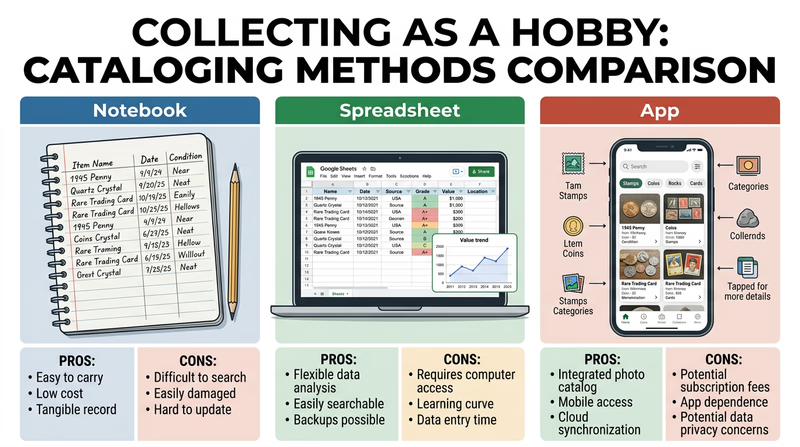
There is no single “right” way to catalog. The best method is the one you will actually use consistently.
Physical Notebook
A dedicated notebook or binder with one entry per item (or per page for groups of similar items). Simple, portable, and works even without electricity. The downside: searching through hundreds of entries gets slow, and updating is messy.
Spreadsheet
A spreadsheet (Google Sheets, Excel, or similar) gives you columns for every detail — name, date, source, condition, value, location, notes. You can sort, filter, and search instantly. This is the sweet spot for most collectors.
Dedicated Apps and Software
Many hobbies have specialized cataloging tools:
| Collection Type | Popular Cataloging Tools |
|---|---|
| Coins | PCGS CoinFacts, NGC Registry, Numista |
| Stamps | StampWorld, Colnect |
| Cards | Beckett, TCDB (Trading Card Database) |
| Rocks & minerals | Mindat.org, Rock Collector app |
| Comics | CLZ Comics, CovrPrice |
| General | Google Sheets, Airtable, Notion |
Photographic Catalog
Whatever other method you use, photographs are a must. Take clear, well-lit photos of both sides of each item (or all angles for 3D objects). Store them in folders that match your catalog’s organizational scheme. If your collection is ever stolen, photos are the most powerful evidence you can provide to police and insurers.
Building Your System
Start Simple
Do not over-engineer your catalog. Begin with the basics for each item and add detail as you go. A simple spreadsheet with 50 entries you actually maintain is more valuable than an elaborate database you abandoned after 10 entries.
Be Consistent
Pick a format and stick with it. If you abbreviate “Mint State” as “MS,” do it every time. If you record dates as “2024-03-15,” always use that format. Consistency makes searching and sorting reliable.
Update Regularly
Set a routine — maybe every time you acquire a new item, or once a month for a batch update. A catalog that is six months behind is not much help.
Cataloging Essentials
Every catalog entry should include- Item identification: Full name, type, and any variant or edition details.
- Date acquired: When you obtained it.
- Source: Where it came from (store, show, gift, online).
- Condition: Condition grade or description.
- Value: Estimated current value and what you paid.
- Location: Where in your storage or display the item lives.
- Photo: At least one clear image linked or attached.
Req 4 — Investing, Buying & Selling
This requirement covers three financial aspects of collecting:
- Investing and speculation — can your collection grow in value?
- Buying other collections — what to look for when purchasing
- Selling — what to expect if you decide to sell
Collecting and investing overlap, but they are not the same thing. A collector buys something because they love it. An investor buys something because they expect it to increase in value. The smartest collectors keep both perspectives in mind.
Investing vs. Speculation
What Is Investing in Collectibles?
Investing means buying items you believe will increase in value over time based on research, historical trends, and market knowledge. A collector who purchases a key-date coin in excellent condition — knowing that similar coins have appreciated steadily for decades — is making an informed investment.
What Is Speculation?
Speculation means buying based on hype, hope, or guesswork rather than solid data. When a new trading card set launches and people rush to buy boxes hoping for a valuable chase card, that is speculation. Some speculators win big; many lose money.
How This Applies to Your Collection
Think about your own collection through these lenses:
- Supply and demand: Are the items in your collection getting harder to find? Limited supply plus growing demand usually means rising value.
- Condition sensitivity: In most collectible markets, the difference between “good” and “excellent” condition is enormous. A coin graded MS-65 might be worth 10 times more than the same coin graded MS-60.
- Trends: Is interest in your collecting area growing, stable, or declining? A hobby with an aging collector base and few newcomers may see declining prices.
- Authenticity risk: Counterfeits and reproductions are a real concern. Knowing how to verify authenticity protects your investment.
Buying Other Collections
Sometimes a collector has the opportunity to buy an entire collection — from an estate sale, an auction, or another collector who is downsizing. This can be a great way to acquire many items at once, but it requires careful evaluation.
Evaluating a Collection for Purchase
Ask these questions before buying- Authenticity: Are the items genuine? Have key pieces been authenticated or graded?
- Condition: What is the overall condition? Are there damaged or cleaned items?
- Completeness: Is it a complete set or a random assortment? Complete sets are usually worth more.
- Fair pricing: How does the asking price compare to the total retail value of individual items?
- Storage history: How were the items stored? Poor storage can cause hidden damage.
- Your interest: Do these items actually fit your collection, or are you buying just because it seems like a deal?
Selling Your Collection
At some point, you may want to sell — to upgrade, to fund a new interest, or simply because your collecting goals have changed. Understanding the selling process helps you set realistic expectations.
Where Collectors Sell
- Dealer shops: Convenient but dealers typically pay 50–70% of retail value (they need room for profit)
- Shows: You can rent a table or sell to dealers at a show
- Online platforms: eBay, specialized forums, Facebook groups — reach more buyers but deal with shipping, fees, and scam risks
- Auctions: Auction houses handle high-value items; they charge a seller’s commission (typically 10–20%)
- Other collectors: Direct sales to people you know often get the best prices
Realistic Expectations
The gap between what you paid and what you can sell for depends on many factors. Common items in average condition often sell for less than you paid. Rare items in excellent condition can sell for more — sometimes much more. The market sets the price, not your personal attachment.
Req 5a — Collector Vocabulary
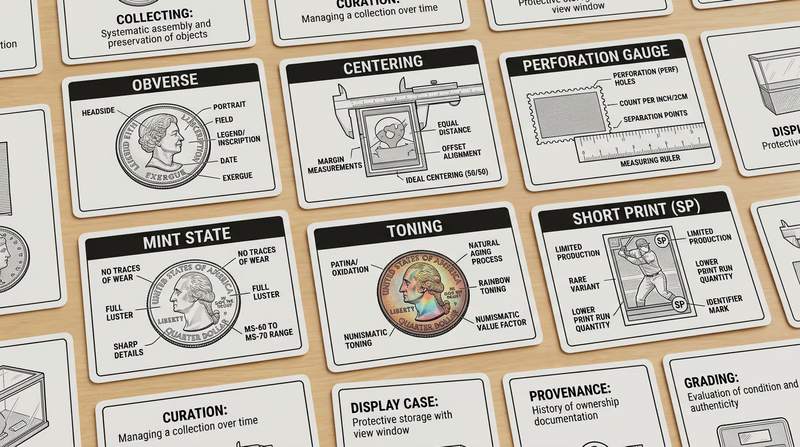
Every hobby has its own language. When stamp collectors say “FDC,” coin collectors say “toning,” and card collectors say “centering,” they are using vocabulary that would confuse an outsider. Learning these terms is like getting a key to a locked room — suddenly conversations, listings, and reference guides make sense.
Building Your Vocabulary
Your 10 terms should come from your specific collecting area. The requirement is not asking for generic words like “rare” or “collection” — it wants the specialized terminology that collectors in your hobby use every day.
Where to Find Terms
- Price guides and catalogs for your hobby
- Grading company glossaries (PSA, NGC, PCGS, BGS)
- Hobby association websites and educational materials
- Collector forums and communities — pay attention to terms that appear frequently
- Books and magazines about your specific collecting area
Examples Across Collecting Areas
Here are examples to give you an idea of the depth expected. Your own list should reflect your specific collection.
Coin collecting:
| Term | Definition |
|---|---|
| Mint State (MS) | A coin that has never been circulated |
| Obverse | The front (heads) side of a coin |
| Reverse | The back (tails) side of a coin |
| Toning | Natural color change on a coin’s surface from chemical reactions over time |
| Mint mark | A small letter indicating which mint facility produced the coin |
Stamp collecting:
| Term | Definition |
|---|---|
| Philately | The study and collection of postage stamps |
| First Day Cover (FDC) | An envelope bearing a stamp canceled on its first day of issue |
| Perforation gauge | A tool to measure the number of holes per 2 centimeters on a stamp’s edge |
| Hinged / Hingeless | Whether a stamp mount is attached with a hinge (less desirable) or held in place by friction |
Card collecting:
| Term | Definition |
|---|---|
| Centering | How evenly the card image is positioned within its borders |
| Rookie card (RC) | The first licensed trading card of a player |
| Wax (as in “ripping wax”) | Slang for sealed packs, from the wax-paper packaging used in older packs |
| Short print (SP) | A card produced in smaller quantities than others in the same set |
Preparing for Your Counselor Discussion
Your counselor will want you to define each term and explain how it relates to your collection. Here is how to prepare:
- Write your list of 10+ terms with definitions in your own words
- Find examples in your collection that illustrate each term
- Practice explaining each one as if the listener knows nothing about your hobby
- Be ready for follow-up questions — your counselor may ask how a term affects value, condition, or your collecting strategy
Vocabulary Preparation
Steps to get your 10 terms ready- Research: Identify at least 12–15 terms (extra gives you flexibility).
- Define: Write a clear, one-sentence definition for each.
- Connect: Note how each term applies to items in your collection.
- Illustrate: Pull out an item from your collection that demonstrates each term.
- Practice: Explain each term out loud to a friend or family member.
Req 5b — Organizing & Showing Groups
Organization is what separates a collection from a hoard. When you can pull out two distinct groups and explain the logic behind each, you demonstrate that you have thought carefully about what you own and how the pieces relate to each other.
What Is a “Group”?
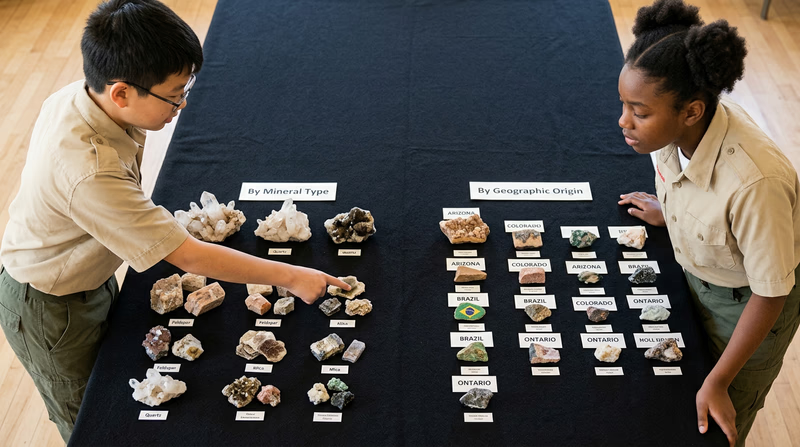
A group is any subset of your collection united by a shared characteristic. The grouping method you choose depends on what makes sense for your specific collection. Here are common approaches:
By Date or Era
Arranging items chronologically — for example, coins from the 1960s vs. coins from the 2020s, or stamps from before World War II vs. modern issues. This method highlights historical changes and production evolution.
By Type or Category
Grouping by what the items are — different mineral types, different card sports, different stamp themes (animals, landmarks, space). This is the most intuitive approach for many collectors.
By Origin or Geography
Sorting by where items came from — coins by country, rocks by the state or park where they were found, stamps by issuing nation. Geographic organization tells a story about your travels or interests.
By Condition or Grade
Separating items by their quality — mint-condition pieces in one group, circulated or worn items in another. This method makes it easy to identify your best pieces and your upgrade candidates.
By Rarity or Value
Placing your most valuable or hardest-to-find items together. This is practical for insurance purposes and helps you focus your preservation efforts on the pieces that matter most.
Choosing Your Two Groups
Pick two groups that show different aspects of your collection. Good combinations include:
- A complete set vs. an in-progress set — shows range and goals
- A high-value group vs. a sentimental favorites group — shows that collecting is about more than money
- Two different categories — shows the breadth of your interests
Preparing Your Presentation
Whether you are bringing items in person or showing photographs, preparation makes a difference.
In Person
- Select representatives from each group (you do not need to bring everything)
- Arrange them on a felt pad or in a portable display
- Have your catalog or list handy to reference
- Be ready to explain why specific items belong in each group
With Photographs
If your collection is too large to transport (or your counselor cannot visit), photographs work well. The requirement explicitly allows this.
Photography Tips
Create clear, useful photos of your collection- Use natural or bright indirect light: Avoid harsh shadows and flash glare.
- Photograph both sides: Coins, cards, and stamps have important details on both sides.
- Include a scale reference: A ruler or coin next to minerals and fossils shows size.
- Group shots and close-ups: Show the full group layout, then zoom in on individual items.
- Label your photos: Include the item name, group, and any notable details in file names or captions.
Req 5c — Monetary Value
Knowing what your collection is worth is not about bragging — it is a practical skill. You need value information for insurance, for making smart purchases, for trades, and for understanding the market you are part of. But figuring out value is trickier than it sounds, because “value” means different things in different contexts.
Types of Value
Retail Value
What a dealer or specialty store charges a customer for the item. This is the highest price you will typically see. Online listings, price guides, and auction results usually reflect retail values.
Wholesale Value
What a dealer pays when they buy from you. Dealers need profit margin, so wholesale is significantly lower than retail — often 40–60% of retail price. This is the price you should expect if you sell to a shop.
Fair Market Value
The price a willing buyer and a willing seller would agree on, with neither under pressure. This falls between wholesale and retail and is what insurance companies, appraisers, and the IRS use.
Sentimental Value
The worth an item has to you personally that has nothing to do with money. Your grandfather’s pocket watch might be worth $25 at market but be priceless to you. Sentimental value is real — it is just not financial.
Where to Research Values
| Source | What It Offers | Best For |
|---|---|---|
| Price guides (Red Book for coins, Scott Catalog for stamps, Beckett for cards) | Published reference values updated annually | Baseline pricing, understanding relative rarity |
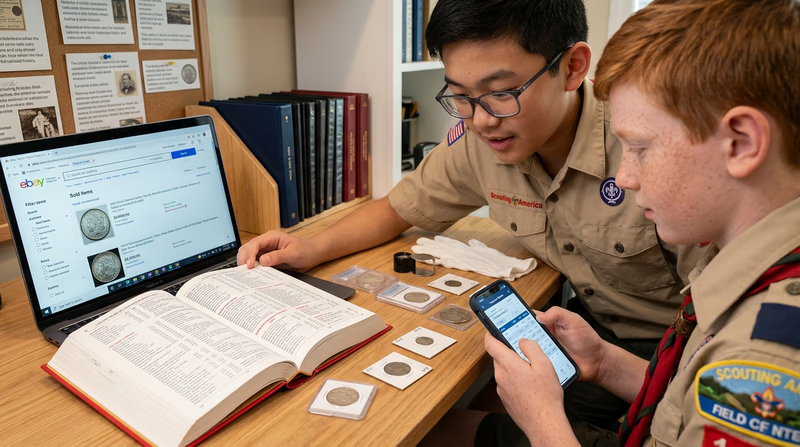
| Online auction results | Real transaction prices from actual sales | Current market value — what people actually pay |
| Grading service databases | Population reports and certified values | Understanding scarcity at each condition grade |
| Dealer websites | Current asking prices | Retail value comparison |
| Collector forums | Community knowledge and recent sale reports | Niche items not well-covered by mainstream guides |
| Appraisals | Professional assessment of specific items | Insurance documentation, estate valuation |
Calculating Your Collection’s Value
For your counselor, you do not need a professional appraisal. A reasonable estimate is fine. Here is how to approach it:
- Identify key pieces — the items most likely to have significant value
- Research each one using at least two of the sources above
- Note the condition — value is meaningless without a condition reference
- Add up individual values — the total gives you an overall estimate
- Be honest about uncertainty — say “I estimate this at $XX based on recent eBay sales” rather than claiming a precise number
Common Items vs. Key Items
In most collections, a small number of items account for the majority of the value. If you collect coins, your common-date modern quarters are worth face value — 25 cents each. But a single key-date older coin might be worth hundreds. Focus your research energy on the items that matter most.
Req 5d — Grading & Classification
Grading is the universal language of condition in the collecting world. When a seller says a coin is “VF-30” or a card is “PSA 9,” experienced collectors know exactly what to expect without seeing the item. Understanding your hobby’s grading system is one of the most important skills you can develop.
What Grading Measures
Grading evaluates an item against an ideal — the best possible version that could exist. Graders consider:
- Physical defects: Scratches, dents, creases, tears, chips, stains, and wear
- Completeness: Missing parts, broken edges, or trimmed margins
- Eye appeal: Overall visual attractiveness, color, and luster
- Originality: Whether the item has been cleaned, repaired, altered, or restored
Grading Systems by Collection Type
Coins: The Sheldon Scale
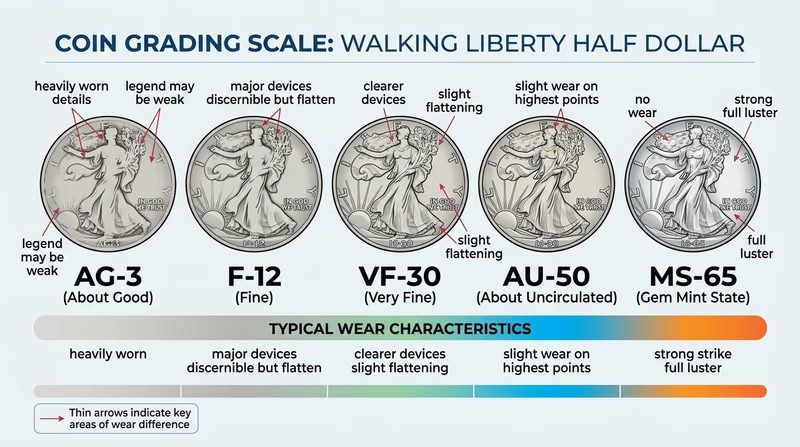
Coins use a 1–70 numerical scale developed by Dr. William Sheldon in 1949. Key grades:
| Grade | Abbreviation | Condition |
|---|---|---|
| 1 | PO (Poor) | Barely identifiable |
| 4 | AG (About Good) | Very heavily worn, outline visible |
| 12 | F (Fine) | Moderate wear, major details clear |
| 30 | VF (Very Fine) | Light wear on high points only |
| 50 | AU (About Uncirculated) | Slight wear, nearly mint |
| 60–70 | MS (Mint State) | No wear at all; 70 is theoretically perfect |
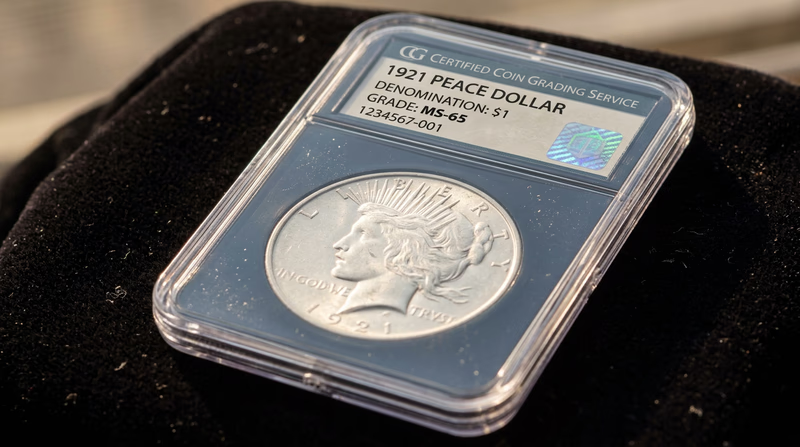
Professional grading services (PCGS, NGC) seal graded coins in tamper-evident “slabs” with the grade printed on the label.
Trading Cards: The 1–10 Scale
Card grading services (PSA, BGS, SGC) use a 1–10 scale:
| Grade | Condition |
|---|---|
| PSA 10 (Gem Mint) | Perfect — no visible flaws under magnification |
| PSA 9 (Mint) | One minor flaw |
| PSA 8 (NM-MT) | Minor flaws, sharp corners |
| PSA 7 (NM) | Slight wear, minor surface issues |
| PSA 5 (EX) | Noticeable wear, may have light creases |
| PSA 1 (Poor) | Major damage, missing parts |
Stamps: Grading Standards
Stamp condition considers centering, gum condition, cancellation quality (for used stamps), and paper freshness:
- Superb: Nearly perfect centering, full original gum, no flaws
- Extremely Fine: Well-centered, original gum, minor imperfections
- Fine: Slightly off-center, acceptable for most collectors
- Good: Noticeably off-center, heavier cancellation
Rocks & Minerals: Quality Descriptors
Natural specimens typically use qualitative rather than numerical grading:
- Museum quality: Exceptional size, color, crystal form, and display worthiness
- Collector grade: Good quality with minor imperfections
- Specimen grade: Identifiable and educational but not display quality
- Study grade: Good for learning but not for display or investment
General Collectibles
Many categories (toys, memorabilia, vintage items) use a simple scale:
- Mint / Mint in Box (MIB): Perfect, unused, complete with original packaging
- Near Mint (NM): Excellent with minimal signs of age
- Excellent (EX): Very slight wear or handling
- Good (G): Noticeable wear but structurally sound
- Fair / Poor: Significant damage or missing parts
Classification Beyond Condition
Grading is about condition, but classification includes other factors too:
- Age: Date of manufacture, issue, or formation
- Size: Physical dimensions, weight, or denomination
- Variety: Different editions, printings, or natural variations within the same type
- Authenticity: Genuine vs. reproduction, original vs. restrike
Why Professional Grading Matters
Professional grading removes subjectivity. When two collectors disagree about whether a coin is VF-35 or EF-40, a professional grading service provides a definitive answer — and that answer directly affects the price. For high-value items, the cost of professional grading (typically $15–$50 per item) is easily justified.
Req 5e — Collector Associations
Collector associations are the backbone of the hobby world. They publish research, set standards, host events, advocate for collectors’ interests, and create communities where knowledge flows freely. Knowing which organizations exist for your hobby — and what they offer — connects you to a much larger world.
Why Associations Matter
- Education: Most associations publish journals, newsletters, and educational materials
- Authentication: Some associations operate grading or authentication services
- Networking: Membership connects you with experienced collectors who can mentor you
- Events: As you learned in Req 3c, associations organize the major shows, conventions, and seminars
- Advocacy: Associations lobby on behalf of collector interests (import/export laws, cultural property issues)
Major National Associations by Collecting Area
| Collecting Area | National Association | What They Offer |
|---|---|---|
| Coins | American Numismatic Association (ANA) | Museum, conventions, publications, youth programs |
| Stamps | American Philatelic Society (APS) | Expertizing service, stamp store, library, publications |
| Rocks & minerals | Mineralogical Society of America (MSA) | Publications, research, education programs |
| Gems & minerals (hobby) | American Federation of Mineralogical Societies (AFMS) | Network of regional and local clubs |
| Fossils | Paleontological Society (PS) | Publications, education, fossil collecting advocacy |
| Trading cards | No single national association | Community organized through PSA, Beckett, and collector forums |
| Antiques | National Association of Dealers in Antiques (NADA) | Dealer standards, member directory, education |
| Art | American Alliance of Museums (AAM) | Museum standards, professional development, publications |
Finding State and Local Associations
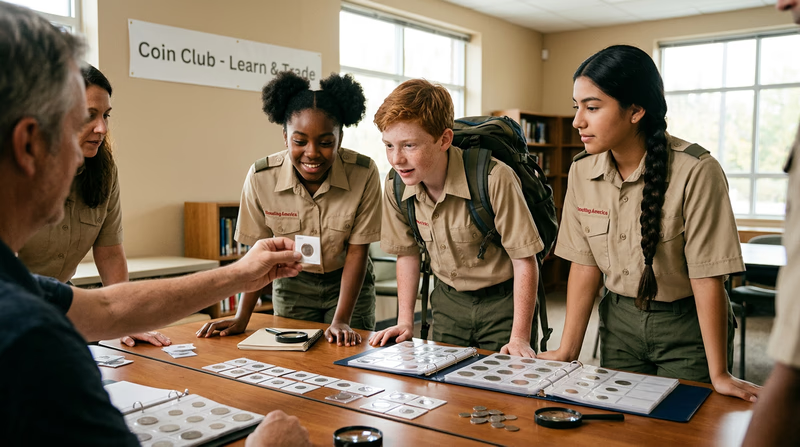
National associations are the easiest to find, but state and local clubs often provide the most hands-on value. A local coin club or gem and mineral society meets regularly, usually monthly, and members bring items to show, trade, and discuss.
How to Find Local Clubs
- Check the national association’s website — most maintain a directory of affiliated local clubs
- Ask at hobby shops — local dealers usually know about area clubs
- Search “[your hobby] club [your city/state]” online
- Check Meetup.com and Facebook Groups for informal collector meetups
- Visit your local library or community center — many clubs meet in public spaces
What to Tell Your Counselor
Your counselor wants to know that you have done the research. Be prepared to:
- Name specific organizations — at least one national association and, if possible, a state or local club
- Describe what they do — mission, services, publications, events
- Explain membership benefits — what would you get if you joined?
- Note youth programs — many associations offer discounted youth memberships or special programs for young collectors
Association Research
Prepare this information for your counselor- National association: Name, mission, and key offerings.
- State or regional association: Name and how to find them.
- Local club: Name, meeting schedule, and location (if one exists near you).
- Youth programs: Any special programs or membership tiers for young collectors.
- Publications: Journals, newsletters, or magazines the association produces.
Req 5f — Identification Marks
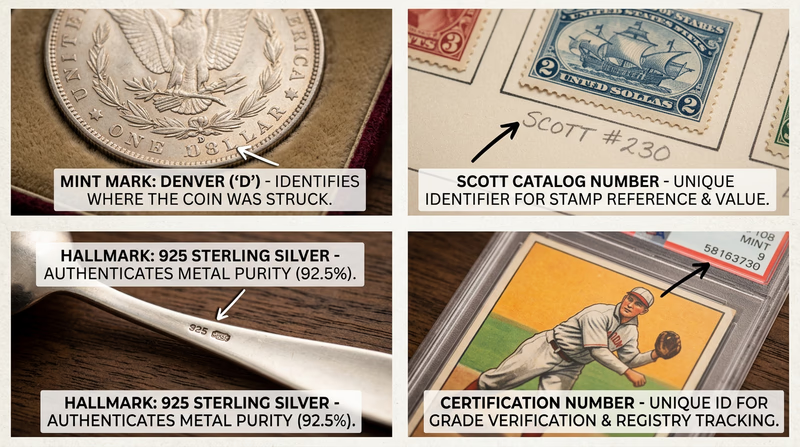
Every collectible tells a story through its markings. A coin’s mint mark reveals which factory struck it. A stamp’s Scott number lets collectors worldwide refer to the exact same issue. A trading card’s serial number proves it is one of a limited run. Learning to read these marks is like learning to read a secret language printed right on the items you already own.
Identification Numbers
Many collectibles have catalog numbers assigned by reference authorities. These numbers give every item a unique, universally recognized identity.
| Collection Type | Catalog System | Example |
|---|---|---|
| Stamps | Scott Catalog numbers | US #C3a (the Inverted Jenny) |
| Coins | Krause-Mishler (KM) numbers | KM#201 (US quarter) |
| Trading cards | Set name + card number | 2021 Topps #1 (Fernando Tatis Jr.) |
| Minerals | Mindat ID numbers | Mindat #3337 (quartz) |
| Comics | Issue number + publisher | Amazing Spider-Man #129 (Marvel) |
Why Numbers Matter
- Precise communication: When you say “Scott #C3a,” every stamp collector on Earth knows exactly which stamp you mean — no ambiguity
- Price research: Catalog numbers link directly to price guide listings
- Inventory management: Numbers make your catalog (Req 3d) searchable and sortable
- Authentication: Knowing the correct catalog designation helps you spot counterfeits labeled with wrong numbers
Series and Sets
A series is a group of related items issued together or over a defined period. Collectors often try to complete an entire series.
- Coins: The 50 State Quarters Program (1999–2008) is a series of 50 coins
- Stamps: A country’s definitive series (everyday mail stamps) changes every few years
- Cards: Each year’s Topps Baseball release is a series, often split into Series 1 and Series 2
- Minerals: Collectors might focus on a mineral “series” based on chemistry (the garnet group, the feldspar group)
Knowing which series an item belongs to tells you how many pieces exist in the set, what you still need, and how common or rare individual pieces are within that series.
Brand Names and Manufacturers
For manufactured collectibles, the brand name or manufacturer is a critical identifier:
- Trading cards: Topps, Panini, Upper Deck — each company has different licensing, print quality, and collectibility
- Figurines: Hummel, Lladró, Royal Doulton — the maker’s mark is on the bottom
- Pottery: Look for kiln marks, maker’s stamps, or impressed logos
- Toys: Mattel, Hasbro, LEGO — brand and production line determine value
Why Brand Matters
Two items that look similar can have wildly different values based on their maker. A vintage porcelain figurine with a “Meissen” mark (one of Europe’s oldest porcelain manufacturers) is worth far more than a visually similar figurine from an unknown factory.
Other Special Identification Marks
Beyond numbers, series, and brands, collectibles carry many other meaningful marks:
- Mint marks on coins (as described above)
- Edition marks on prints (e.g., “23/500” means the 23rd print in a run of 500)
- Hallmarks on silver and gold (purity stamps like “925” for sterling silver)
- Date stamps on pottery and porcelain
- Watermarks on stamps and paper
- Serial numbers on limited-edition items, sports equipment, and certified collectibles
- Error marks — manufacturing mistakes that make items rarer and often more valuable
Preparing for Your Counselor
Pick several items from your collection and be ready to point out their identification marks. Explain:
- What each mark represents
- How you use it to identify, catalog, or value the item
- Why the mark was put there in the first place
Req 6 — Future Plans
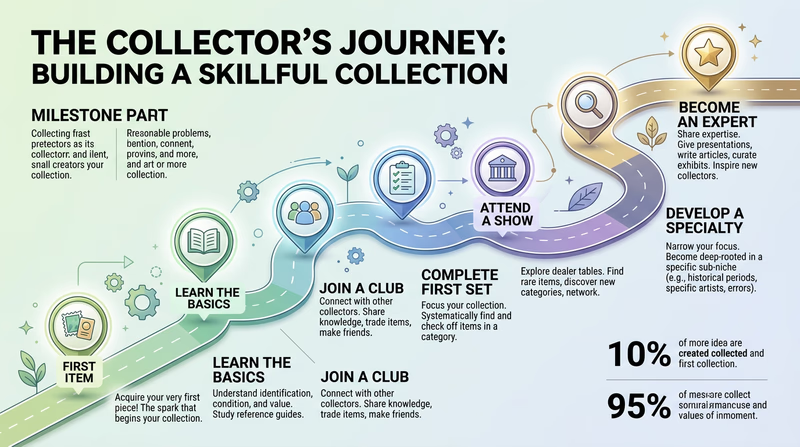
A collection without a plan is just accumulation. The difference between a casual hobbyist and a serious collector is intentionality — knowing where you want your collection to go and having a roadmap to get there. This requirement asks you to think beyond the next acquisition and consider the long game.
Setting Collection Goals
Goals give your collecting direction. They do not need to be rigid — they should evolve as you learn more — but having them turns random buying into purposeful building.
Short-Term Goals (Next 6–12 Months)
These are immediate, achievable targets:
- Complete a specific set or sub-set
- Upgrade your worst-condition item to a better grade
- Attend your first collector show or club meeting
- Learn a new skill (grading, authentication, conservation)
- Improve your cataloging system
Medium-Term Goals (1–3 Years)
These require sustained effort:
- Build a collection around a specific theme or era
- Start exhibiting at shows or competitions
- Develop expertise in a narrow specialty within your hobby
- Build relationships with dealers and fellow collectors
Long-Term Goals (3+ Years)
These are aspirational:
- Assemble a significant, focused collection recognized by peers
- Publish research or write articles about your specialty
- Mentor younger collectors
- Own a specific key item you have been dreaming about
Budget Planning
Collecting does not have to be expensive, but it helps to think about how much you can reasonably spend. Consider:
- Regular budget: A small monthly amount you set aside for collecting (even $10/month adds up)
- Opportunity fund: A separate savings stash for unexpected finds — the rare item you stumble across at a show or estate sale
- Trade value: Items in your collection that you would be willing to trade toward an upgrade
Expanding vs. Specializing
At some point, every collector faces a fork in the road: do you go wider or deeper?
- Expanding means adding new categories or areas to your collection. A coin collector might branch into paper currency. A rock collector might add fossils.
- Specializing means narrowing your focus to become an expert in a very specific area. Instead of “all U.S. coins,” you focus on “Mercury dimes from the Denver mint.”
Both paths are valid. Many collectors do both — maintaining a broad general collection while building a deep specialty within it.
What to Tell Your Counselor
Be prepared to discuss:
- Your specific goals — at least 2–3 concrete plans for your collection’s future
- How you will acquire new items — shows, dealers, online, trades, field collecting
- Your focus — will you expand, specialize, or both?
- Your budget — how you plan to fund your hobby
- Your knowledge plan — how you will continue learning (books, clubs, mentors, events)
Req 7 — Careers in Collecting
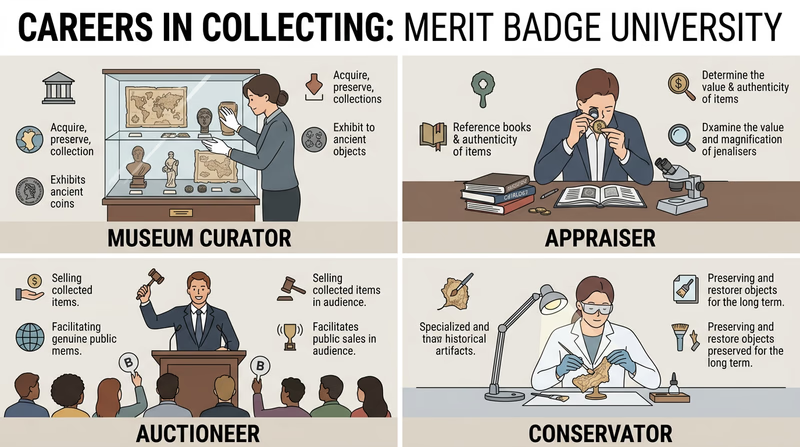
The skills you are building as a collector — research, evaluation, preservation, organization — are the same skills used by professionals who work with collections every day. For some people, what starts as a childhood hobby becomes a lifelong career.
Career Paths in the Collecting World
Museum Curator
Curators manage museum collections — acquiring new pieces, researching their history, designing exhibits, and ensuring proper preservation. They are the bridge between a collection and the public.
- Education: Bachelor’s degree minimum; most positions require a master’s degree in museum studies, art history, or a relevant field
- Training: Internships at museums are essential — many curators start as unpaid volunteers or interns during college
- Experience: Entry-level positions like collections assistant or registrar build the skills needed to advance
- Skills from collecting: Object identification, research, cataloging, preservation, display design
Appraiser
Appraisers determine the value of items for insurance, estate settlements, donations, and legal proceedings. They work independently or for auction houses, insurance companies, and banks.
- Education: Bachelor’s degree in a relevant field; specialized training through organizations like the American Society of Appraisers (ASA)
- Training: Apprenticeship with an experienced appraiser, plus coursework in valuation methodology
- Experience: Years of handling and evaluating items in a specific area build the expertise appraisers need
- Skills from collecting: Condition assessment, market knowledge, research, grading
Auction House Specialist
Auction houses like Sotheby’s, Christie’s, Heritage Auctions, and Stack’s Bowers employ specialists who authenticate items, estimate values, write catalog descriptions, and manage sales.
- Education: Bachelor’s degree; many specialists have advanced degrees in art history, numismatics, or a related field
- Training: Most start in entry-level cataloging or administrative roles and work their way up
- Experience: Deep expertise in a specific collecting area is essential
- Skills from collecting: Authentication, grading, market awareness, client relationships
Archivist
Archivists preserve and organize historical documents, photographs, and records for libraries, universities, government agencies, and private organizations. If you love the organizational side of collecting, this might be your path.
- Education: Master’s degree in library science or archival studies
- Training: Practical experience through internships and volunteer positions
- Experience: Familiarity with cataloging systems, preservation techniques, and digital archiving
- Skills from collecting: Organization, cataloging, preservation, attention to detail
Dealer / Shop Owner
Running a collectibles shop — brick-and-mortar or online — turns your market knowledge into a business. Dealers buy, sell, and trade in their specialty area.
- Education: Business knowledge is essential (even if self-taught); subject-matter expertise comes from years of collecting
- Training: Many dealers start by selling at shows or online while holding another job
- Experience: Deep knowledge of the market, strong relationships with collectors and wholesalers
- Skills from collecting: Grading, pricing, negotiation, customer relations, inventory management
Conservator / Restorer
Conservators repair and preserve damaged collectibles, artwork, and artifacts. They work in museums, private practice, and specialty labs.
- Education: Master’s degree in conservation (programs at NYU, University of Delaware, and others)
- Training: Extensive hands-on internships; chemistry and materials science coursework
- Experience: Each specialty (paper, metals, textiles, paintings) requires years of focused practice
- Skills from collecting: Understanding materials, preservation knowledge, patience, fine motor skills
Preparing for Your Counselor Discussion
Pick one career that genuinely interests you and be prepared to explain:
- What the job involves day to day
- Education required — degrees, certifications, or specialized training
- How to get started — internships, entry-level positions, volunteer opportunities
- Why it appeals to you — connect it to your personal interests and collecting experience
Career Research
Cover these points for your chosen profession- Job description: What does a typical day or week look like?
- Education: What degree or certification is needed?
- Training path: How do people break into this field?
- Salary range: What can you expect to earn?
- Connection to collecting: How do your current skills apply?
- Why it interests you: A genuine, personal reason.
Extended Learning
A. Congratulations, Collector
You have earned the Collections merit badge — and more importantly, you have built a framework of skills that will serve you for a lifetime. You know how to research, organize, preserve, evaluate, and communicate about the things you care about. Those skills apply far beyond collecting. What follows are ways to take your hobby even further.
B. The Science of Authentication
Every collecting area has its share of fakes, forgeries, and misattributed items. Learning to spot them is one of the most intellectually challenging — and satisfying — skills a collector can develop.
Authentication starts with knowing what the genuine article looks like so well that anything off jumps out at you. Coin collectors study die characteristics under magnification — the tiny marks left by the steel die that struck the coin. Stamp collectors examine paper fiber, watermarks, and ink composition. Card collectors look for printing dot patterns, card stock thickness, and centering that matches known production methods.
Technology has transformed authentication. Ultraviolet (UV) light reveals repairs on porcelain, repainting on vintage toys, and chemical alterations on coins. X-ray fluorescence (XRF) can identify the exact metal composition of a coin or piece of jewelry without damaging it. High-resolution digital photography allows remote experts to examine items in detail without handling them.
The rise of professional grading services (PSA, NGC, PCGS, BGS) has created a new layer of trust. When a reputable service authenticates and grades an item, the sealed holder and certification number provide assurance that survives across multiple future sales. But even grading services make mistakes, and learning to form your own opinion — rather than blindly trusting a label — is what separates a true expert from a casual buyer.
C. Digital Collecting and Technology
The internet has changed collecting in ways that would be unrecognizable to a collector from even 30 years ago. Understanding how technology shapes the hobby gives you an edge.
Online communities have replaced local clubs as the primary gathering place for many collectors. Reddit communities like r/coins, r/stamps, and r/tradingcards have hundreds of thousands of members sharing finds, asking questions, and debating values. Instagram has become a visual showroom where collectors display their best pieces. YouTube channels offer educational content from expert collectors and dealers.
Digital tools make cataloging and research faster than ever. Apps can scan a coin or card and pull up identification, grading information, and market values in seconds. High-resolution scanning preserves a visual record of every item. Cloud-based catalogs ensure your records survive even if your computer does not.
Online marketplaces have expanded access enormously. A collector in a small town now has access to the same inventory as someone in New York or London. But online buying also requires new skills — reading seller feedback, understanding return policies, recognizing misleading photographs, and shipping items safely.
Digital collectibles represent the newest frontier. Non-fungible tokens (NFTs), digital trading cards (like NBA Top Shot), and blockchain-verified ownership are still evolving. Whether these become a permanent part of the collecting landscape or a passing trend is an open question — but understanding the technology is worth your time.
D. Collecting and Conservation Ethics
As your collection grows, you will encounter ethical questions that do not have simple answers. Thinking about them now builds the foundation for responsible collecting throughout your life.
Cultural property is a complex issue. Who owns an ancient artifact dug up in one country and sold in another? International laws like the UNESCO Convention on Cultural Property restrict the import and export of cultural objects to prevent looting and protect heritage sites. As a collector, knowing the provenance (ownership history) of items — especially antiquities, fossils, and indigenous art — is both a legal and ethical responsibility.
Environmental impact matters for natural specimen collectors. Over-collecting can deplete mineral deposits, damage fossil sites, and harm fragile ecosystems. Responsible collectors follow the “collect less, learn more” principle — taking only what they need, leaving sites better than they found them, and supporting conservation efforts.
Reproductions and replicas present their own ethical questions. There is nothing wrong with owning a reproduction — many are beautifully made and serve as excellent study pieces. The problem arises when reproductions are sold as originals, either through deliberate fraud or innocent misidentification. Always disclose when an item in your collection is a reproduction.
E. Real-World Experiences
Places to Visit and Things to Do
Experiences that deepen your collecting journey- Visit a major museum collection: The Smithsonian National Museum of Natural History, the American Numismatic Money Museum in Colorado Springs, or the National Postal Museum in Washington, D.C. all have world-class collecting exhibits.
- Attend a regional or national collector show: Walk the floor, talk to dealers, and see competitive exhibits. Even if you do not buy anything, the education is invaluable.
- Tour a production facility: The U.S. Mint offers tours at its Philadelphia and Denver facilities. Many other manufacturers welcome visitors.
- Join a local club field trip: Gem and mineral clubs often organize group collecting trips to approved sites — a hands-on experience that no book can replace.
- Volunteer at a museum or historical society: Behind-the-scenes work with real collections teaches skills you cannot learn any other way.