Req 1 — Writing Your Collection Report
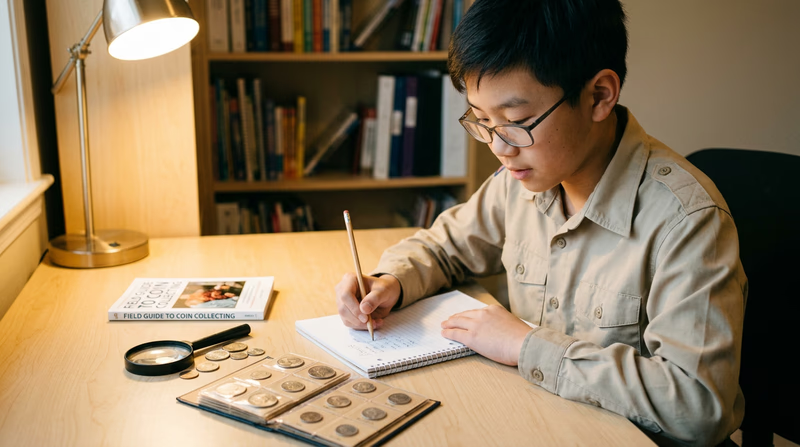
A blank page can feel intimidating, but this report is really just you telling the story of your collection — something you already know better than anyone. Your counselor wants to hear your voice and your enthusiasm, not a textbook summary.
What to Include
Your report should cover four main areas. Think of each one as a paragraph or short section:
1. Description of Your Collection
Start with the basics. What do you collect? How many items do you have? What is the range — oldest to newest, most common to most rare, least to most valuable? Give your counselor a clear picture of what they would see if they could look through your collection right now.
2. A Short History
When did you start collecting? What was the first item in your collection? Was there a moment that got you hooked — a gift from a grandparent, a find at a yard sale, a cool rock on a hike? Trace the timeline from that first item to where your collection stands today.
3. Why You Enjoy It
This is the heart of your report. What keeps you going back? Is it the thrill of the hunt? The satisfaction of completing a set? The history behind each piece? The community of other collectors you have found? Be honest — your counselor is not grading you on having the “right” answer.
4. What You Have Learned
Collecting teaches you things you might not expect. Maybe you have learned about geography from stamps, metallurgy from coins, geology from rocks, or graphic design from trading cards. Maybe you have learned patience, budgeting, or negotiation. Think beyond the obvious.
Report or Outline?
The requirement says “report or outline.” A report is a few paragraphs of flowing prose. An outline uses bullet points and headers to organize the same information. Either format works — pick whichever feels more natural. If you are more comfortable talking than writing, try jotting an outline first and then expanding the key points into sentences.
Why This Collection?
Do not forget the last sentence of the requirement: explain why you chose this particular type of collection or collecting method. Maybe you chose coins because your grandfather was a numismatist. Maybe you collect rocks because you love hiking and want a souvenir from every trail. Whatever your reason, share it.
Report Checklist
Make sure your report covers each of these
- What you collect: Type, size, and scope of your collection.
- History: When and how you started.
- Enjoyment: Why you love this hobby.
- Lessons learned: Skills and knowledge you have gained.
- Why this collection: The reason you chose this particular type.