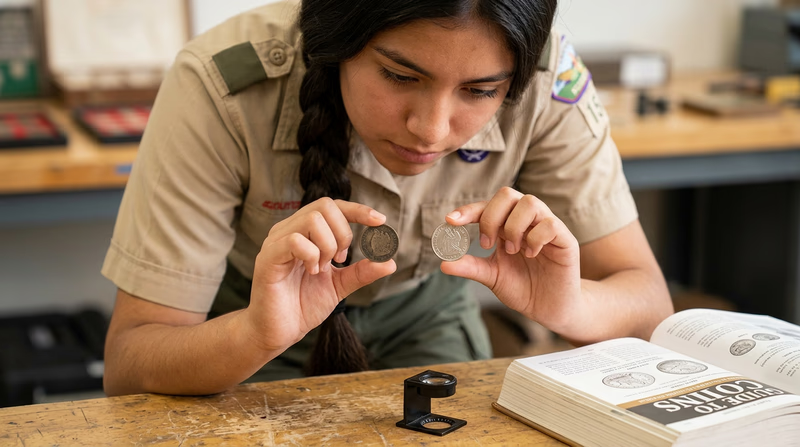
Req 2 — Growth & Development
Every collection has a story arc. It starts somewhere — maybe a single coin your uncle handed you — and it evolves as your knowledge, taste, and ambitions grow. This requirement asks you to step back and look at the big picture: how did your collection get from Point A to where it is today?
Phases of Growth
Most collections pass through recognizable stages. Thinking about which phase you are in can help you explain your collection’s development to your counselor.
The Accumulation Phase
In the beginning, you gather everything you can find. A rock collector picks up every interesting stone. A card collector saves every pack’s worth of cards. Quantity matters more than quality, and that is perfectly normal — you are learning what is out there.
The Focusing Phase
As you learn more, you start getting selective. You realize you cannot collect everything, so you narrow your focus. Maybe you shift from “all coins” to “Mercury dimes” or from “all rocks” to “minerals from my home state.” This is when collecting gets really interesting, because you are making deliberate choices.
The Refining Phase
Now you are upgrading. You trade duplicates, sell lower-quality pieces, and replace them with better examples. You might start targeting specific rare items you have been researching for months. Quality overtakes quantity.
How to Explain Your Growth
When discussing this with your counselor, consider these questions:
- Starting point: How many items did you begin with? What was your first acquisition?
- Milestones: What were the key moments — a significant find, a gift, a trade, a show where you found something special?
- Changes in direction: Did your focus shift over time? Did you start collecting one thing and pivot to another?
- Knowledge growth: How has your understanding of the subject deepened? Can you spot details now that you would have missed a year ago?
- Sources: Where do your items come from — shops, online, shows, trades, family, nature?
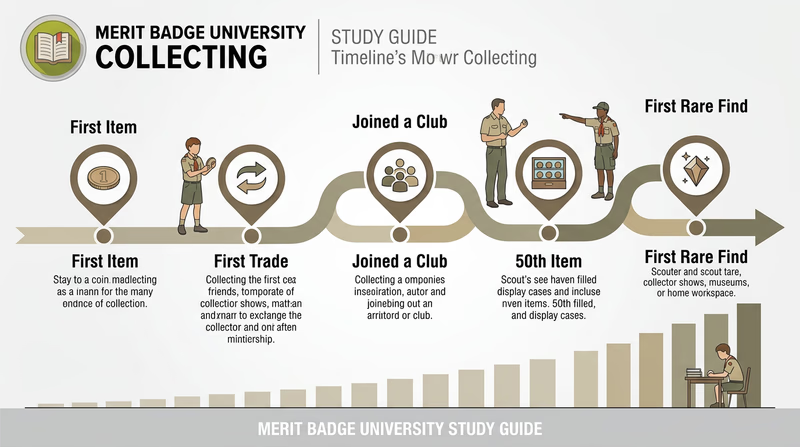
Tracking Growth Over Time
Keeping a simple log helps you remember and explain your collection’s journey. You do not need anything fancy — a notebook, a spreadsheet, or even a note on your phone works. Record:
- Date acquired: When did you get the item?
- Source: Where did it come from?
- Cost: What did you pay (or was it a gift/find)?
- Significance: Why is this item notable?
This log becomes the raw material for your counselor discussion — and it connects directly to the cataloging skills you will learn in Req 3d.
American Numismatic Association — Building a Collection Practical advice on growing a coin collection — many principles apply to any type of collecting.