Req 3a — Handling, Cleaning & Storage
This requirement covers three essential preservation skills:
- Handling — how to touch and move items without causing damage
- Cleaning — when and how to clean (and when not to)
- Storage — protecting your collection from environmental threats
A single careless moment — a fingerprint on a rare coin, a stamp peeled with too much force, a fossil dropped on a hard floor — can permanently reduce an item’s condition and value. Preservation is the foundation of good collecting.
Handling
The Golden Rule: Less Contact Is Better
Every time you touch a collectible, you risk transferring oils, moisture, and dirt from your skin. Over time, these tiny deposits cause tarnishing, staining, and corrosion.
Surface Protection
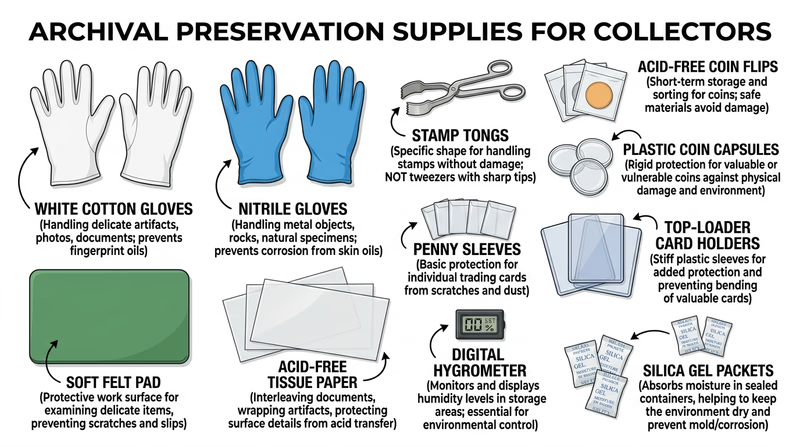
Work over a soft, clean surface. A felt pad, a clean towel, or a padded tray prevents damage if you accidentally drop an item. This is especially important for coins, minerals, and figurines.
Cleaning
The Most Important Rule
When in doubt, do not clean. Improper cleaning destroys more collectibles than neglect ever has. Many collectors and grading services actually prefer items in their original, uncleaned state — even if they look a little worn.
| Collection Type | Safe Cleaning Method | Never Do This |
|---|---|---|
| Coins | Gentle rinse in distilled water, pat dry | Polish, scrub, use chemical cleaners |
| Stamps | Light dusting with soft brush | Soak in water unless you know the ink is waterproof |
| Rocks & minerals | Soft brush, distilled water | Use acids without expert guidance |
| Trading cards | Soft microfiber cloth (dry) | Use water or cleaning sprays |
| Fossils | Soft brush, dental pick for matrix | Scrub with hard brushes |
When Cleaning Is Appropriate
Some items do benefit from careful cleaning — a fossil still embedded in rock matrix, a mineral caked with clay, or a vintage toy covered in surface dust. The key is research: learn the accepted cleaning methods for your specific type of collection before you touch anything.
Storage
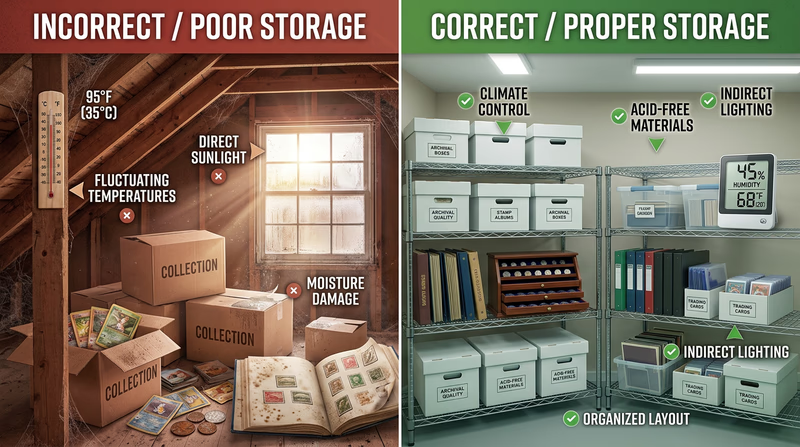
Good storage protects against five enemies of collectibles:
- Moisture — causes rust, mold, foxing (brown spots on paper), and mineral degradation
- Light — fades colors, yellows paper, and degrades plastics
- Temperature extremes — expansion and contraction crack, warp, and delaminate
- Dust and pollutants — abrade surfaces and cause chemical reactions
- Pests — insects and rodents can destroy paper, fabric, and natural specimens
Storage Solutions by Collection Type
- Coins: Acid-free flips, capsules, or slabs (hard plastic holders used by grading services)
- Stamps: Stamp mounts (hingeless) in acid-free albums
- Cards: Penny sleeves inside top-loaders or magnetic holders, stored upright in boxes
- Rocks & minerals: Padded compartment boxes or display cases with individual wells
- Paper items: Acid-free sleeves, flat storage in archival boxes, away from light
Storage Environment Checklist
Keep your collection safe from environmental damage
- Stable temperature: Aim for 65–72°F with minimal fluctuation.
- Low humidity: 30–50% relative humidity is ideal for most collections.
- No direct sunlight: UV light is the top cause of fading and deterioration.
- Clean air: Avoid attics, basements, and garages where dust, moisture, and temperature swing.
- Pest prevention: Keep food away from storage areas and inspect regularly.