Req 5b — Organizing & Showing Groups
Organization is what separates a collection from a hoard. When you can pull out two distinct groups and explain the logic behind each, you demonstrate that you have thought carefully about what you own and how the pieces relate to each other.
What Is a “Group”?
A group is any subset of your collection united by a shared characteristic. The grouping method you choose depends on what makes sense for your specific collection. Here are common approaches:
By Date or Era
Arranging items chronologically — for example, coins from the 1960s vs. coins from the 2020s, or stamps from before World War II vs. modern issues. This method highlights historical changes and production evolution.
By Type or Category
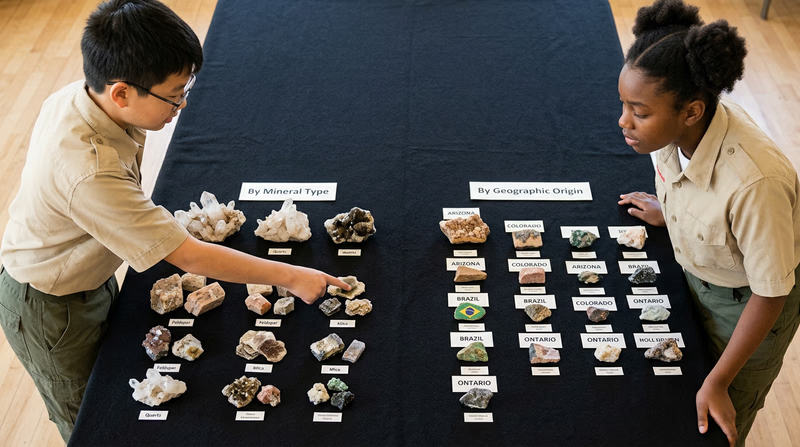
Grouping by what the items are — different mineral types, different card sports, different stamp themes (animals, landmarks, space). This is the most intuitive approach for many collectors.
By Origin or Geography
Sorting by where items came from — coins by country, rocks by the state or park where they were found, stamps by issuing nation. Geographic organization tells a story about your travels or interests.
By Condition or Grade
Separating items by their quality — mint-condition pieces in one group, circulated or worn items in another. This method makes it easy to identify your best pieces and your upgrade candidates.
By Rarity or Value
Placing your most valuable or hardest-to-find items together. This is practical for insurance purposes and helps you focus your preservation efforts on the pieces that matter most.
Choosing Your Two Groups
Pick two groups that show different aspects of your collection. Good combinations include:
- A complete set vs. an in-progress set — shows range and goals
- A high-value group vs. a sentimental favorites group — shows that collecting is about more than money
- Two different categories — shows the breadth of your interests
Preparing Your Presentation
Whether you are bringing items in person or showing photographs, preparation makes a difference.
In Person
- Select representatives from each group (you do not need to bring everything)
- Arrange them on a felt pad or in a portable display
- Have your catalog or list handy to reference
- Be ready to explain why specific items belong in each group
With Photographs
If your collection is too large to transport (or your counselor cannot visit), photographs work well. The requirement explicitly allows this.
Photography Tips
Create clear, useful photos of your collection
- Use natural or bright indirect light: Avoid harsh shadows and flash glare.
- Photograph both sides: Coins, cards, and stamps have important details on both sides.
- Include a scale reference: A ruler or coin next to minerals and fossils shows size.
- Group shots and close-ups: Show the full group layout, then zoom in on individual items.
- Label your photos: Include the item name, group, and any notable details in file names or captions.