Req 5c — Monetary Value
Knowing what your collection is worth is not about bragging — it is a practical skill. You need value information for insurance, for making smart purchases, for trades, and for understanding the market you are part of. But figuring out value is trickier than it sounds, because “value” means different things in different contexts.
Types of Value
Retail Value
What a dealer or specialty store charges a customer for the item. This is the highest price you will typically see. Online listings, price guides, and auction results usually reflect retail values.
Wholesale Value
What a dealer pays when they buy from you. Dealers need profit margin, so wholesale is significantly lower than retail — often 40–60% of retail price. This is the price you should expect if you sell to a shop.
Fair Market Value
The price a willing buyer and a willing seller would agree on, with neither under pressure. This falls between wholesale and retail and is what insurance companies, appraisers, and the IRS use.
Sentimental Value
The worth an item has to you personally that has nothing to do with money. Your grandfather’s pocket watch might be worth $25 at market but be priceless to you. Sentimental value is real — it is just not financial.
Where to Research Values
| Source | What It Offers | Best For |
|---|---|---|
| Price guides (Red Book for coins, Scott Catalog for stamps, Beckett for cards) | Published reference values updated annually | Baseline pricing, understanding relative rarity |
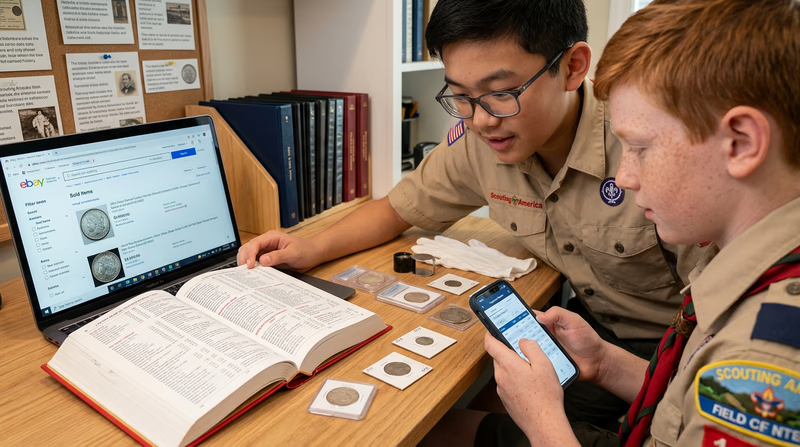
| Online auction results | Real transaction prices from actual sales | Current market value — what people actually pay |
| Grading service databases | Population reports and certified values | Understanding scarcity at each condition grade |
| Dealer websites | Current asking prices | Retail value comparison |
| Collector forums | Community knowledge and recent sale reports | Niche items not well-covered by mainstream guides |
| Appraisals | Professional assessment of specific items | Insurance documentation, estate valuation |
Calculating Your Collection’s Value
For your counselor, you do not need a professional appraisal. A reasonable estimate is fine. Here is how to approach it:
- Identify key pieces — the items most likely to have significant value
- Research each one using at least two of the sources above
- Note the condition — value is meaningless without a condition reference
- Add up individual values — the total gives you an overall estimate
- Be honest about uncertainty — say “I estimate this at $XX based on recent eBay sales” rather than claiming a precise number
Common Items vs. Key Items
In most collections, a small number of items account for the majority of the value. If you collect coins, your common-date modern quarters are worth face value — 25 cents each. But a single key-date older coin might be worth hundreds. Focus your research energy on the items that matter most.