Req 5d — Grading & Classification
Grading is the universal language of condition in the collecting world. When a seller says a coin is “VF-30” or a card is “PSA 9,” experienced collectors know exactly what to expect without seeing the item. Understanding your hobby’s grading system is one of the most important skills you can develop.
What Grading Measures
Grading evaluates an item against an ideal — the best possible version that could exist. Graders consider:
- Physical defects: Scratches, dents, creases, tears, chips, stains, and wear
- Completeness: Missing parts, broken edges, or trimmed margins
- Eye appeal: Overall visual attractiveness, color, and luster
- Originality: Whether the item has been cleaned, repaired, altered, or restored
Grading Systems by Collection Type
Coins: The Sheldon Scale
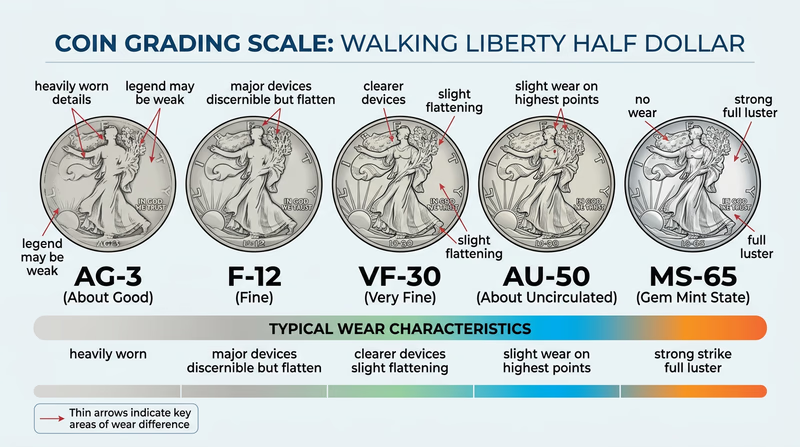
Coins use a 1–70 numerical scale developed by Dr. William Sheldon in 1949. Key grades:
| Grade | Abbreviation | Condition |
|---|---|---|
| 1 | PO (Poor) | Barely identifiable |
| 4 | AG (About Good) | Very heavily worn, outline visible |
| 12 | F (Fine) | Moderate wear, major details clear |
| 30 | VF (Very Fine) | Light wear on high points only |
| 50 | AU (About Uncirculated) | Slight wear, nearly mint |
| 60–70 | MS (Mint State) | No wear at all; 70 is theoretically perfect |
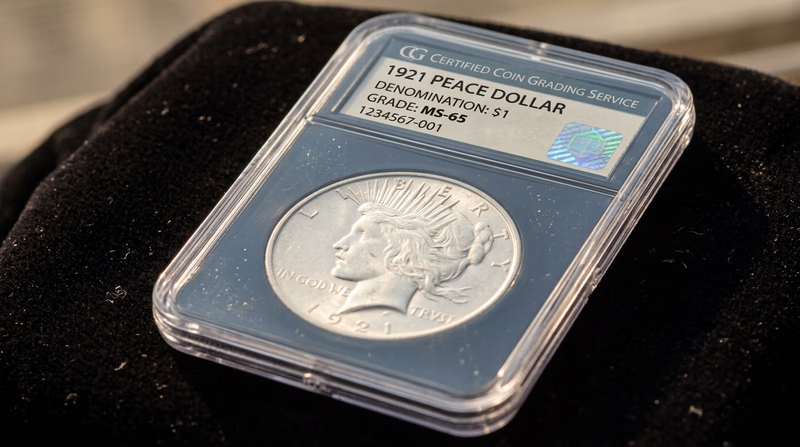
Professional grading services (PCGS, NGC) seal graded coins in tamper-evident “slabs” with the grade printed on the label.
Trading Cards: The 1–10 Scale
Card grading services (PSA, BGS, SGC) use a 1–10 scale:
| Grade | Condition |
|---|---|
| PSA 10 (Gem Mint) | Perfect — no visible flaws under magnification |
| PSA 9 (Mint) | One minor flaw |
| PSA 8 (NM-MT) | Minor flaws, sharp corners |
| PSA 7 (NM) | Slight wear, minor surface issues |
| PSA 5 (EX) | Noticeable wear, may have light creases |
| PSA 1 (Poor) | Major damage, missing parts |
Stamps: Grading Standards
Stamp condition considers centering, gum condition, cancellation quality (for used stamps), and paper freshness:
- Superb: Nearly perfect centering, full original gum, no flaws
- Extremely Fine: Well-centered, original gum, minor imperfections
- Fine: Slightly off-center, acceptable for most collectors
- Good: Noticeably off-center, heavier cancellation
Rocks & Minerals: Quality Descriptors
Natural specimens typically use qualitative rather than numerical grading:
- Museum quality: Exceptional size, color, crystal form, and display worthiness
- Collector grade: Good quality with minor imperfections
- Specimen grade: Identifiable and educational but not display quality
- Study grade: Good for learning but not for display or investment
General Collectibles
Many categories (toys, memorabilia, vintage items) use a simple scale:
- Mint / Mint in Box (MIB): Perfect, unused, complete with original packaging
- Near Mint (NM): Excellent with minimal signs of age
- Excellent (EX): Very slight wear or handling
- Good (G): Noticeable wear but structurally sound
- Fair / Poor: Significant damage or missing parts
Classification Beyond Condition
Grading is about condition, but classification includes other factors too:
- Age: Date of manufacture, issue, or formation
- Size: Physical dimensions, weight, or denomination
- Variety: Different editions, printings, or natural variations within the same type
- Authenticity: Genuine vs. reproduction, original vs. restrike
Why Professional Grading Matters
Professional grading removes subjectivity. When two collectors disagree about whether a coin is VF-35 or EF-40, a professional grading service provides a definitive answer — and that answer directly affects the price. For high-value items, the cost of professional grading (typically $15–$50 per item) is easily justified.