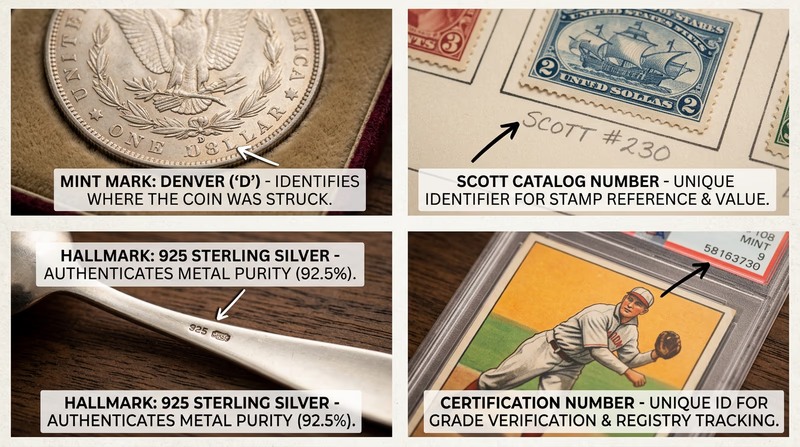
Req 5f — Identification Marks
Every collectible tells a story through its markings. A coin’s mint mark reveals which factory struck it. A stamp’s Scott number lets collectors worldwide refer to the exact same issue. A trading card’s serial number proves it is one of a limited run. Learning to read these marks is like learning to read a secret language printed right on the items you already own.
Identification Numbers
Many collectibles have catalog numbers assigned by reference authorities. These numbers give every item a unique, universally recognized identity.
| Collection Type | Catalog System | Example |
|---|---|---|
| Stamps | Scott Catalog numbers | US #C3a (the Inverted Jenny) |
| Coins | Krause-Mishler (KM) numbers | KM#201 (US quarter) |
| Trading cards | Set name + card number | 2021 Topps #1 (Fernando Tatis Jr.) |
| Minerals | Mindat ID numbers | Mindat #3337 (quartz) |
| Comics | Issue number + publisher | Amazing Spider-Man #129 (Marvel) |
Why Numbers Matter
- Precise communication: When you say “Scott #C3a,” every stamp collector on Earth knows exactly which stamp you mean — no ambiguity
- Price research: Catalog numbers link directly to price guide listings
- Inventory management: Numbers make your catalog (Req 3d) searchable and sortable
- Authentication: Knowing the correct catalog designation helps you spot counterfeits labeled with wrong numbers
Series and Sets
A series is a group of related items issued together or over a defined period. Collectors often try to complete an entire series.
- Coins: The 50 State Quarters Program (1999–2008) is a series of 50 coins
- Stamps: A country’s definitive series (everyday mail stamps) changes every few years
- Cards: Each year’s Topps Baseball release is a series, often split into Series 1 and Series 2
- Minerals: Collectors might focus on a mineral “series” based on chemistry (the garnet group, the feldspar group)
Knowing which series an item belongs to tells you how many pieces exist in the set, what you still need, and how common or rare individual pieces are within that series.
Brand Names and Manufacturers
For manufactured collectibles, the brand name or manufacturer is a critical identifier:
- Trading cards: Topps, Panini, Upper Deck — each company has different licensing, print quality, and collectibility
- Figurines: Hummel, Lladró, Royal Doulton — the maker’s mark is on the bottom
- Pottery: Look for kiln marks, maker’s stamps, or impressed logos
- Toys: Mattel, Hasbro, LEGO — brand and production line determine value
Why Brand Matters
Two items that look similar can have wildly different values based on their maker. A vintage porcelain figurine with a “Meissen” mark (one of Europe’s oldest porcelain manufacturers) is worth far more than a visually similar figurine from an unknown factory.
Other Special Identification Marks
Beyond numbers, series, and brands, collectibles carry many other meaningful marks:
- Mint marks on coins (as described above)
- Edition marks on prints (e.g., “23/500” means the 23rd print in a run of 500)
- Hallmarks on silver and gold (purity stamps like “925” for sterling silver)
- Date stamps on pottery and porcelain
- Watermarks on stamps and paper
- Serial numbers on limited-edition items, sports equipment, and certified collectibles
- Error marks — manufacturing mistakes that make items rarer and often more valuable
Preparing for Your Counselor
Pick several items from your collection and be ready to point out their identification marks. Explain:
- What each mark represents
- How you use it to identify, catalog, or value the item
- Why the mark was put there in the first place