Req 6 — Future Plans
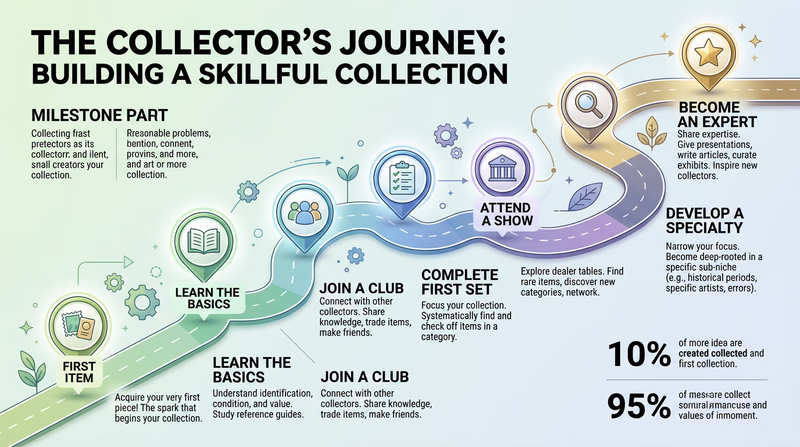
A collection without a plan is just accumulation. The difference between a casual hobbyist and a serious collector is intentionality — knowing where you want your collection to go and having a roadmap to get there. This requirement asks you to think beyond the next acquisition and consider the long game.
Setting Collection Goals
Goals give your collecting direction. They do not need to be rigid — they should evolve as you learn more — but having them turns random buying into purposeful building.
Short-Term Goals (Next 6–12 Months)
These are immediate, achievable targets:
- Complete a specific set or sub-set
- Upgrade your worst-condition item to a better grade
- Attend your first collector show or club meeting
- Learn a new skill (grading, authentication, conservation)
- Improve your cataloging system
Medium-Term Goals (1–3 Years)
These require sustained effort:
- Build a collection around a specific theme or era
- Start exhibiting at shows or competitions
- Develop expertise in a narrow specialty within your hobby
- Build relationships with dealers and fellow collectors
Long-Term Goals (3+ Years)
These are aspirational:
- Assemble a significant, focused collection recognized by peers
- Publish research or write articles about your specialty
- Mentor younger collectors
- Own a specific key item you have been dreaming about
Budget Planning
Collecting does not have to be expensive, but it helps to think about how much you can reasonably spend. Consider:
- Regular budget: A small monthly amount you set aside for collecting (even $10/month adds up)
- Opportunity fund: A separate savings stash for unexpected finds — the rare item you stumble across at a show or estate sale
- Trade value: Items in your collection that you would be willing to trade toward an upgrade
Expanding vs. Specializing
At some point, every collector faces a fork in the road: do you go wider or deeper?
- Expanding means adding new categories or areas to your collection. A coin collector might branch into paper currency. A rock collector might add fossils.
- Specializing means narrowing your focus to become an expert in a very specific area. Instead of “all U.S. coins,” you focus on “Mercury dimes from the Denver mint.”
Both paths are valid. Many collectors do both — maintaining a broad general collection while building a deep specialty within it.
What to Tell Your Counselor
Be prepared to discuss:
- Your specific goals — at least 2–3 concrete plans for your collection’s future
- How you will acquire new items — shows, dealers, online, trades, field collecting
- Your focus — will you expand, specialize, or both?
- Your budget — how you plan to fund your hobby
- Your knowledge plan — how you will continue learning (books, clubs, mentors, events)