 Getting Started
Introduction & Overview
Communication is one of the most powerful skills you will ever develop. Every time you explain an idea, listen to a friend, write a message, or stand up in front of a group to speak, you are practicing communication. It connects people, builds trust, solves problems, and makes great things happen. The Communication merit badge will help you become a clearer thinker, a better listener, and a more confident speaker — skills that will serve you in Scouting and throughout your life.
This is an Eagle-required merit badge, and for good reason. Leaders must communicate well. Whether you are leading a patrol on a campout or presenting a project at school, the ability to share your ideas clearly and listen carefully to others is what sets great leaders apart.
Then and Now
Then — Getting the Message Across
For thousands of years, humans found creative ways to share information across distances. Ancient civilizations used smoke signals, drumbeats, and runners to carry messages between villages. The Greeks and Romans developed systems of signal fires to relay warnings across hundreds of miles in minutes. In the 1400s, the printing press revolutionized communication by making books and pamphlets available to ordinary people for the first time.
- Purpose: Survival, trade, governance, record-keeping
- Mindset: Communication was slow, deliberate, and often reserved for the most important messages
Now — The Connected World
Today, you can send a message to someone on the other side of the planet in less than a second. Video calls let you see a friend’s face while talking across time zones. Social media connects millions of people around shared interests. Podcasts, blogs, and streaming video give anyone the power to broadcast their ideas to the world.
- Purpose: Connection, collaboration, creativity, entertainment, information
- Mindset: Communication is instant, constant, and available to everyone — the challenge is using it wisely and effectively
Get Ready! You already communicate every single day — now it is time to get better at it. This badge will challenge you to listen more carefully, speak more clearly, write more persuasively, and lead more confidently. Let’s get started!
Kinds of Communication
Communication takes many forms. Understanding the different types will help you choose the right method for the right moment.
Verbal Communication
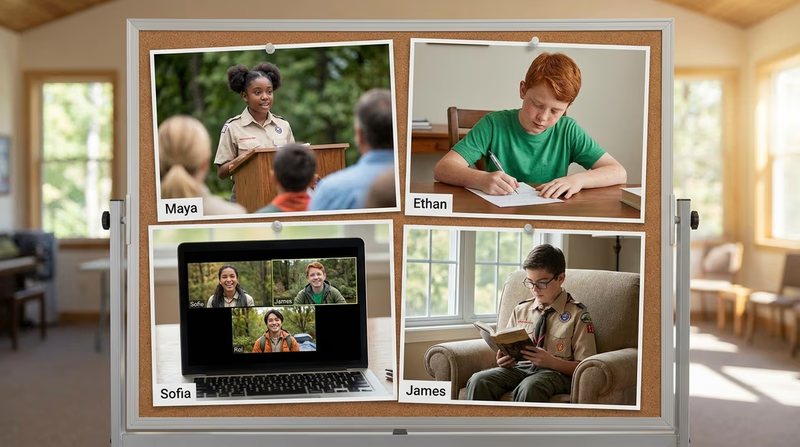
Verbal communication is any time you use spoken words to share a message. This includes conversations with friends, phone calls, speeches, presentations, and group discussions. Your tone of voice, pace, and word choice all affect how your message is received.
Written Communication
From handwritten letters to emails, text messages, and social media posts, written communication lets you craft your message carefully before sending it. Writing gives you time to organize your thoughts and choose your words precisely. It also creates a record that can be read again later.
Nonverbal Communication
You are always communicating, even when you are not saying a word. Your facial expressions, posture, eye contact, and gestures send powerful signals. Crossing your arms might tell someone you are closed off. Making eye contact shows that you are engaged and listening. Learning to read and control nonverbal cues makes you a much more effective communicator.
Visual Communication
Pictures, charts, diagrams, videos, and presentations all fall under visual communication. A well-designed poster or a clear graph can explain a complex idea faster than a page of text. In today’s world, visual communication is everywhere — from road signs to infographics to video tutorials.
Digital Communication
Digital communication includes texting, email, social media, video calls, blogs, podcasts, and websites. These tools give you incredible reach and speed, but they also come with unique challenges. Without tone of voice or facial expressions, digital messages can easily be misunderstood.
Listening
Listening is often overlooked, but it is one of the most important forms of communication. Active listening means giving your full attention to the speaker, asking thoughtful questions, and reflecting on what you heard. Great communicators are always great listeners first.
Now let’s dive into the requirements and start building your communication skills!