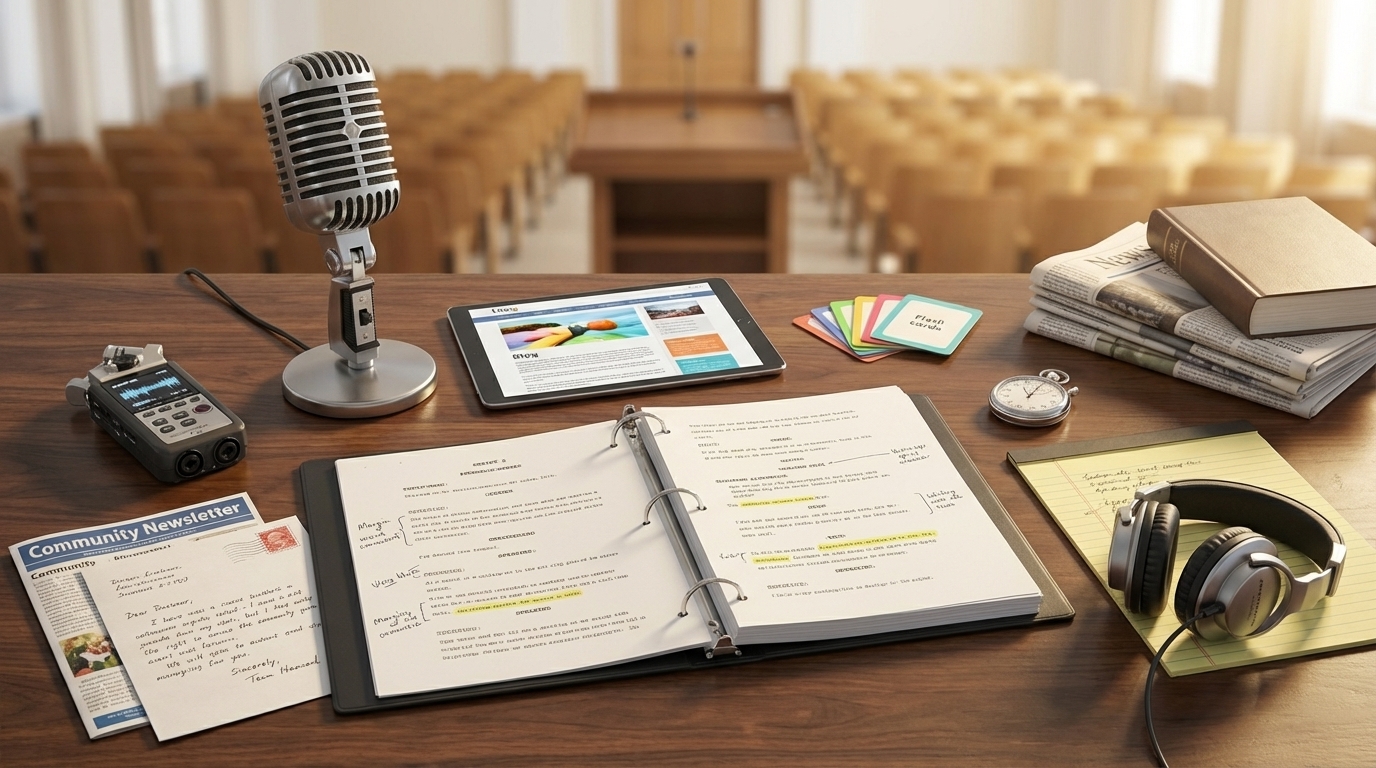
Communication Merit Badge — Complete Digital Resource Guide
https://merit-badge.university/merit-badges/communication/guide/
Introduction & Overview
Communication is one of the most powerful skills you will ever develop. Every time you explain an idea, listen to a friend, write a message, or stand up in front of a group to speak, you are practicing communication. It connects people, builds trust, solves problems, and makes great things happen. The Communication merit badge will help you become a clearer thinker, a better listener, and a more confident speaker — skills that will serve you in Scouting and throughout your life.
This is an Eagle-required merit badge, and for good reason. Leaders must communicate well. Whether you are leading a patrol on a campout or presenting a project at school, the ability to share your ideas clearly and listen carefully to others is what sets great leaders apart.
Then and Now
Then — Getting the Message Across
For thousands of years, humans found creative ways to share information across distances. Ancient civilizations used smoke signals, drumbeats, and runners to carry messages between villages. The Greeks and Romans developed systems of signal fires to relay warnings across hundreds of miles in minutes. In the 1400s, the printing press revolutionized communication by making books and pamphlets available to ordinary people for the first time.
- Purpose: Survival, trade, governance, record-keeping
- Mindset: Communication was slow, deliberate, and often reserved for the most important messages
Now — The Connected World
Today, you can send a message to someone on the other side of the planet in less than a second. Video calls let you see a friend’s face while talking across time zones. Social media connects millions of people around shared interests. Podcasts, blogs, and streaming video give anyone the power to broadcast their ideas to the world.
- Purpose: Connection, collaboration, creativity, entertainment, information
- Mindset: Communication is instant, constant, and available to everyone — the challenge is using it wisely and effectively
Get Ready! You already communicate every single day — now it is time to get better at it. This badge will challenge you to listen more carefully, speak more clearly, write more persuasively, and lead more confidently. Let’s get started!
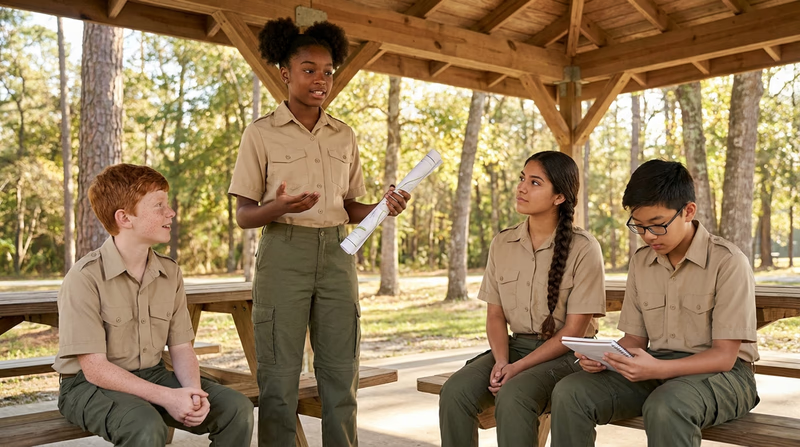
Kinds of Communication
Communication takes many forms. Understanding the different types will help you choose the right method for the right moment.
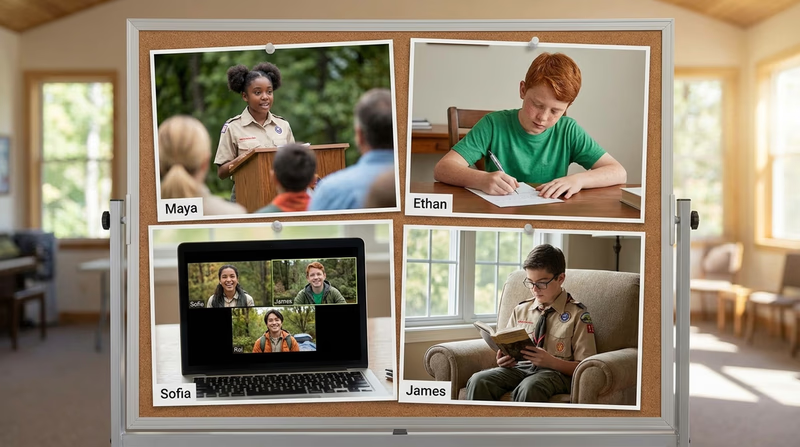
Verbal Communication
Verbal communication is any time you use spoken words to share a message. This includes conversations with friends, phone calls, speeches, presentations, and group discussions. Your tone of voice, pace, and word choice all affect how your message is received.
Written Communication
From handwritten letters to emails, text messages, and social media posts, written communication lets you craft your message carefully before sending it. Writing gives you time to organize your thoughts and choose your words precisely. It also creates a record that can be read again later.
Nonverbal Communication
You are always communicating, even when you are not saying a word. Your facial expressions, posture, eye contact, and gestures send powerful signals. Crossing your arms might tell someone you are closed off. Making eye contact shows that you are engaged and listening. Learning to read and control nonverbal cues makes you a much more effective communicator.
Visual Communication
Pictures, charts, diagrams, videos, and presentations all fall under visual communication. A well-designed poster or a clear graph can explain a complex idea faster than a page of text. In today’s world, visual communication is everywhere — from road signs to infographics to video tutorials.
Digital Communication
Digital communication includes texting, email, social media, video calls, blogs, podcasts, and websites. These tools give you incredible reach and speed, but they also come with unique challenges. Without tone of voice or facial expressions, digital messages can easily be misunderstood.
Listening
Listening is often overlooked, but it is one of the most important forms of communication. Active listening means giving your full attention to the speaker, asking thoughtful questions, and reflecting on what you heard. Great communicators are always great listeners first.
Now let’s dive into the requirements and start building your communication skills!
Req 1 — Communication Awareness
This requirement asks you to take a close look at how communication works in your everyday life. You will pick one of four options. Read through all of them before choosing — each one highlights a different side of communication.
Option A: Communication Log
If you choose this option, you will spend one full day tracking every time you communicate — and how you do it. Most people are amazed at how much time they spend communicating without even realizing it.
How to Keep Your Log
Pick a typical day — a school day works well because it includes a good mix of activities. From the moment you wake up to the time you go to bed, write down each communication activity along with:
- The time it happened
- The method (talking face-to-face, texting, listening to a podcast, reading, etc.)
- How long it lasted
- Who was involved (a teacher, a friend, a family member, a screen)
What to Look For
After your day is done, review your log and look for patterns:
- Which type of communication did you use the most?
- How much time did you spend listening versus talking?
- How much of your communication was digital versus face-to-face?
- Were there moments when a different communication method would have worked better?
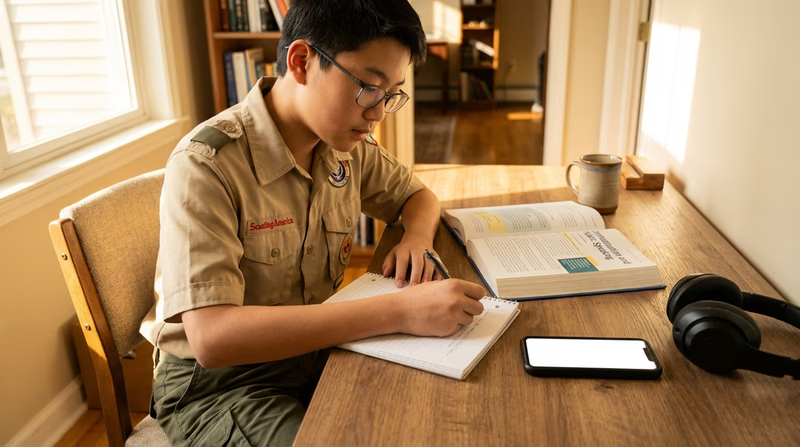
Option B: Listening Journal
This option focuses on the listening side of communication. Over three days, you will pay close attention to the different reasons you listen.
The Four Purposes of Listening
Not all listening is the same. Here is what each type means:
- Listening to obtain information — You are trying to learn something. Examples: a teacher explaining a math concept, a news report, or a friend giving you directions.
- Listening to be persuaded — Someone is trying to change your mind or convince you of something. Examples: a commercial, a debate, a friend arguing why their favorite team is the best.
- Listening to appreciate or enjoy — You are listening for pleasure. Examples: a favorite song, a funny podcast, a story told around the campfire.
- Listening to understand feelings — You are trying to understand how someone feels. Examples: a friend telling you about a tough day, a family member sharing good news, or a Scout explaining why something matters to them.
Option C: Group Discussion
This option lets you observe communication in action. You will gather a small group and watch how different people tell their stories.
Setting Up the Discussion
Invite 3–5 Scouts or friends to meet in a comfortable, quiet spot. Ask each person to share a story about a significant event — something that changed them, taught them a lesson, or made a lasting impression.
What to Observe
While each person speaks, pay attention to:
- Organization — Does the story have a clear beginning, middle, and end?
- Engagement — Does the speaker make eye contact? Do they use gestures and tone to keep you interested?
- Clarity — Can you easily follow what happened?
- Emotion — Does the speaker convey how the event made them feel?
- Listening — How do the other group members react? Are they attentive or distracted?
Option D: Communication Methods
This option challenges you to think broadly about all the ways humans communicate — and when each method is the right (or wrong) choice.
Building Your List
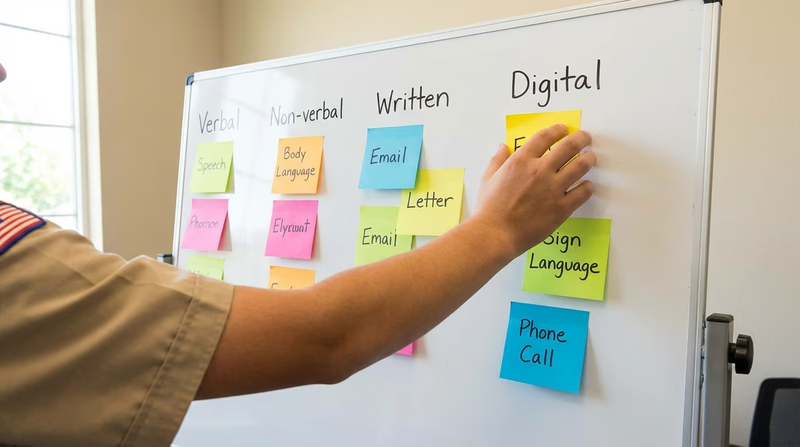
Start by brainstorming every method you can think of. Here are some categories to spark your thinking:
- Spoken: Face-to-face, phone call, video call, voicemail, public speech, radio
- Written: Letter, email, text message, note, postcard
- Digital: Social media post, blog, website, instant message, online forum
- Visual: Sign language, photographs, drawings, presentations, infographics
- Symbolic: Morse code, semaphore flags, road signs, emojis
When Methods Don’t Work
For each method, think about a situation when it would be a poor choice. For example:
- Text message — Not appropriate for delivering serious or emotional news (like a death in the family)
- Social media post — Not the right place to share private information about someone else
- Phone call — Not effective during a loud event where you cannot hear
Whichever option you choose, the goal is the same: becoming more aware of how communication shapes your daily life. When you start paying attention, you will be surprised by how much communicating you already do — and how much better you can become.
Req 2 — Creative Presentation
This requirement asks you to step into the spotlight. You will pick one of two options: presenting yourself creatively to your counselor, or building a persuasive sales pitch. Both options challenge you to organize your thoughts, create a visual aid, and deliver a confident presentation.
Option A: Describe Yourself Creatively
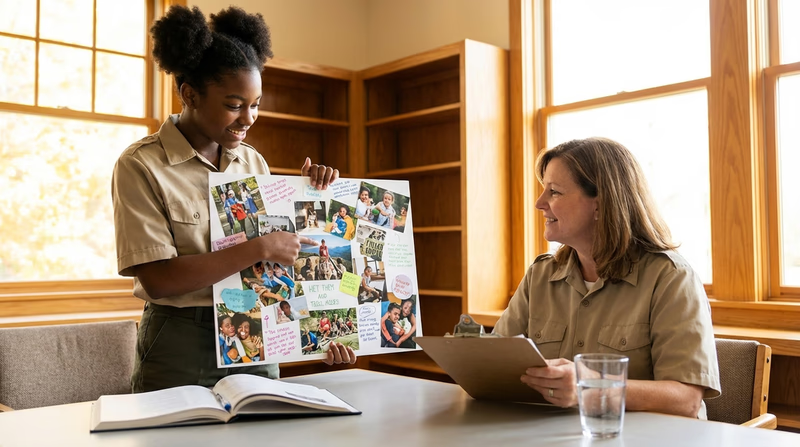
This option is all about self-expression. You get to choose your medium — and there is no wrong answer. The key is that your presentation gives your counselor a real sense of who you are.
Choosing Your Format
Think about what you enjoy and what you are good at:
- Collage — Gather photos, magazine clippings, and printed images that represent your interests, values, and goals. Arrange them on a poster board to tell your story visually.
- Short story or autobiography — Write about yourself in narrative form. Focus on a few key moments that shaped who you are today.
- Drawing or series of photographs — Create original artwork or take photos that capture different parts of your life — your family, hobbies, favorite places, and dreams.
- Song or skit — Write lyrics or a script that reveals your personality. Perform it for your counselor.
Making Your Presentation Memorable
Creating the visual aid is only half the job. You also need to present it. Here are some tips:
- Practice — Run through your presentation at least twice before meeting with your counselor.
- Explain your choices — Do not just show the collage or read the story. Explain why you chose each element.
- Be genuine — Your counselor is not looking for perfection. They want to see the real you.
- Make eye contact — Look at your counselor, not at your visual aid.
Option B: Persuasive Sales Talk
This option challenges you to be persuasive. You will pick something you believe in and convince your counselor that it is worth their attention.
Picking Your Subject
Choose something you genuinely care about. Your enthusiasm will be your greatest tool. Some ideas:
- A hobby or activity you love (rock climbing, coding, cooking)
- A cause or idea you believe in (recycling, community service, reading)
- A product you use and trust (a specific water bottle, a favorite book, a useful app)
- A Scouting event or program you think more Scouts should try
Building Your Sales Plan
A strong sales pitch follows a simple structure:
- Hook — Start with an attention-grabbing statement or question. “What if I told you there is one activity that builds strength, confidence, and friendship — all at the same time?”
- Features — List the key benefits or good points of your subject.
- Evidence — Support your claims with facts, personal experience, or examples.
- Objections — Think about why someone might say “no” and prepare responses.
- Close — End with a clear call to action. Ask your counselor to agree, try it, or commit.
Sales Talk Preparation
Make sure you cover these before presenting- Identify your subject: Something you genuinely believe in.
- List at least three benefits: Why should someone care?
- Prepare evidence: Facts, statistics, or personal stories that support your points.
- Anticipate objections: What reasons might someone have for saying no?
- Practice your delivery: Rehearse at least twice, out loud, standing up.
After the Pitch
After your sales talk, your counselor will discuss how persuasive you were. Be open to feedback. Ask yourself:
- Did I make strong eye contact?
- Did I sound confident and enthusiastic?
- Did I address potential objections?
- Was my closing clear and compelling?
Both of these options push you to organize your thoughts, create something meaningful, and present it with confidence. These are skills you will use over and over — in school, in your career, and in Scouting.
Req 3 — Writing & Delivering a Speech
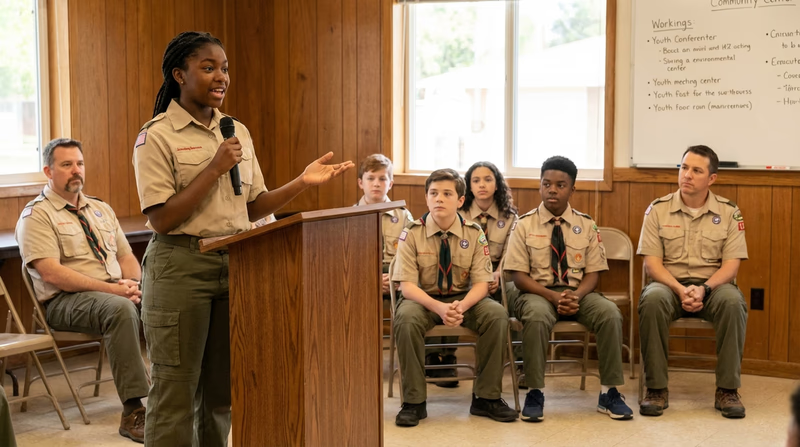
Public speaking is one of the most valuable skills you can develop — and one of the most feared. Surveys consistently show that many people rank public speaking as their number-one fear, even above heights or spiders. But here is the truth: public speaking is a skill, not a talent. Anyone can learn to do it well, and this requirement will show you how.
Choosing Your Topic
The best speeches come from topics you genuinely care about. When you are passionate about your subject, your energy comes through naturally and keeps your audience engaged.
Think about:
- Something you know a lot about (a hobby, a skill, a place you have visited)
- Something you feel strongly about (a cause, a belief, a change you want to see)
- Something your audience would find useful or interesting (a practical tip, a surprising fact, an inspiring story)
Structuring Your Speech
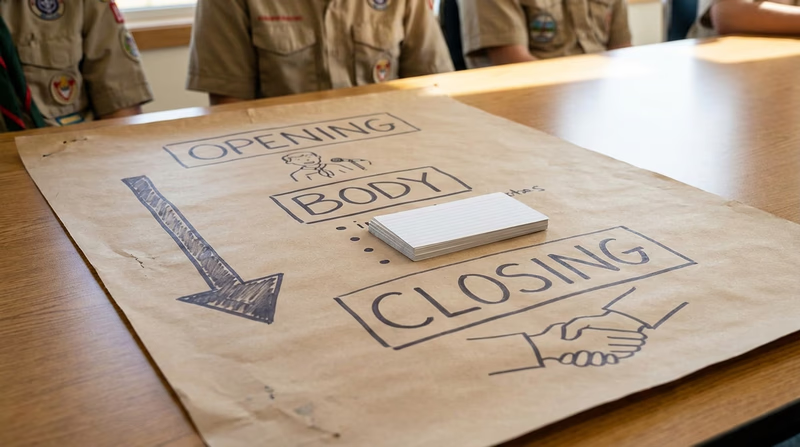
Every great speech has three parts:
1. The Opening (30–60 seconds)
Your opening grabs the audience’s attention and tells them what you are going to talk about. You can start with:
- A surprising fact or statistic
- A short personal story
- A thought-provoking question
- A bold statement
Avoid starting with “Hi, my name is…” or “Today I’m going to talk about…” — these are forgettable. Jump right into something interesting.
2. The Body (3–4 minutes)
This is the heart of your speech. Organize your main points in a logical order. Two to three main points is ideal for a five-minute speech. For each point:
- State the point clearly
- Support it with evidence, an example, or a story
- Connect it back to your main idea
3. The Closing (30–60 seconds)
Your closing is what the audience will remember most. Summarize your key message and end with impact. You can:
- Circle back to your opening story or question
- Issue a call to action
- Leave the audience with a memorable quote or image
Writing Tips
Speech Writing Checklist
Review these before finalizing your speech- One clear main idea: Can you state your speech’s purpose in one sentence?
- Strong opening: Does your first line grab attention?
- Logical flow: Do your points build on each other?
- Transitions: Do you connect each section smoothly?
- Vivid language: Are you using concrete examples and descriptive words?
- Strong closing: Does your ending leave an impression?
- Timed it: Is your speech between 4.5 and 5.5 minutes when you read it aloud?
Delivering Your Speech
Writing the speech is only half the work. How you deliver it matters just as much — sometimes more.
Practice, Practice, Practice
Rehearse your speech out loud at least five times. Practice in front of a mirror, record yourself on your phone, or deliver it to a family member. Each time, you will get smoother and more confident.
Body Language
- Stand tall with your feet shoulder-width apart.
- Make eye contact by looking at different people around the room — not at the ceiling, the floor, or your notes.
- Use gestures naturally. Moving your hands helps emphasize points, but avoid fidgeting or pacing.
- Smile when appropriate. It relaxes you and makes the audience feel comfortable.
Voice Control
- Speak slowly — most new speakers rush. Aim to speak about 20% slower than feels natural.
- Vary your tone — a monotone voice puts people to sleep. Raise your voice for emphasis and lower it for serious points.
- Pause — Short silences after important points give your audience time to absorb what you said. Pauses are powerful.
- Project — Speak loud enough for the person in the back row to hear you clearly.
Where to Give Your Speech
The requirement says “a meeting of a group.” Good options include:
- Your troop or patrol meeting
- A school club or class
- A religious group meeting
- A family gathering
Req 4 — Conducting an Interview
This requirement combines several communication skills into one powerful exercise: interviewing, active listening, writing, and public speaking. You will interview someone interesting, craft a compelling introduction, and even demonstrate a professional phone call. Let’s break it down step by step.
Choosing Your Subject
Pick someone you admire — someone whose story would be interesting to an audience. Think about people in your life who have:
- A fascinating career or job
- A unique talent or skill
- Significant life experiences (military service, travel, overcoming challenges)
- An important role in your community (teacher, coach, volunteer leader, first responder)
This could be a family member, a teacher, a Scoutmaster, a neighbor, or a community leader. The only requirement is that you know them well enough to arrange a conversation.
Conducting the Interview
A great interview does not happen by accident. It takes preparation.
Before the Interview
Interview Preparation
Complete these before sitting down with your subject- Schedule a time: Ask your subject for 20–30 minutes of their time. Be specific about the date, time, and place.
- Research: Learn what you can about their career, accomplishments, or experiences ahead of time.
- Prepare questions: Write at least 8–10 open-ended questions (questions that cannot be answered with just “yes” or “no”).
- Bring materials: Have a notebook and pen ready, or ask permission to record the conversation.
Great Interview Questions
The best questions invite stories, not just facts. Here are some examples to get you started:
- “What inspired you to get into your line of work?”
- “What is the most meaningful experience you have had in your career?”
- “What was your biggest challenge, and how did you overcome it?”
- “What advice would you give to a young person interested in what you do?”
- “What is something most people don’t know about your work?”
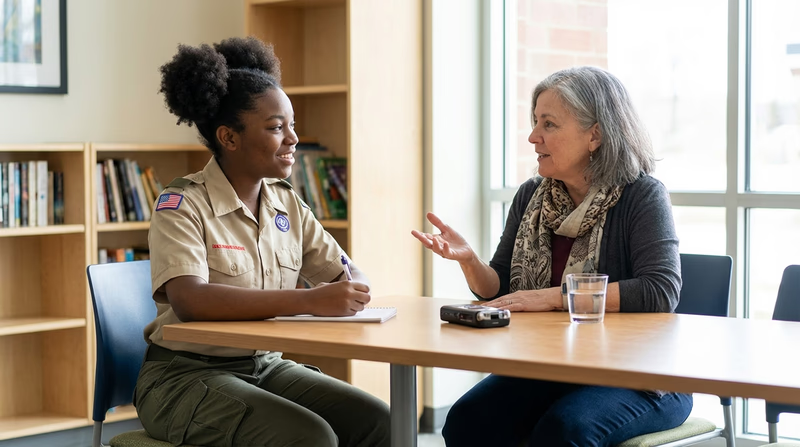
Active Listening During the Interview
Active listening is the most important skill you will use during the interview. It means:
- Giving your full attention — Put your phone away. Make eye contact.
- Not interrupting — Let the person finish their thought before you respond or ask the next question.
- Reflecting — Repeat back key ideas to confirm you understood. “So what you are saying is…”
- Taking notes — Write down key phrases, interesting stories, and details you want to remember.
- Asking follow-up questions — Go deeper. “You mentioned that you traveled to Japan for work. What was that experience like?”
Crafting the Introduction
After the interview, you will write a short introduction — as if this person were about to walk on stage as a guest speaker. A good introduction:
- Is 60–90 seconds long (about 150–200 words)
- Opens with a hook — something that immediately captures the audience’s attention
- Covers the person’s background, accomplishments, and why they are worth listening to
- Ends by building excitement: “Please join me in welcoming…”
Introduction Structure
- Hook — A surprising fact, a brief story, or a compelling quote from your interview
- Background — Who is this person? What do they do?
- Accomplishments — What makes them impressive or worth listening to?
- Relevance — Why should this audience care?
- Welcome — Invite the audience to welcome the speaker
The Phone Invitation
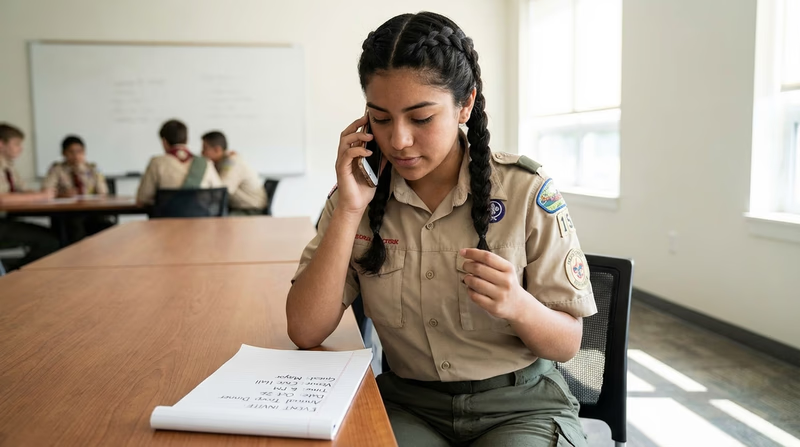
The final part of this requirement is demonstrating how you would call to invite this person to speak. This is your chance to practice professional phone skills.
Key Elements of the Call
- Introduce yourself — State your name, your troop, and why you are calling.
- Be specific — Name the event, the date, the time, the audience, and how long you would like them to speak.
- Explain why — Tell them why you chose them specifically.
- Be polite and professional — Use “please,” “thank you,” and “sir” or “ma’am” as appropriate.
- Confirm details — Repeat back any information they give you to make sure you have it right.
Req 5 — Public Meeting Report
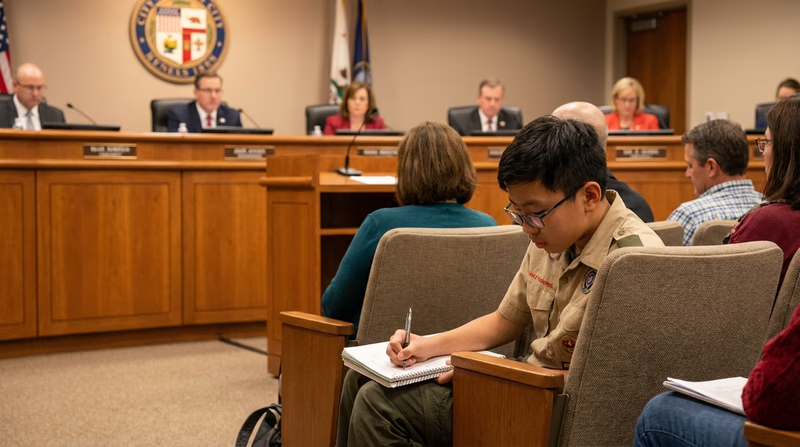
This requirement takes your communication skills out of the meeting room and into the real world. You will attend an actual public meeting, listen to real people debating real issues, and write a fair, balanced report. This is the kind of communication that keeps communities and democracies running.
Finding a Public Meeting
You need your counselor’s approval before attending, so start by identifying a few options and discussing them together. Good choices include:
- City or town council meetings — These are usually held monthly and cover local issues like zoning, budgets, and public safety.
- School board meetings — Topics might include school policies, budgets, new programs, or facility changes.
- County commission meetings — Similar to city council but covering a larger area.
- Public debates — Candidates running for office or community groups debating a local issue.
- Homeowners association meetings — Often feature spirited discussion about neighborhood rules and improvements.
Preparing for the Meeting
Before you walk in the door, take a few minutes to prepare:
- Read the agenda — Know what topics will be discussed.
- Research the issue — A basic understanding of the topic will help you follow the discussion.
- Bring a notebook and pen — You will be taking detailed notes.
- Arrive early — Give yourself time to find a seat and settle in before the meeting starts.
Active Listening at the Meeting
This is where your listening skills from Requirement 1 pay off. You will hear multiple speakers with different — sometimes opposing — viewpoints. Your job is to listen carefully to all of them.
What to Listen For
For each speaker or point of view, note:
- Who is speaking — Their name, title, or role (council member, resident, business owner)
- Their position — Are they for or against the issue? What do they want to happen?
- Their reasoning — What facts, experiences, or arguments do they use to support their position?
- Their tone — Are they calm and logical, passionate and emotional, or somewhere in between?
Note-Taking Template
Use these columns for each speaker- Speaker: Name and role of the person speaking.
- Position: What side of the issue they support.
- Key arguments: The main reasons they give for their position.
- Evidence used: Any facts, statistics, or personal experiences they cite.
- Tone and delivery: How they communicated their message.
Writing Your Report
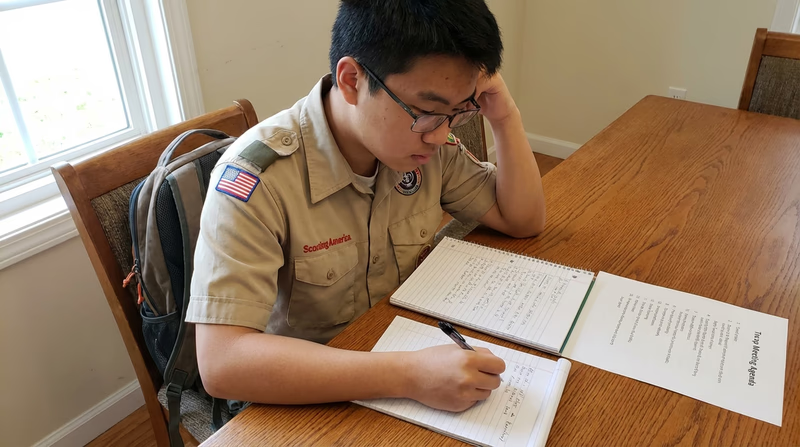
Your report must be objective — that means you present all viewpoints fairly without showing which side you personally agree with. Think of yourself as a journalist reporting the facts.
Report Structure
- Introduction — Identify the meeting (what, when, where) and the main issue being discussed.
- Background — Briefly explain the issue and why it matters to the community.
- Points of View — Present each viewpoint you heard, including the key arguments and evidence used. Give roughly equal space to each side.
- Conclusion — Summarize the outcome of the discussion. Was a decision made? Was the issue tabled for future discussion? What seemed to be the majority sentiment?
Staying Objective
Objectivity is harder than it sounds. Here are some pitfalls to avoid:
- Do not editorialize — Phrases like “the best argument was…” or “they were wrong because…” show bias. Stick to “Speaker A argued that…” and “Speaker B countered that…”
- Do not cherry-pick — Present all significant viewpoints, even ones you disagree with.
- Use neutral language — Instead of “claimed,” try “stated” or “argued.” Instead of “admitted,” try “acknowledged.”
Req 6 — Teach a Skill
Teaching is one of the highest forms of communication. When you teach someone a skill, you have to understand the subject deeply, organize your thoughts clearly, and adjust your approach based on how your learner responds. If you can teach something well, you truly understand it.
Choosing What to Teach
Pick something you know well and feel confident explaining. The best subjects are specific and hands-on. Here are some ideas:
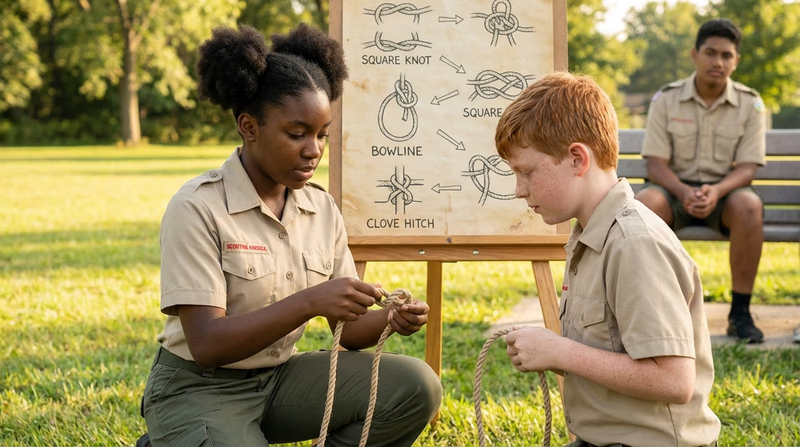
- Scouting skills — Tying knots, using a compass, building a fire, first aid basics
- Hobbies — Drawing, cooking a recipe, playing a card game, solving a Rubik’s Cube
- Academic skills — A math concept, a science experiment, a study technique
- Practical skills — Changing a tire, sewing a button, organizing a backpack, basic coding
Developing Your Teaching Plan
Every good lesson follows a structure. Before you start teaching, write out a plan that covers these elements:
1. Learning Objective
What will your learner be able to do after your lesson? Write this as a clear, measurable statement:
- “After this lesson, you will be able to tie a bowline knot without help.”
- “After this lesson, you will be able to identify three edible wild plants.”
2. Materials Needed
List everything you will need — rope, paper, a whiteboard, ingredients, tools, or any other supplies.
3. Step-by-Step Instruction
Break the skill down into small, logical steps. Number them. For each step, note:
- What you will say (the explanation)
- What you will show (the demonstration)
- What the learner will do (hands-on practice)
4. Teaching Aids
The requirement specifically asks you to prepare teaching aids. These are tools that make your lesson clearer and more engaging:
- Visual aids — Posters, diagrams, printed instructions, or slides
- Demonstration materials — The actual objects or tools used in the skill
- Handouts — A step-by-step reference card the learner can keep
- Videos — A short clip that shows the skill in action (use this as a supplement, not a replacement for your teaching)
5. Assessment
How will you know if your learner actually learned the skill? Plan a way to check:
- Ask them to perform the skill independently
- Ask them to explain the steps back to you
- Give them a slightly different scenario and see if they can apply what they learned
The EDGE Method
Scouting uses a proven teaching method called EDGE. It stands for:
- E — Explain — Tell the learner what you are going to teach and why it matters.
- D — Demonstrate — Show them how to do it while explaining each step.
- G — Guide — Let them try it while you watch and offer corrections.
- E — Enable — Step back and let them do it on their own. Only help if they get stuck.
EDGE Method Checklist
Follow these four steps during your lesson- Explain: Describe the skill and why it is useful. Set the learning objective.
- Demonstrate: Perform the skill slowly while narrating each step.
- Guide: Have the learner try it while you coach and correct.
- Enable: Let the learner perform the skill independently. Observe and give feedback.
Tips for Being a Great Teacher
- Be patient — Everyone learns at a different pace. If your learner is struggling, slow down and try explaining it a different way.
- Check for understanding — Do not just ask “Do you understand?” Instead, ask “Can you show me what you would do next?” Actions reveal understanding better than words.
- Encourage — Celebrate small wins. A simple “Great job, you got it!” goes a long way.
- Adapt — If your original plan is not working, change your approach. Maybe your learner is a visual person and needs a diagram instead of a verbal explanation.
After the Lesson
Meet with your counselor to discuss how it went. Together, determine whether your learner achieved the learning objective. Reflect on:
- What worked well in your lesson?
- What would you do differently next time?
- How did your teaching aids help (or not help)?
- How did you adapt when something did not go as planned?
Req 7 — Writing & Publishing
This requirement puts your written communication skills to the test. You will pick one of three options: writing a letter to the editor, creating a website or blog, or producing a printed publication. Each option challenges you to organize your ideas, write clearly, and present information in a polished format.
Option A: Letter to the Editor
A letter to the editor is one of the most direct ways to make your voice heard in your community. Newspapers and magazines publish letters from readers to encourage public discussion about important topics.
Choosing Your Subject
Pick a topic you care about. It could be:
- A local issue (a new park, traffic safety near your school, recycling programs)
- A response to a recent article you read
- A topic related to Scouting or youth leadership
- An issue you learned about in Requirement 5 at your public meeting
Writing a Strong Letter
Most published letters are 150–300 words. Editors receive hundreds of letters and pick the ones that are clear, concise, and well-reasoned.
Letter to the Editor Checklist
Include these elements- A clear subject line: State the topic or reference the article you are responding to.
- Your main point: State your opinion or information in the first sentence or two.
- Supporting evidence: Give 2–3 reasons, facts, or personal experiences to back up your point.
- A call to action: What do you want readers to do or think about?
- Your name and contact info: Most publications require your full name, city, and a phone number or email for verification.
Option B: Website or Blog
Creating a website or blog lets you build something from scratch and share it with the world — or just with your counselor.
Planning Your Site
Before you start building, decide:
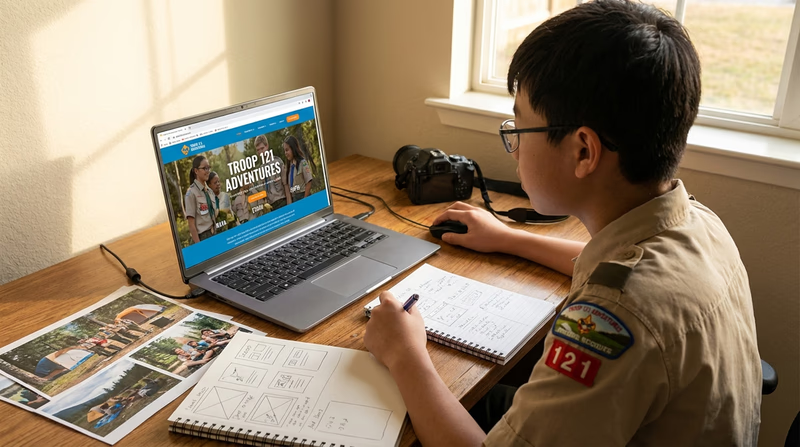
- The topic — Pick something you are passionate about. Your troop’s activities, a sport you play, a hobby like fishing or coding, or a cause you care about.
- The audience — Who would visit your site? Other Scouts? People interested in your hobby?
- The structure — Plan at least three pages or blog entries.
Building Your Site
You do not need to be a tech expert. Free tools like Google Sites, WordPress.com, or Wix make it easy to create a polished site with no coding required.
Your site must include:
- At least three articles or entries — Each should be well-written and informative.
- At least one photograph or illustration — Use your own photos or images you have permission to use.
- At least one link to another helpful website or blog.
Option C: Desktop Publishing
Desktop publishing means using a computer to design professional-looking printed materials. This is a practical skill used by businesses, schools, and organizations every day.
Choosing Your Project
Pick a real need for a group you belong to:
- A troop newsletter covering recent activities and upcoming events
- A brochure promoting your troop to prospective Scouts
- A flyer advertising a fundraiser, campout, or service project
- A program for a court of honor or special event
Design Principles
You do not need expensive software. Google Docs, Canva, Microsoft Publisher, or even a word processor can produce great results. Keep these design principles in mind:
- Readability — Use clear, legible fonts. Body text should be 10–12 point. Avoid using more than two different fonts.
- White space — Do not cram everything together. Leave room for the eye to rest.
- Hierarchy — Use headlines, subheadings, and body text to guide the reader’s eye.
- Images — One strong photo or illustration is better than five blurry ones.
- Consistency — Use the same colors, fonts, and spacing throughout.
Content Requirements
Your publication must include:
- At least one article — A written piece with a headline, byline, and body text.
- At least one photograph or illustration — Include a caption that explains what the image shows.
Whichever option you choose, this requirement gives you hands-on experience with the full writing process: planning, drafting, editing, designing, and publishing. These are skills that professionals in journalism, marketing, and business use every day.
Req 8 — Master of Ceremonies
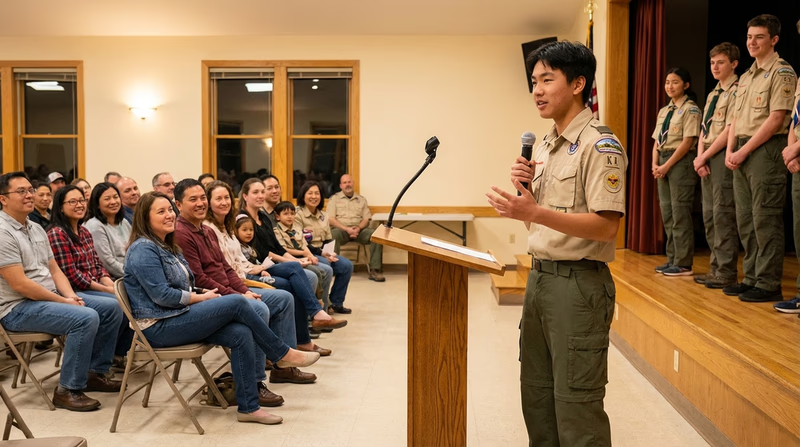
Being a master of ceremonies (MC) is one of the biggest communication challenges in this badge — and one of the most rewarding. You are not just speaking; you are leading an entire event. You will plan the program, write the script, get approval from your patrol leaders’ council (PLC), and then guide the audience through the experience from start to finish.
Choosing Your Event
You have three options:
- Court of Honor — A formal ceremony recognizing Scouts who have earned ranks, merit badges, or special awards.
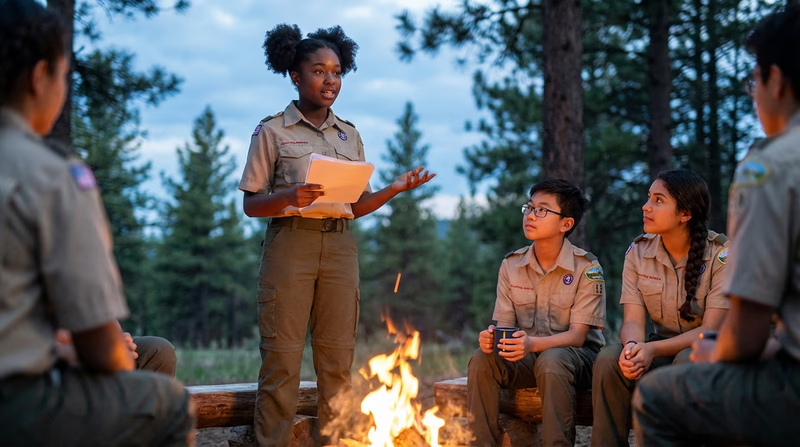
- Campfire Program — An evening program around the campfire featuring skits, songs, stories, and recognitions.
- Interfaith Worship Service — A spiritual gathering that respects the diverse beliefs within your troop or crew.
Pick the one that best fits your troop’s upcoming schedule. Talk to your Scoutmaster or crew advisor about what is coming up.
Planning the Program
A well-planned event runs smoothly because someone thought through every detail in advance.
Step 1: Define the Purpose
What is this event supposed to accomplish? A court of honor celebrates achievements. A campfire builds troop spirit. An interfaith service provides a shared moment of reflection. Keep the purpose in mind as you plan every element.
Step 2: Build the Program Order
Map out the entire event from beginning to end. Here is a typical structure for each type:
Court of Honor:
- Opening (flag ceremony, Scout Oath and Law)
- Welcome and introductions
- Awards and recognitions (rank advancements, merit badges, special awards)
- Guest speaker or special presentation
- Scoutmaster’s minute
- Closing (retire colors, refreshments)
Campfire Program:
- Gathering songs or activity
- Opening ceremony (lighting the fire, invocation)
- Songs, skits, and stories (mix of energetic and reflective)
- Recognitions or awards
- Scoutmaster’s minute
- Closing song or reflection
Interfaith Worship Service:
- Call to worship
- Opening prayer or reflection
- Readings from different faith traditions
- Shared hymn or song
- Reflection or meditation
- Closing prayer and benediction
Step 3: Get PLC Approval
Present your program plan to the patrol leaders’ council. This is a real leadership exercise — you need to explain your plan, listen to feedback, and incorporate suggestions. Come prepared with:
- A written program outline showing the order of events and approximate timing
- Names of people involved (who is doing skits, who is receiving awards, etc.)
- Any materials or supplies you will need
Step 4: Write the Script
Your script is your roadmap for the evening. It should include:
- Word-for-word introductions for each segment
- Transitions between segments (what you will say to move from one part to the next)
- Timing notes (how long each segment should last)
- Cues for other participants (when the song leader starts, when to dim lights, when to call someone forward)
MC Script Elements
Include all of these in your script- Opening welcome: Greet the audience and set the tone.
- Introduction of each segment: Briefly explain what is about to happen.
- Transitions: Smooth bridges between segments — not just “And now…”
- Award introductions: Names, achievements, and a brief personal note for each honoree.
- Timing notes: Target duration for each segment.
- Closing remarks: Thank the audience, summarize the evening, and provide any final announcements.
Serving as MC
On event night, you are the glue that holds everything together. Here is how to do it well:
Before the Event
- Rehearse — Read your script out loud at least twice. Time yourself.
- Check the space — Make sure seating, lighting, sound, and decorations are ready.
- Brief participants — Confirm that every person with a role knows when and where to go.
- Have a backup plan — What happens if a skit group does not show? Have a song or activity ready to fill the gap.
During the Event
- Stay calm and confident — Even if something goes wrong, your job is to keep the energy positive.
- Make eye contact with the audience, not your script.
- Keep it moving — If a segment runs long, gently steer things along. Dead air kills energy.
- Be enthusiastic — Your energy sets the tone for the entire event. If you are excited, the audience will be too.
- Acknowledge people — Use names. Thank performers and award recipients warmly.
After the Event
- Thank everyone who participated — performers, helpers, and your PLC.
- Reflect — What went well? What would you change? Write down your observations while they are fresh.
- Discuss with your counselor — Share what you learned about planning, leading, and communicating under pressure.
Req 9 — Career Exploration
Communication skills are used in every career, but some professions make communication the entire job. This requirement asks you to explore three communication careers, then dive deep into one that interests you most.
Communication Career Fields
The world of communication careers is enormous. Here are some major categories to explore:
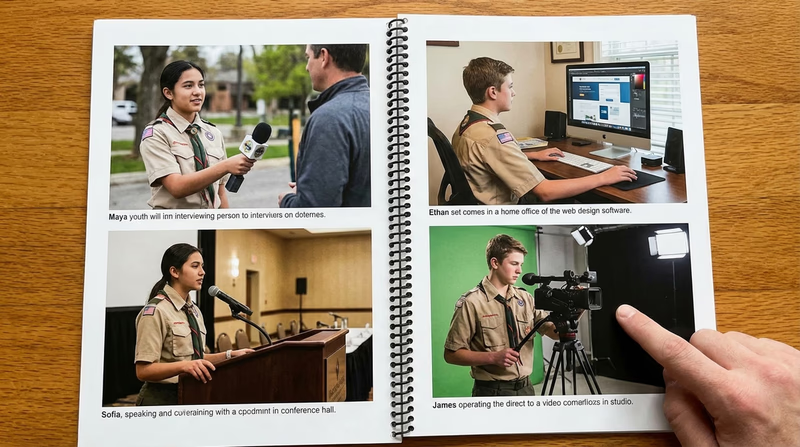
Journalism & Media
Journalists investigate stories, gather facts, and present the news to the public. This field includes newspaper reporters, television news anchors, radio hosts, podcasters, and digital media producers.
- What they do: Research, interview sources, write or produce stories, meet deadlines
- Key skills: Writing, interviewing, critical thinking, working under pressure
- Education: Typically a bachelor’s degree in journalism, communications, or a related field
Public Relations
Public relations (PR) professionals shape how organizations communicate with the public. They write press releases, manage social media accounts, handle crises, and build positive relationships between organizations and communities.
- What they do: Write press releases, plan events, manage media inquiries, develop communication strategies
- Key skills: Writing, strategic thinking, relationship building, creativity
- Education: Bachelor’s degree in communications, PR, marketing, or a related field
Broadcasting & Film
This field covers everything from local radio DJs to film directors. Professionals create content for television, radio, streaming platforms, and podcasts.
- What they do: Produce, direct, edit, and present audio and video content
- Key skills: Storytelling, technical production, teamwork, creativity
- Education: Ranges from technical certificates to bachelor’s degrees in broadcasting, film, or media production
Marketing & Advertising
Marketers and advertisers use communication to connect products, services, and ideas with the people who need them. They create campaigns, design ads, and analyze what messages resonate with audiences.
- What they do: Develop marketing campaigns, create advertisements, analyze consumer behavior, manage brands
- Key skills: Persuasive writing, data analysis, design thinking, creativity
- Education: Bachelor’s degree in marketing, advertising, communications, or business
Corporate Communications
Large companies and organizations hire communication professionals to manage internal messaging (to employees) and external messaging (to customers, investors, and the public).
- What they do: Write internal newsletters, prepare executive speeches, manage company websites and social media, handle crisis communication
- Key skills: Writing, strategic planning, interpersonal communication, discretion
- Education: Bachelor’s degree in communications, business, or a related field
Education & Training
Teachers, corporate trainers, and instructional designers all use communication as their primary tool. The skills you practiced in Requirement 6 are the foundation of these careers.
- What they do: Develop curriculum, deliver lessons, assess learning, create training materials
- Key skills: Public speaking, patience, organization, adaptability
- Education: Bachelor’s degree (often a master’s) in education, instructional design, or a specific subject area
Researching Your Chosen Career
After you have identified three careers, pick the one that interests you most and dig deeper. Here is what to find out:
Career Research Guide
Answer these questions about your chosen career- Education: What degree or certification is typically required? How many years of school?
- Training: Is there on-the-job training, an apprenticeship, or an internship involved?
- Experience: What kind of entry-level work do people do to build experience in this field?
- Day-to-day work: What does a typical workday look like?
- Salary range: What do people in this career typically earn? (The Bureau of Labor Statistics is a great source.)
- Job outlook: Is this field growing, shrinking, or staying the same?
- Why it interests you: What about this career appeals to you personally?
Having the Discussion
When you meet with your counselor, be ready to:
- Briefly describe all three careers you explored
- Share detailed information about the one you chose
- Explain why that career interests you — connect it to your skills, interests, and experiences from this merit badge
- Discuss how the skills you have developed throughout this badge (listening, speaking, writing, teaching, leading) apply to that career
Extended Learning
A. Introduction
You have completed the requirements for the Communication merit badge — congratulations! You have tracked your communication habits, given a speech, conducted an interview, attended a public meeting, taught a skill, published something, led a ceremony, and explored careers. Those are real-world skills that most adults are still working to improve. But the journey does not end here — there is so much more to explore.
B. Deep Dive: The Power of Storytelling
Storytelling is the oldest form of communication, and it remains one of the most powerful. Long before writing was invented, humans passed down knowledge, culture, and values through stories told around the fire. Today, the best communicators — from business leaders to filmmakers to coaches — are great storytellers.
What makes a story memorable? It is not just what happened, but how you tell it. Great stories follow a structure called the narrative arc:
- Setup — Introduce the characters, setting, and situation. Give the audience a reason to care.
- Conflict — Present a problem, challenge, or question. This is what creates tension and keeps people listening.
- Rising action — Show the struggle. What did the character try? What obstacles stood in the way?
- Climax — The turning point. The moment of greatest tension where everything changes.
- Resolution — How things turned out. What was learned? What changed?
You can use this structure everywhere: in speeches, in interviews, in letters to the editor, and even in casual conversations. When someone asks “How was your campout?” instead of saying “It was fun,” try telling the story of the moment your tent collapsed in the rain and how your patrol worked together to fix it. That is the difference between reporting and storytelling.
Practice storytelling by sharing one story per week with a friend or family member. Pay attention to their reaction. Did they lean in? Did they laugh or gasp at the right moments? Their response will tell you whether your storytelling is improving.
C. Deep Dive: Digital Literacy and Media Awareness
In an age of constant information, one of the most important communication skills is the ability to evaluate what you read, see, and hear. Not everything on the internet is true, and not every source has your best interests in mind. Being digitally literate means you can tell the difference between reliable information and misinformation — and that you communicate responsibly online.
Here are key habits of digitally literate communicators:
- Check the source — Who created this content? Is the author an expert, a journalist, or an anonymous poster? Look for credentials and track records.
- Verify with multiple sources — If a claim seems surprising, search for it on two or three other reputable sites. If only one source is reporting it, be cautious.
- Look for bias — Every source has a perspective. Ask yourself: What is this author trying to accomplish? Are they informing, persuading, or entertaining?
- Check the date — Old articles can be shared as if they are new. Make sure the information is current and relevant.
- Be skeptical of emotional content — Stories designed to make you angry, scared, or outraged are often exaggerated or misleading. Strong emotions can cloud your judgment.
- Think before you share — Before reposting or forwarding something, ask: Is this true? Is it helpful? Could it hurt someone?
These skills are directly connected to what you practiced in Requirement 5 — objective reporting. The same discipline that helped you write a fair, balanced meeting report will help you navigate the complex world of digital information.
D. Deep Dive: Conflict Resolution Through Communication
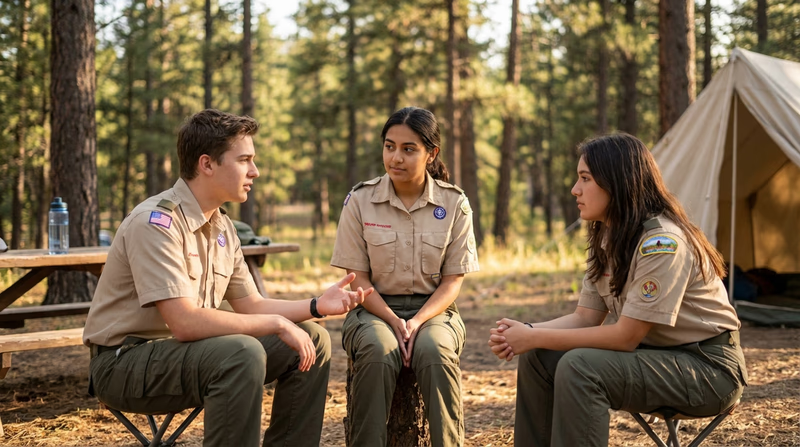
Some of the most important communication happens during disagreements. Knowing how to resolve conflict without escalating it is a leadership skill that will serve you in every area of your life — from patrol meetings to family dinners to future workplaces.
Effective conflict resolution follows a process:
- Stay calm — Take a breath before responding. Reacting in anger almost always makes things worse.
- Listen first — Before stating your position, hear the other person out completely. Use active listening — the same skills from Requirement 1.
- Use “I” statements — Instead of “You always interrupt me,” try “I feel frustrated when I do not get to finish my thought.” This describes your experience without blaming the other person.
- Identify the real issue — Sometimes arguments about small things are really about bigger things. Ask yourself: What is the underlying concern here?
- Look for common ground — Even in strong disagreements, there is usually something both sides agree on. Start there and build outward.
- Propose solutions — Move from the problem to the fix. “What if we tried…” is a powerful phrase.
- Follow up — After reaching an agreement, check in later to make sure the solution is working.
These skills are especially valuable in Scouting, where you work in teams and need to make group decisions. A patrol leader who can resolve conflicts fairly earns trust and respect from the entire patrol.
E. Real-World Experiences
Communication skills come alive when you use them in the real world. Here are some experiences that will sharpen the skills you have built:
Toastmasters Youth Leadership Program
School Newspaper or Yearbook
Local Government Youth Board
Community Theater or Debate Team
Volunteer at a Local Radio or TV Station
F. Organizations
These organizations can help you continue developing your communication skills long after you earn this badge:
The world’s largest organization dedicated to helping people become better speakers and leaders. Many clubs welcome youth participants.
Organization: Toastmasters International — https://www.toastmasters.org/
The honor society for high school speech and debate. Offers competitions, resources, and a supportive community for young speakers.
Organization: National Forensic League (NSDA) — https://www.speechanddebate.org/
Supports and defends the First Amendment rights of student journalists. Offers resources for students interested in journalism and media.
Organization: Student Press Law Center — https://splc.org/
Advocates for media literacy education in schools. Provides resources to help young people become critical thinkers about the media they consume.
Organization: Media Literacy Now — https://medialiteracynow.org/
The largest professional organization for communication scholars and practitioners. Offers student resources and career information.
Organization: National Communication Association — https://www.natcom.org/