Req 1 — Communication Awareness
This requirement asks you to take a close look at how communication works in your everyday life. You will pick one of four options. Read through all of them before choosing — each one highlights a different side of communication.
Option A: Communication Log
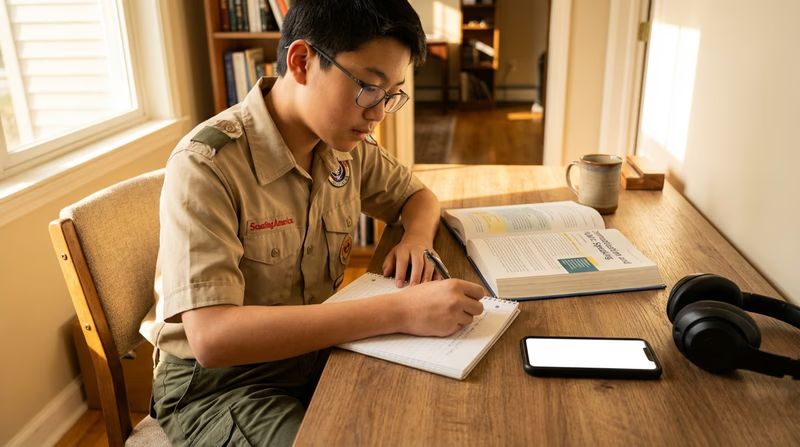
If you choose this option, you will spend one full day tracking every time you communicate — and how you do it. Most people are amazed at how much time they spend communicating without even realizing it.
How to Keep Your Log
Pick a typical day — a school day works well because it includes a good mix of activities. From the moment you wake up to the time you go to bed, write down each communication activity along with:
- The time it happened
- The method (talking face-to-face, texting, listening to a podcast, reading, etc.)
- How long it lasted
- Who was involved (a teacher, a friend, a family member, a screen)
What to Look For
After your day is done, review your log and look for patterns:
- Which type of communication did you use the most?
- How much time did you spend listening versus talking?
- How much of your communication was digital versus face-to-face?
- Were there moments when a different communication method would have worked better?
Option B: Listening Journal
This option focuses on the listening side of communication. Over three days, you will pay close attention to the different reasons you listen.
The Four Purposes of Listening
Not all listening is the same. Here is what each type means:
- Listening to obtain information — You are trying to learn something. Examples: a teacher explaining a math concept, a news report, or a friend giving you directions.
- Listening to be persuaded — Someone is trying to change your mind or convince you of something. Examples: a commercial, a debate, a friend arguing why their favorite team is the best.
- Listening to appreciate or enjoy — You are listening for pleasure. Examples: a favorite song, a funny podcast, a story told around the campfire.
- Listening to understand feelings — You are trying to understand how someone feels. Examples: a friend telling you about a tough day, a family member sharing good news, or a Scout explaining why something matters to them.
Option C: Group Discussion
This option lets you observe communication in action. You will gather a small group and watch how different people tell their stories.
Setting Up the Discussion
Invite 3–5 Scouts or friends to meet in a comfortable, quiet spot. Ask each person to share a story about a significant event — something that changed them, taught them a lesson, or made a lasting impression.
What to Observe
While each person speaks, pay attention to:
- Organization — Does the story have a clear beginning, middle, and end?
- Engagement — Does the speaker make eye contact? Do they use gestures and tone to keep you interested?
- Clarity — Can you easily follow what happened?
- Emotion — Does the speaker convey how the event made them feel?
- Listening — How do the other group members react? Are they attentive or distracted?
Option D: Communication Methods
This option challenges you to think broadly about all the ways humans communicate — and when each method is the right (or wrong) choice.
Building Your List
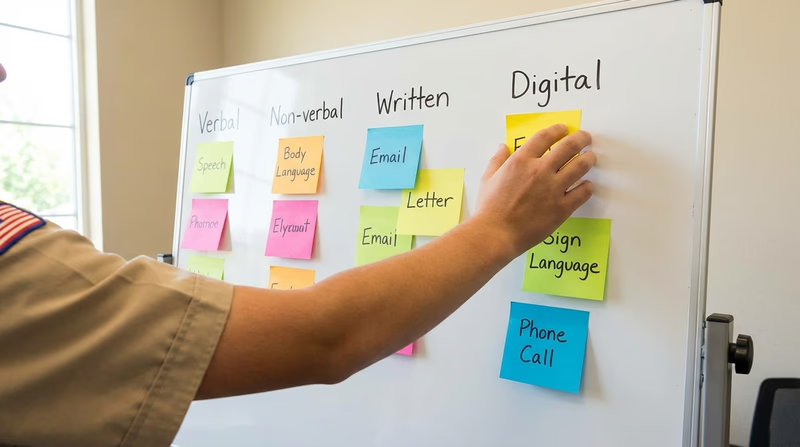
Start by brainstorming every method you can think of. Here are some categories to spark your thinking:
- Spoken: Face-to-face, phone call, video call, voicemail, public speech, radio
- Written: Letter, email, text message, note, postcard
- Digital: Social media post, blog, website, instant message, online forum
- Visual: Sign language, photographs, drawings, presentations, infographics
- Symbolic: Morse code, semaphore flags, road signs, emojis
When Methods Don’t Work
For each method, think about a situation when it would be a poor choice. For example:
- Text message — Not appropriate for delivering serious or emotional news (like a death in the family)
- Social media post — Not the right place to share private information about someone else
- Phone call — Not effective during a loud event where you cannot hear
Whichever option you choose, the goal is the same: becoming more aware of how communication shapes your daily life. When you start paying attention, you will be surprised by how much communicating you already do — and how much better you can become.