Req 4 — Conducting an Interview
This requirement combines several communication skills into one powerful exercise: interviewing, active listening, writing, and public speaking. You will interview someone interesting, craft a compelling introduction, and even demonstrate a professional phone call. Let’s break it down step by step.
Choosing Your Subject
Pick someone you admire — someone whose story would be interesting to an audience. Think about people in your life who have:
- A fascinating career or job
- A unique talent or skill
- Significant life experiences (military service, travel, overcoming challenges)
- An important role in your community (teacher, coach, volunteer leader, first responder)
This could be a family member, a teacher, a Scoutmaster, a neighbor, or a community leader. The only requirement is that you know them well enough to arrange a conversation.
Conducting the Interview
A great interview does not happen by accident. It takes preparation.
Before the Interview
Interview Preparation
Complete these before sitting down with your subject
- Schedule a time: Ask your subject for 20–30 minutes of their time. Be specific about the date, time, and place.
- Research: Learn what you can about their career, accomplishments, or experiences ahead of time.
- Prepare questions: Write at least 8–10 open-ended questions (questions that cannot be answered with just “yes” or “no”).
- Bring materials: Have a notebook and pen ready, or ask permission to record the conversation.
Great Interview Questions
The best questions invite stories, not just facts. Here are some examples to get you started:
- “What inspired you to get into your line of work?”
- “What is the most meaningful experience you have had in your career?”
- “What was your biggest challenge, and how did you overcome it?”
- “What advice would you give to a young person interested in what you do?”
- “What is something most people don’t know about your work?”
Active Listening During the Interview
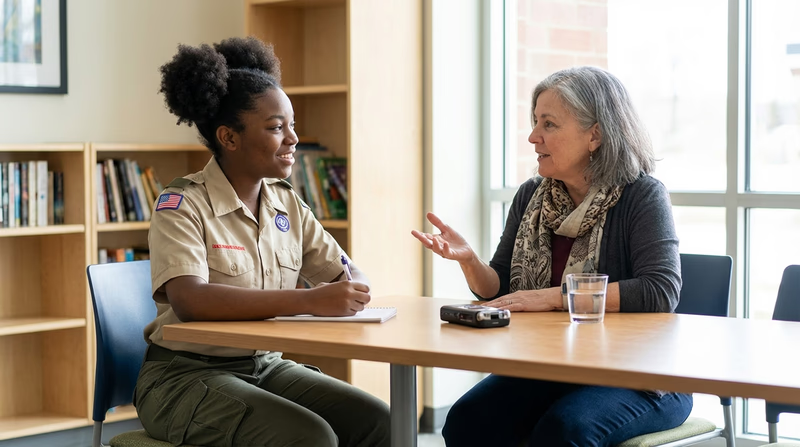
Active listening is the most important skill you will use during the interview. It means:
- Giving your full attention — Put your phone away. Make eye contact.
- Not interrupting — Let the person finish their thought before you respond or ask the next question.
- Reflecting — Repeat back key ideas to confirm you understood. “So what you are saying is…”
- Taking notes — Write down key phrases, interesting stories, and details you want to remember.
- Asking follow-up questions — Go deeper. “You mentioned that you traveled to Japan for work. What was that experience like?”
Crafting the Introduction
After the interview, you will write a short introduction — as if this person were about to walk on stage as a guest speaker. A good introduction:
- Is 60–90 seconds long (about 150–200 words)
- Opens with a hook — something that immediately captures the audience’s attention
- Covers the person’s background, accomplishments, and why they are worth listening to
- Ends by building excitement: “Please join me in welcoming…”
Introduction Structure
- Hook — A surprising fact, a brief story, or a compelling quote from your interview
- Background — Who is this person? What do they do?
- Accomplishments — What makes them impressive or worth listening to?
- Relevance — Why should this audience care?
- Welcome — Invite the audience to welcome the speaker
The Phone Invitation
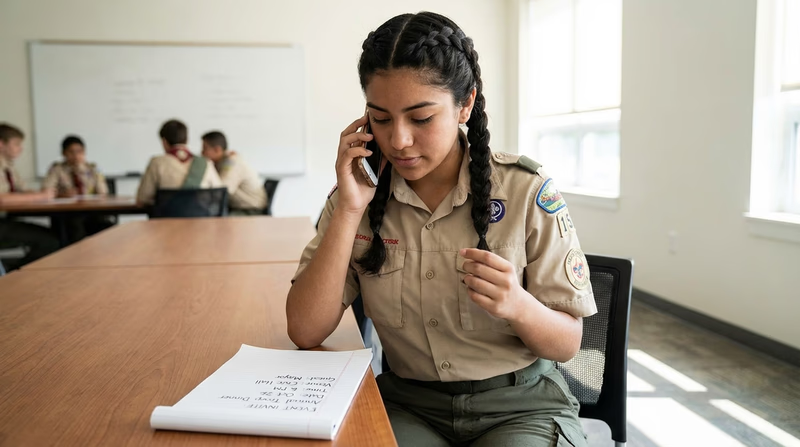
The final part of this requirement is demonstrating how you would call to invite this person to speak. This is your chance to practice professional phone skills.
Key Elements of the Call
- Introduce yourself — State your name, your troop, and why you are calling.
- Be specific — Name the event, the date, the time, the audience, and how long you would like them to speak.
- Explain why — Tell them why you chose them specifically.
- Be polite and professional — Use “please,” “thank you,” and “sir” or “ma’am” as appropriate.
- Confirm details — Repeat back any information they give you to make sure you have it right.