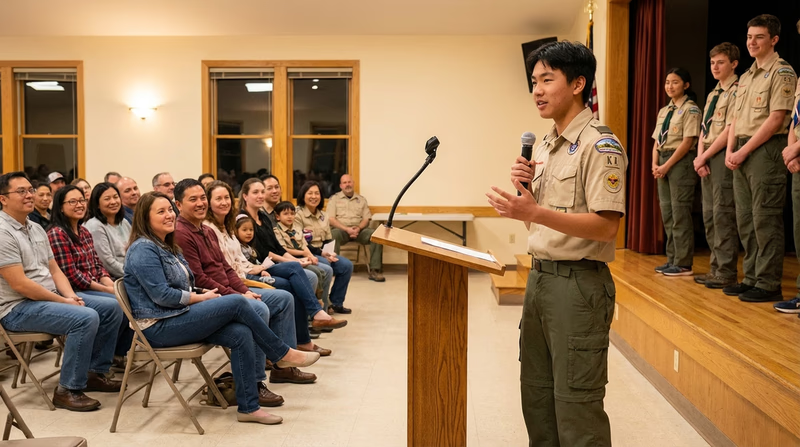
Req 8 — Master of Ceremonies
Being a master of ceremonies (MC) is one of the biggest communication challenges in this badge — and one of the most rewarding. You are not just speaking; you are leading an entire event. You will plan the program, write the script, get approval from your patrol leaders’ council (PLC), and then guide the audience through the experience from start to finish.
Choosing Your Event
You have three options:
- Court of Honor — A formal ceremony recognizing Scouts who have earned ranks, merit badges, or special awards.
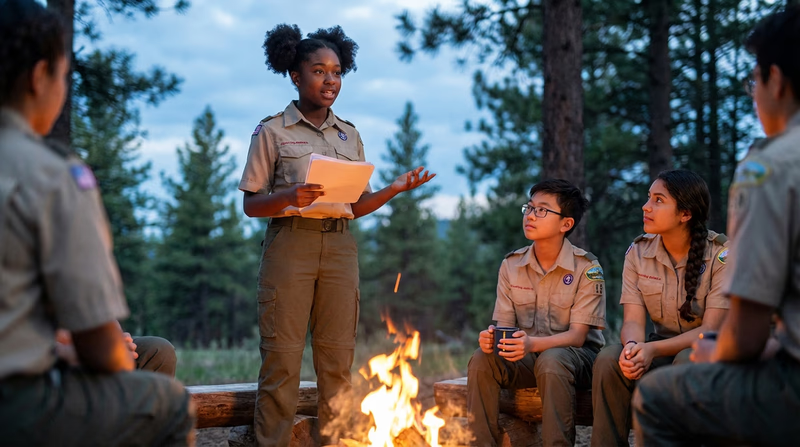
- Campfire Program — An evening program around the campfire featuring skits, songs, stories, and recognitions.
- Interfaith Worship Service — A spiritual gathering that respects the diverse beliefs within your troop or crew.
Pick the one that best fits your troop’s upcoming schedule. Talk to your Scoutmaster or crew advisor about what is coming up.
Planning the Program
A well-planned event runs smoothly because someone thought through every detail in advance.
Step 1: Define the Purpose
What is this event supposed to accomplish? A court of honor celebrates achievements. A campfire builds troop spirit. An interfaith service provides a shared moment of reflection. Keep the purpose in mind as you plan every element.
Step 2: Build the Program Order
Map out the entire event from beginning to end. Here is a typical structure for each type:
Court of Honor:
- Opening (flag ceremony, Scout Oath and Law)
- Welcome and introductions
- Awards and recognitions (rank advancements, merit badges, special awards)
- Guest speaker or special presentation
- Scoutmaster’s minute
- Closing (retire colors, refreshments)
Campfire Program:
- Gathering songs or activity
- Opening ceremony (lighting the fire, invocation)
- Songs, skits, and stories (mix of energetic and reflective)
- Recognitions or awards
- Scoutmaster’s minute
- Closing song or reflection
Interfaith Worship Service:
- Call to worship
- Opening prayer or reflection
- Readings from different faith traditions
- Shared hymn or song
- Reflection or meditation
- Closing prayer and benediction
Step 3: Get PLC Approval
Present your program plan to the patrol leaders’ council. This is a real leadership exercise — you need to explain your plan, listen to feedback, and incorporate suggestions. Come prepared with:
- A written program outline showing the order of events and approximate timing
- Names of people involved (who is doing skits, who is receiving awards, etc.)
- Any materials or supplies you will need
Step 4: Write the Script
Your script is your roadmap for the evening. It should include:
- Word-for-word introductions for each segment
- Transitions between segments (what you will say to move from one part to the next)
- Timing notes (how long each segment should last)
- Cues for other participants (when the song leader starts, when to dim lights, when to call someone forward)
MC Script Elements
Include all of these in your script
- Opening welcome: Greet the audience and set the tone.
- Introduction of each segment: Briefly explain what is about to happen.
- Transitions: Smooth bridges between segments — not just “And now…”
- Award introductions: Names, achievements, and a brief personal note for each honoree.
- Timing notes: Target duration for each segment.
- Closing remarks: Thank the audience, summarize the evening, and provide any final announcements.
Serving as MC
On event night, you are the glue that holds everything together. Here is how to do it well:
Before the Event
- Rehearse — Read your script out loud at least twice. Time yourself.
- Check the space — Make sure seating, lighting, sound, and decorations are ready.
- Brief participants — Confirm that every person with a role knows when and where to go.
- Have a backup plan — What happens if a skit group does not show? Have a song or activity ready to fill the gap.
During the Event
- Stay calm and confident — Even if something goes wrong, your job is to keep the energy positive.
- Make eye contact with the audience, not your script.
- Keep it moving — If a segment runs long, gently steer things along. Dead air kills energy.
- Be enthusiastic — Your energy sets the tone for the entire event. If you are excited, the audience will be too.
- Acknowledge people — Use names. Thank performers and award recipients warmly.
After the Event
- Thank everyone who participated — performers, helpers, and your PLC.
- Reflect — What went well? What would you change? Write down your observations while they are fresh.
- Discuss with your counselor — Share what you learned about planning, leading, and communicating under pressure.