Req 9 — Career Exploration
Communication skills are used in every career, but some professions make communication the entire job. This requirement asks you to explore three communication careers, then dive deep into one that interests you most.
Communication Career Fields
The world of communication careers is enormous. Here are some major categories to explore:
Journalism & Media
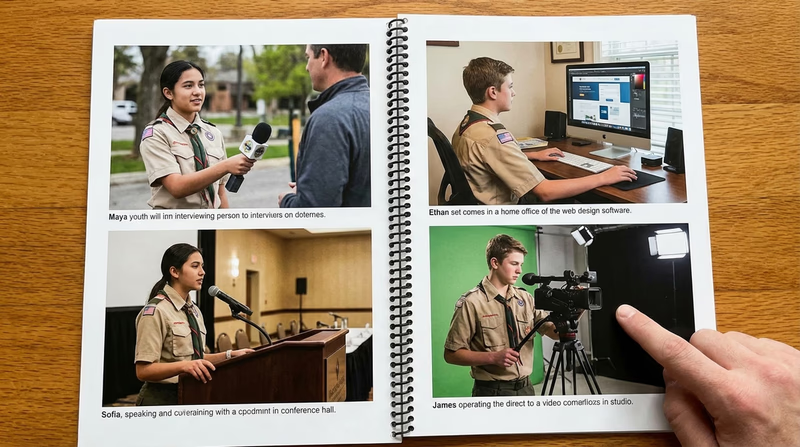
Journalists investigate stories, gather facts, and present the news to the public. This field includes newspaper reporters, television news anchors, radio hosts, podcasters, and digital media producers.
- What they do: Research, interview sources, write or produce stories, meet deadlines
- Key skills: Writing, interviewing, critical thinking, working under pressure
- Education: Typically a bachelor’s degree in journalism, communications, or a related field
Public Relations
Public relations (PR) professionals shape how organizations communicate with the public. They write press releases, manage social media accounts, handle crises, and build positive relationships between organizations and communities.
- What they do: Write press releases, plan events, manage media inquiries, develop communication strategies
- Key skills: Writing, strategic thinking, relationship building, creativity
- Education: Bachelor’s degree in communications, PR, marketing, or a related field
Broadcasting & Film
This field covers everything from local radio DJs to film directors. Professionals create content for television, radio, streaming platforms, and podcasts.
- What they do: Produce, direct, edit, and present audio and video content
- Key skills: Storytelling, technical production, teamwork, creativity
- Education: Ranges from technical certificates to bachelor’s degrees in broadcasting, film, or media production
Marketing & Advertising
Marketers and advertisers use communication to connect products, services, and ideas with the people who need them. They create campaigns, design ads, and analyze what messages resonate with audiences.
- What they do: Develop marketing campaigns, create advertisements, analyze consumer behavior, manage brands
- Key skills: Persuasive writing, data analysis, design thinking, creativity
- Education: Bachelor’s degree in marketing, advertising, communications, or business
Corporate Communications
Large companies and organizations hire communication professionals to manage internal messaging (to employees) and external messaging (to customers, investors, and the public).
- What they do: Write internal newsletters, prepare executive speeches, manage company websites and social media, handle crisis communication
- Key skills: Writing, strategic planning, interpersonal communication, discretion
- Education: Bachelor’s degree in communications, business, or a related field
Education & Training
Teachers, corporate trainers, and instructional designers all use communication as their primary tool. The skills you practiced in Requirement 6 are the foundation of these careers.
- What they do: Develop curriculum, deliver lessons, assess learning, create training materials
- Key skills: Public speaking, patience, organization, adaptability
- Education: Bachelor’s degree (often a master’s) in education, instructional design, or a specific subject area
Researching Your Chosen Career
After you have identified three careers, pick the one that interests you most and dig deeper. Here is what to find out:
Career Research Guide
Answer these questions about your chosen career
- Education: What degree or certification is typically required? How many years of school?
- Training: Is there on-the-job training, an apprenticeship, or an internship involved?
- Experience: What kind of entry-level work do people do to build experience in this field?
- Day-to-day work: What does a typical workday look like?
- Salary range: What do people in this career typically earn? (The Bureau of Labor Statistics is a great source.)
- Job outlook: Is this field growing, shrinking, or staying the same?
- Why it interests you: What about this career appeals to you personally?
Having the Discussion
When you meet with your counselor, be ready to:
- Briefly describe all three careers you explored
- Share detailed information about the one you chose
- Explain why that career interests you — connect it to your skills, interests, and experiences from this merit badge
- Discuss how the skills you have developed throughout this badge (listening, speaking, writing, teaching, leading) apply to that career