Req 1b — Handling, Storage & Disposal
Knowing how to wear the right PPE is only half the safety picture. The other half is knowing how to handle, store, and get rid of composite materials so they do not hurt you, other people, or the environment. A sealed can of polyester resin is harmless on a shelf — but store it wrong, and it can overheat, leak fumes, or contaminate soil and groundwater.
Handling Precautions
Resins and Hardeners
Always wear the PPE you learned about in Req 1a before opening any container. Beyond personal protection, follow these handling rules:
- Mix in small batches. Large volumes of mixed resin generate more heat, speeding up the reaction and increasing the risk of an exothermic runaway. Mix only what you can use in the resin’s working time (called pot life).
- Use dedicated tools. Keep mixing cups, stir sticks, and brushes separate from household items. Never use food containers for resin.
- Work on a protected surface. Cover your work area with plastic sheeting or wax paper. Resin that soaks into a wooden bench is nearly impossible to remove.
- Keep containers closed. Resins and solvents release volatile organic compounds (VOCs) whenever the lid is off. Open containers only when you are actively pouring or mixing.
Reinforcement Fibers
- Cut fibers with sharp scissors or a rotary cutter on a dedicated cutting mat. Dull tools crush the fibers and generate more dust.
- Handle dry fiberglass fabric with gloves. Even before resin is applied, loose glass fibers can embed in your skin.
- Never shake or snap dry carbon or glass fabric. This launches invisible fiber fragments into the air.
Solvents
Acetone and other cleanup solvents are highly flammable. Keep them away from heat sources, pilot lights, and electrical sparks. Use the minimum amount needed, and keep the container sealed between uses.
Storage Rules
Proper storage keeps materials usable, prevents accidents, and protects the environment.
| Material | Storage Requirements |
|---|---|
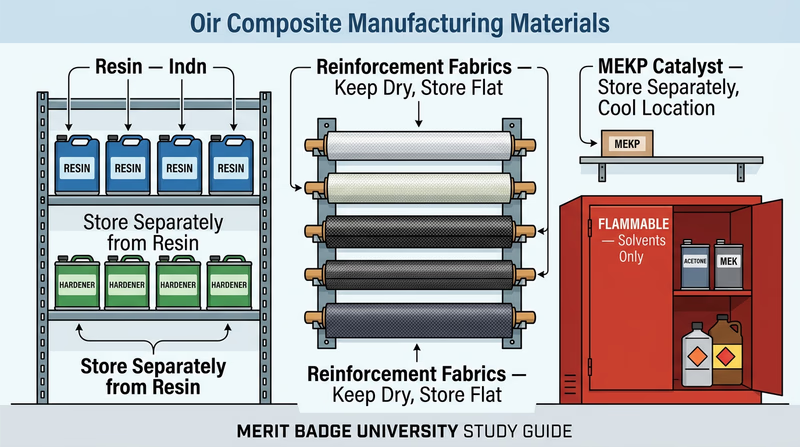
| Epoxy resin & hardener | Room temperature (60–90°F), out of direct sunlight. Store resin and hardener in separate locations to prevent accidental mixing from a leak. |
| Polyester / vinyl ester resin | Cool location (below 77°F ideal). These resins have a limited shelf life — check the expiration date. Contains flammable solvents; keep away from ignition sources. |
| Catalyst (MEKP) | Store separately from resin in a cool, dark place. MEKP is an organic peroxide — a strong oxidizer that can cause fires if it contacts resin without proper mixing. Never store it above resin containers. |
| Fiberglass / carbon / aramid fabric | Dry location. Moisture weakens the bond between fibers and resin. Store rolls horizontally to prevent kinks. |
| Solvents (acetone, MEK) | Flammable liquids cabinet if available. Away from heat, sparks, and direct sun. Keep containers tightly sealed. |
Disposal: Environmental Responsibility
Composite materials cannot be poured down a drain, tossed in a regular trash can, or dumped outside. Many components are classified as hazardous waste under federal and state environmental regulations.
Liquid Resin and Hardener
- Never pour liquid resin down a drain. It will contaminate water systems and can harden inside pipes.
- Fully cure leftover resin before disposal. Mix small leftover amounts of resin and hardener together, spread thin on cardboard, and let it cure completely. Once fully hardened, most cured resins can go in regular trash (check your local regulations).
- Large quantities of uncured resin must be taken to a hazardous waste collection facility.
Solvents
- Used solvents (contaminated with resin residue) are hazardous waste. Collect them in a sealed metal container and bring them to a household hazardous waste drop-off.
- Never evaporate solvents into the air as a disposal method — this releases VOCs that contribute to smog and ground-level ozone.
Fiber Scraps and Dust
- Cured composite scraps (trimmed edges, sanded dust) can usually go in regular trash, but bag them in sealed plastic first to prevent fiber release.
- Uncured fiber scraps contaminated with wet resin should be treated like uncured resin — let them cure fully before disposal.
Containers and PPE
- Empty resin containers with dried residue can usually go in regular trash. Containers with liquid residue need hazardous waste disposal.
- Used gloves, mixing cups, and brushes with cured resin can go in regular trash. With uncured resin, let them cure first.
Health, Safety, and Environmental Awareness
Your counselor wants to hear you connect these practices to a bigger picture. Here is what matters:
- Health: Acute exposure (one-time, high-dose) can cause burns, nausea, or respiratory distress. Chronic exposure (repeated, low-dose over time) leads to sensitization, organ damage, or cancer risk from certain chemicals. Following handling procedures protects against both.
- Safety: Fire risk from flammable solvents and exothermic reactions. Explosion risk from improperly stored peroxide catalysts. Slip-and-fall risk from resin spills. All preventable with proper procedure.
- Environment: VOC emissions contribute to air pollution. Improper disposal contaminates soil and water. Responsible composites work means minimizing waste, containing chemicals, and using proper disposal channels.
You now know how to handle, store, and dispose of composite materials responsibly. But how do you find the specific safety details for a particular product? That is where Safety Data Sheets come in.