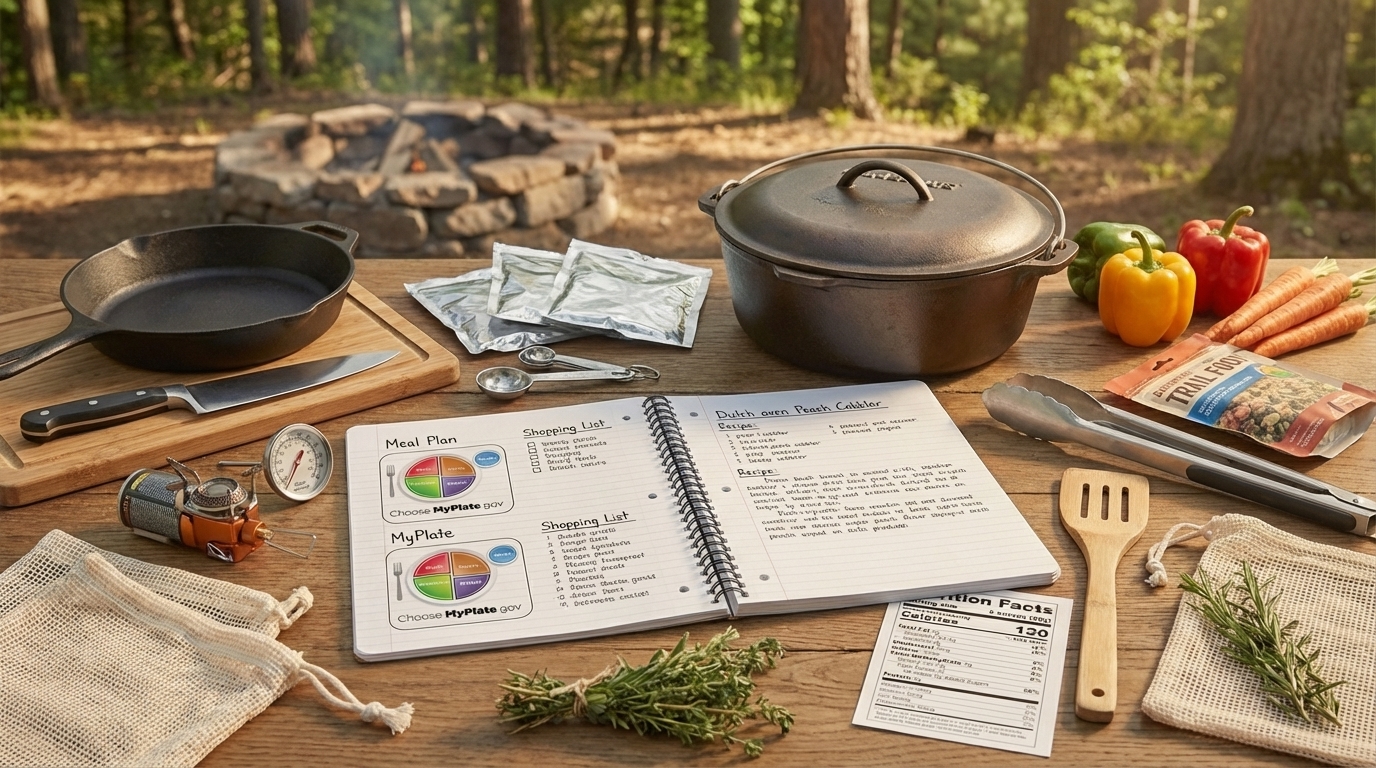
 Getting Started
Introduction & Overview
Every great meal starts with a spark of curiosity — and the Cooking merit badge is your invitation to step into the kitchen (and the campsite) with confidence. Whether you are scrambling eggs for your family on a Saturday morning, grilling burgers at a troop cookout, or preparing a one-pot trail dinner under the stars, cooking is one of the most practical and rewarding skills you will ever learn.
Cooking is also one of the Eagle-required merit badges, and for good reason. It teaches you planning, nutrition, safety, teamwork, and self-reliance — skills that will serve you long after you earn the badge. This guide will walk you through every requirement, giving you the knowledge and tools to become a capable cook at home, at camp, and on the trail.
Then and Now
Then — Cooking for Survival
For thousands of years, cooking was the difference between life and death. Early humans discovered that fire could transform raw meat and tough roots into something safe, digestible, and delicious. Ancient civilizations preserved food with salt, smoke, and fermentation — techniques developed long before refrigerators existed. Sailors packed hardtack and salted pork for voyages that lasted months. Pioneers crossing the American frontier cooked over open flames using cast-iron Dutch ovens that weighed as much as a small child.
- Purpose: Survival, preservation, nourishment
- Mindset: Make food safe to eat and make it last as long as possible
Now — Cooking as a Life Skill and Art Form
Today, cooking has evolved into something far bigger than survival. Professional chefs are celebrities. Food science has unlocked the chemistry behind why bread rises and why onions caramelize. You can watch a cooking tutorial from a chef in Tokyo, order ingredients from across the globe, and prepare a meal your great-grandparents never could have imagined. Yet the fundamentals remain the same — heat, timing, fresh ingredients, and care.
- Purpose: Health, creativity, connection, career, adventure
- Mindset: Feed yourself and others well — at home, at camp, and anywhere the trail takes you
Get Ready! You are about to learn skills that will feed you for the rest of your life — literally. From your first scrambled egg to a full trail dinner for your patrol, every meal you cook builds confidence. Let’s fire it up!
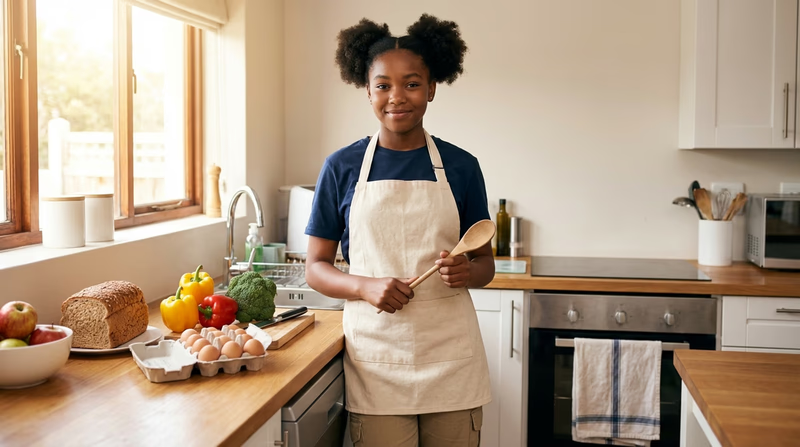
Kinds of Cooking
Cooking takes many forms, and this merit badge will introduce you to several of them. Here is a look at the styles you will explore.
Home Cooking
Home cooking is where most people start. You have access to a full kitchen — stove, oven, microwave, refrigerator, running water, and all the tools you need. Home cooking is about learning the basics: how to follow a recipe, how to use a knife safely, and how to time a meal so everything comes out hot at the same time.
Camp Cooking
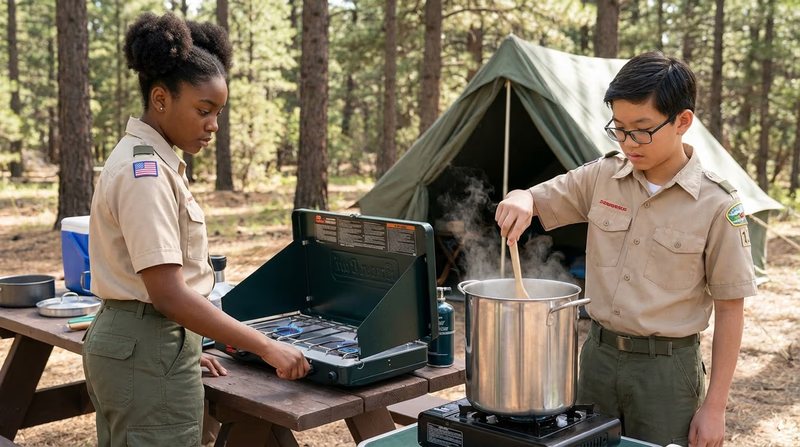
Camp cooking strips away the convenience of a kitchen and challenges you to prepare meals outdoors with limited equipment. You might use a camp stove, a charcoal fire, or a Dutch oven nestled in hot coals. Camp cooking is where Scouts really shine — feeding your patrol a hot meal after a long day of hiking is one of the most satisfying things you can do.
Trail & Backpacking Cooking
When you are miles from the nearest road, every ounce in your pack matters. Trail cooking means lightweight, compact, no-refrigeration meals that still give you the energy to keep moving. You will learn to think about food differently — weight, packaging, and calorie density become just as important as taste.
Baking & Pastry
Baking is the science side of cooking. Unlike stovetop cooking, where you can adjust on the fly, baking demands precision — exact measurements, correct temperatures, and careful timing. From biscuits to brownies, baking teaches patience and attention to detail.
Grilling & BBQ
Grilling means cooking food quickly over direct, high heat — think burgers, steaks, and vegetables on a grate. Barbecue (BBQ) is a slower process that uses indirect heat and smoke to transform tougher cuts of meat into tender, flavorful meals over hours. Both are essential outdoor cooking skills.
Global & Cultural Cuisine
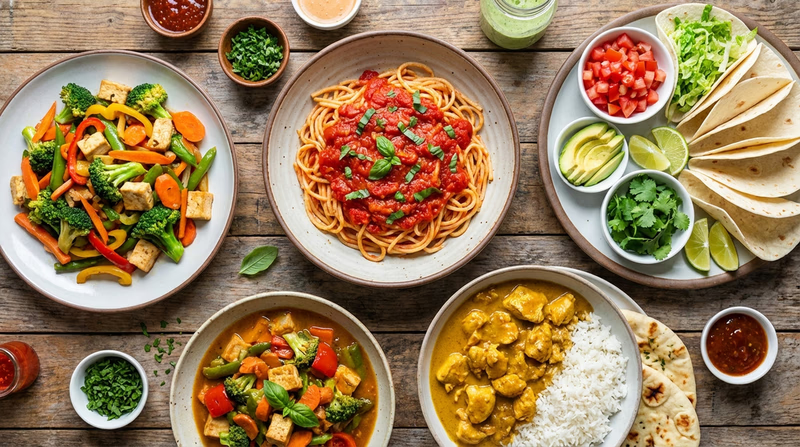
Every culture on Earth has its own cooking traditions, ingredients, and techniques. Learning about global cuisine opens your eyes to new flavors and new ways of thinking about food. You might discover that the spices used in Indian curries, the fermentation behind Korean kimchi, or the simplicity of Italian pasta inspire your own cooking adventures.
Now let’s dive into the requirements — starting with the most important topic of all: keeping yourself and others safe in the kitchen.