Req 1e — Reading Food Labels
Food labels are your most powerful tool for protecting yourself and others from allergens, hidden ingredients, and unhealthy choices. Every packaged food sold in the United States is required by law to carry a label — and knowing how to read one is a skill every cook needs.
Why Food Labels Matter
Labels tell you exactly what is in your food. Without them, you would have no way to know whether a granola bar contains tree nuts, whether a soup has dairy, or how much sugar is hiding in your breakfast cereal. For someone with a food allergy, that information is not just useful — it is life-saving.
Labels also help you:
- Make healthier choices by comparing products
- Plan balanced meals by checking serving sizes and nutrient content
- Budget wisely by understanding what you are actually paying for
- Follow dietary guidelines like the MyPlate recommendations you will learn in Req 2
Anatomy of a Food Label
Every food label has two key sections you need to understand:
1. The Nutrition Facts Panel
This panel lists calories, fat, sodium, carbohydrates, protein, and other nutrients per serving. You will dive deeper into these terms in Req 2e. For now, the most important thing to note is the serving size at the top — everything else on the panel is based on that amount.
2. The Ingredients List
Ingredients are listed in order from most to least by weight. The first ingredient is what the product contains the most of, and the last ingredient is what it contains the least of. This is where you find allergens and hidden ingredients.
Spotting Allergens on Labels
U.S. law requires that the Big Nine allergens be clearly identified on food labels. Manufacturers must do this in one of two ways:
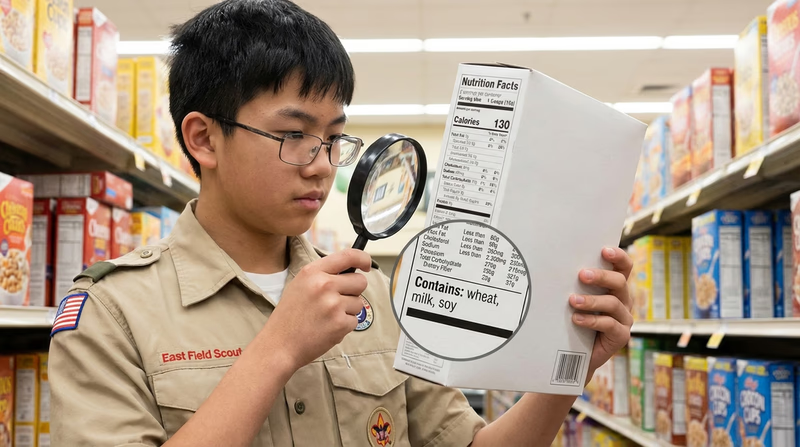
Method 1 — “Contains” statement: A bold line near the ingredients list that says something like: Contains: milk, wheat, soy.
Method 2 — Parenthetical in the ingredients list: The allergen is called out in parentheses after the ingredient name. For example: “casein (milk)” or “lecithin (soy).”
Hidden Allergen Names
Allergens do not always go by their common names. Here are some tricky ones to watch for:
| Allergen | Also listed as… |
|---|---|
| Milk | Casein, whey, lactalbumin, lactose, ghee, curds |
| Eggs | Albumin, globulin, lysozyme, mayonnaise, meringue |
| Wheat | Durum, semolina, spelt, kamut, farina, couscous |
| Soy | Edamame, miso, tempeh, tofu, textured vegetable protein (TVP) |
| Peanuts | Groundnuts, arachis oil, monkey nuts |
| Tree nuts | Marzipan, nougat, praline, gianduja, nut butters |
| Shellfish | Surimi (imitation crab), glucosamine |
Putting Label Reading Into Practice
When you are shopping for a meal — whether it is for your family at home or for your patrol at camp — get into the habit of checking labels before you put anything in the cart.
Label-Reading Routine
Do this for every packaged ingredient
- Check the “Contains” statement for any of the Big Nine allergens.
- Scan the ingredients list for hidden allergen names (see the table above).
- Note the serving size — you will need this for nutrition planning.
- Check for “may contain” or “processed in a facility” warnings if cooking for someone with severe allergies.
- Compare brands — different manufacturers may use different ingredients for similar products.
Label Reading at Camp
At camp, label reading becomes even more important because you are cooking for a larger group and may not know everyone’s dietary needs as well as you know your family’s. Bring a permanent marker to circle allergens on packages so every member of the cooking crew can spot them at a glance.
FDA — How to Read Food Labels The FDA's official guide to understanding the Nutrition Facts label, including serving sizes, daily values, and nutrient information.