Req 2e — Food Label Terms
In Req 1e, you learned how to read food labels to spot allergens. Now you are going deeper — understanding what each nutrition term means and how to use those numbers to make smart food choices.
The Nutrition Facts Panel — Term by Term
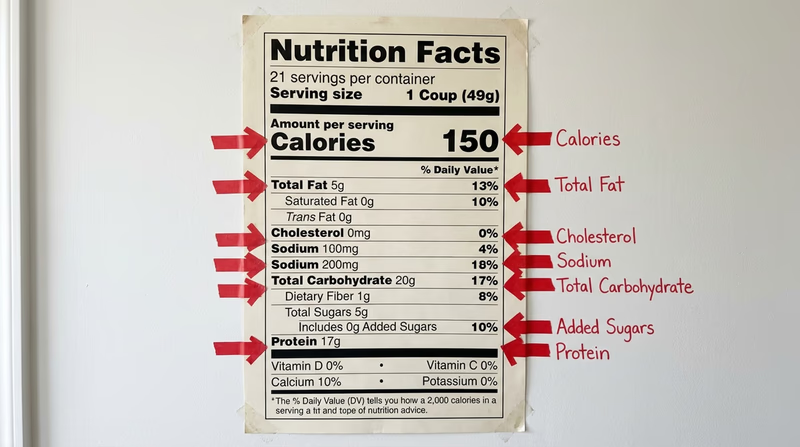
Here is what each term on the label means and why it matters:
Calorie — A unit of energy. The number on the label tells you how much energy one serving of that food provides. Your body uses calories for every function, from breathing to running. Too many calories leads to weight gain; too few leaves you without energy.
Fat — The total amount of fat in one serving, measured in grams. Fat is essential for absorbing vitamins and protecting organs, but the type of fat matters more than the total amount.
Saturated Fat — A type of fat found mainly in animal products (meat, butter, cheese) and some plant oils (coconut, palm). Eating too much saturated fat raises LDL cholesterol, which increases heart disease risk. The general guideline is to keep saturated fat below 10% of your daily calories.
Trans Fat — An artificially created fat that is worse for your heart than saturated fat. It raises bad cholesterol AND lowers good cholesterol. Look for 0 grams on the label. Even foods that say “0g trans fat” may contain small amounts if the ingredient list includes “partially hydrogenated oils.”
Cholesterol — A waxy substance your body needs in small amounts to build cells. Your liver makes all the cholesterol you need, so the cholesterol in food is extra. High cholesterol in the blood can lead to heart disease. Keep dietary cholesterol moderate.
Sodium — Salt. Your body needs some sodium to function, but most people eat far too much. High sodium intake raises blood pressure and increases the risk of heart disease and stroke. Processed foods, canned soups, and fast food tend to be loaded with sodium.
Carbohydrate — Your body’s primary source of energy. Carbohydrates are broken down into glucose (sugar), which fuels your muscles and brain. This number includes all types of carbohydrates: fiber, sugar, and starches.
Dietary Fiber — A type of carbohydrate your body cannot digest. Fiber helps your digestive system work properly, keeps you feeling full, and helps control blood sugar levels. Most teens should aim for about 25–30 grams of fiber per day. Whole grains, fruits, vegetables, and beans are excellent sources.
Sugar — Listed as “Total Sugars” and “Added Sugars” on modern labels. Total sugars include both natural sugars (from fruit, milk) and added sugars. Added sugars are the ones to limit — they provide calories with no nutritional benefit.
Protein — Essential for building and repairing muscles, bones, skin, and blood. The label tells you how many grams of protein are in one serving. Active teens need protein from a variety of sources throughout the day.
Understanding % Daily Value
The % Daily Value (%DV) column on the right side of the label tells you how much of a nutrient one serving contributes to a 2,000-calorie daily diet. Use this as a quick guide:
- 5% DV or less = Low in that nutrient
- 20% DV or more = High in that nutrient
For nutrients you want more of (fiber, vitamins, minerals), look for higher %DV. For nutrients you want to limit (saturated fat, sodium, added sugars), look for lower %DV.
Calculating for Multiple Servings
Here is where math meets nutrition. The values on a food label are for one serving. If you eat two servings, you need to multiply every value by two.
Example: A bag of chips lists the following per serving:
| Nutrient | Per Serving | Per 2 Servings |
|---|---|---|
| Serving size | 15 chips | 30 chips |
| Calories | 150 | 300 |
| Total fat | 10g | 20g |
| Sodium | 170mg | 340mg |
| Total carbohydrate | 15g | 30g |
| Dietary fiber | 1g | 2g |
| Total sugars | 1g | 2g |
| Protein | 2g | 4g |
The math is simple — multiply each value by the number of servings. But many people do not realize they are eating more than one serving. A bottle of soda that looks like a single drink might actually be listed as 2 or 2.5 servings. That means the calories, sugar, and sodium are 2 to 2.5 times what you see on the label.
Practice Makes Perfect
Pick up three packaged foods from your kitchen right now and practice:
- Find the serving size.
- Identify the calories, fat, sodium, carbohydrates, fiber, sugar, and protein per serving.
- Calculate the values for two servings.
- Check the %DV — is the food high or low in sodium? Fiber? Added sugars?
Bring your calculations to your counselor discussion. Showing that you can read a real label and do the math is exactly what this requirement is looking for.
FDA — How to Understand and Use the Nutrition Facts Label The FDA's detailed guide to every section of the Nutrition Facts label, with interactive examples.