Req 3a — Cooking Methods
This is one of the most important requirements in the entire merit badge. These ten cooking methods are the foundation of everything you will cook — at home, at camp, and on the trail. You will use at least five of them when you prepare your home meals in Req 4, and several more when you cook outdoors in Req 5.
The Ten Cooking Methods
1. Baking
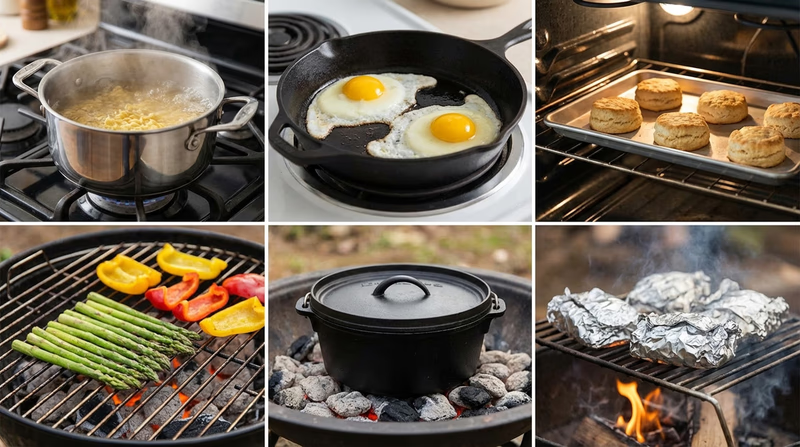
Baking uses dry heat in an enclosed space — typically an oven — to cook food evenly from all sides. It is the go-to method for breads, cakes, casseroles, and many other dishes.
- Equipment: Oven, baking pans or sheets, oven mitts, measuring cups and spoons
- Temperature control: Set the oven to a specific temperature (usually 300°F–450°F). An oven thermometer helps verify accuracy since many ovens run slightly hot or cold.
- Example foods: Biscuits, muffins, casseroles, roasted chicken, cookies
2. Boiling
Boiling means cooking food in water or liquid heated to 212°F (100°F at sea level) — the point where the liquid bubbles rapidly.
- Equipment: Pot, lid, stove or camp stove, colander for draining
- Temperature control: Once water reaches a rolling boil, you can lower the heat slightly to maintain it. Adding a lid helps water boil faster and maintains temperature.
- Example foods: Pasta, rice, eggs, corn on the cob, potatoes
3. Broiling
Broiling is the opposite of baking — heat comes from above the food instead of surrounding it. It is like an upside-down grill. Broiling uses very high, direct heat and cooks food quickly.
- Equipment: Oven with a broiler setting, broiler-safe pan or baking sheet, oven mitts, tongs
- Temperature control: Most broilers have only high and low settings. Control doneness by adjusting the rack height — closer to the heating element means more intense heat and faster cooking.
- Example foods: Steaks, fish fillets, cheese-topped dishes, garlic bread
4. Pan Frying
Pan frying uses a moderate amount of oil or fat in a skillet over medium to medium-high heat. The food sits in the oil but is not fully submerged (that would be deep frying).
- Equipment: Skillet or frying pan, cooking oil, spatula, tongs, stove
- Temperature control: Adjust the burner heat. Oil should shimmer but not smoke. If it smokes, it is too hot — remove the pan from heat and let it cool slightly.
- Example foods: Pancakes, eggs, grilled cheese, chicken cutlets, hamburgers
5. Simmering
Simmering is gentler than boiling. The liquid is heated to just below boiling — around 185°F–205°F — so you see small bubbles rising slowly rather than a full rolling boil. Simmering is used for foods that need longer, slower cooking.
- Equipment: Pot with lid, stove or camp stove, wooden spoon or ladle
- Temperature control: Bring liquid to a boil, then reduce heat until you see gentle bubbles. A lid keeps the temperature stable.
- Example foods: Soups, stews, chili, sauces, oatmeal
6. Microwaving
Microwaving uses electromagnetic waves to vibrate water molecules inside food, generating heat from the inside out. It is fast and convenient for reheating and cooking certain foods.
- Equipment: Microwave oven, microwave-safe containers (no metal!), microwave-safe cover or paper towel
- Temperature control: Adjust power level (most microwaves have settings from 1–10) and cooking time. Stirring or rotating food halfway through helps ensure even heating.
- Example foods: Popcorn, steamed vegetables, reheated leftovers, baked potatoes, scrambled eggs
7. Air Frying
Air frying circulates very hot air around food at high speed, creating a crispy outer layer similar to deep frying but with much less oil. Despite the name, it is actually a form of convection baking.
- Equipment: Air fryer appliance, air fryer basket, tongs
- Temperature control: Set the temperature (typically 300°F–400°F) and time using the controls. Shake or flip food halfway through for even cooking.
- Example foods: French fries, chicken tenders, roasted vegetables, fish sticks
8. Grilling
Grilling cooks food over direct heat from below — usually from charcoal, propane gas, or wood. The high heat creates a seared, slightly charred exterior while keeping the inside juicy.
- Equipment: Grill (charcoal, gas, or wood), grill grate, tongs, spatula, instant-read thermometer
- Temperature control: On a gas grill, adjust the burner knobs. On a charcoal grill, control heat by adjusting the vents (more air = hotter fire) and by creating heat zones (pile coals on one side for direct heat, leave the other side for indirect heat).
- Example foods: Burgers, hot dogs, steaks, chicken, vegetables, kebabs
9. Foil Cooking
Foil cooking wraps food in aluminum foil packets and cooks them over campfire coals, on a grill, or in an oven. The foil traps steam inside, essentially steaming the food in its own juices.
- Equipment: Heavy-duty aluminum foil, campfire coals or grill, tongs, heat-resistant gloves
- Temperature control: Control heat by the thickness of your coal bed and how far the packet sits from the heat source. Rotate packets every 5–10 minutes for even cooking.
- Example foods: Hobo dinners (meat and vegetables), banana boats, foil-wrapped corn, baked apples
10. Dutch Oven
A Dutch oven is a heavy, lidded cast-iron pot used for baking, roasting, stewing, and frying — all over campfire coals. It is one of the most versatile tools in outdoor cooking.
- Equipment: Cast-iron Dutch oven with legs and a flanged lid, charcoal briquettes or campfire coals, lid lifter, heat-resistant gloves, charcoal chimney starter
- Temperature control: Place charcoal briquettes on top of and underneath the Dutch oven. The number and placement of briquettes determines the temperature. A common rule of thumb: for a 12-inch Dutch oven, use twice the diameter in total briquettes (about 24), with roughly two-thirds on top and one-third on the bottom for baking.
- Example foods: Cobbler, cornbread, stew, chili, roasted chicken, biscuits
Putting It All Together
You will use at least five of these ten methods when you cook your home meals in Requirement 4, and you will use camp stoves, Dutch ovens, foil packs, and skewers when you cook outdoors in Requirement 5. Start thinking now about which methods you want to try and which foods you might prepare with each one.