Req 3b — Stoves vs. Fires
3b.
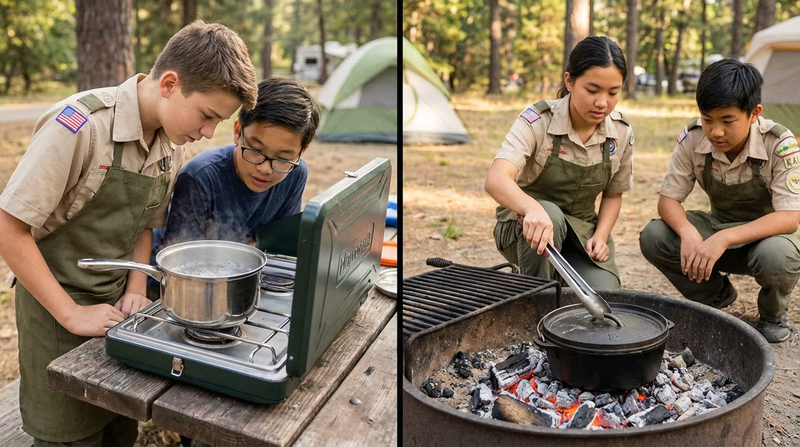
Discuss the benefits of using a camp stove on an outing vs. a charcoal or wood fire.
When you cook outdoors, you have a choice: use a camp stove or build a fire. Both work, but they have very different advantages and tradeoffs. Understanding when to use each one makes you a more capable and responsible outdoor cook.
Camp Stove Advantages
A camp stove is a portable device that burns propane, butane, or liquid fuel (like white gas) to produce a controlled flame. Here is why many experienced outdoor cooks prefer them:
Convenience and Speed
- A camp stove lights in seconds — no need to gather wood, build a fire lay, or wait for coals.
- You can start cooking immediately and be done in minutes.
- Cleanup is minimal compared to managing fire ash and coals.
Precise Temperature Control
- Camp stoves have adjustable valves that let you dial the heat up or down instantly — just like a kitchen stove.
- This matters when you are simmering a sauce, boiling water for pasta, or pan-frying eggs without burning them.
Environmental Responsibility
- Camp stoves leave no trace — no fire ring, no char marks, no ash to dispose of.
- In areas where fire bans are in effect (which is increasingly common during dry seasons), a camp stove may be your only legal cooking option.
- Stoves do not consume firewood, which helps preserve the natural environment.
Safety
- The flame is contained and controllable.
- There is less risk of wildfire compared to an open campfire.
- Stoves work in wind and rain when starting a fire would be difficult or impossible.
Charcoal and Wood Fire Advantages
Despite the convenience of stoves, cooking over a fire has its own benefits:
Flavor
- Wood smoke adds a distinctive flavor to food that a camp stove cannot replicate.
- Charcoal grilling creates a seared, smoky taste that is hard to beat for burgers, steaks, and chicken.
Versatility with Dutch Ovens and Foil Cooking
- Dutch oven cooking requires hot coals — either from charcoal briquettes or a wood fire. A camp stove cannot provide the even, sustained heat that coals deliver from the top and bottom.
- Foil packet cooking is designed for campfire coals.
Self-Sufficiency
- In an emergency or a remote backcountry situation, you do not need to carry fuel — wood is often available on the ground.
- Knowing how to build and manage a fire is a fundamental outdoor skill.
Atmosphere
- Let’s be honest — a campfire is part of the camping experience. Gathering around the fire to cook, eat, and tell stories is a tradition that camp stoves cannot replace.
When to Use Which
| Situation | Best Choice | Why |
|---|---|---|
| Quick breakfast before a hike | Camp stove | Fast, easy, no cleanup delay |
| Dutch oven cobbler for dessert | Charcoal/wood fire | Need coals above and below |
| Fire ban in effect | Camp stove | Only legal option |
| Rainy or very windy conditions | Camp stove | More reliable ignition and flame control |
| Cooking for a large group | Both | Use the stove for boiling water and side dishes, the fire for the main course |
| Backpacking (weight matters) | Backpacking stove | Lightest option; fires may not be permitted |
| Patrol cookout at base camp | Wood fire | Full campfire experience with time to manage coals |